

Hey there! As a supplier of helmet moulds, I often get asked about the vibration - resistance requirements for these moulds. In this blog, I'll break down what these requirements are, why they matter, and how we ensure our moulds meet them.
Why Vibration Resistance Matters in Helmet Moulds
First off, let's talk about why vibration resistance is such a big deal. When a helmet mould is in operation, it goes through a lot of stress. Injection molding machines generate vibrations during the process of injecting molten plastic into the mould. These vibrations can come from the movement of the machine's components, the high - pressure injection of the plastic, and even the cooling and solidification process of the plastic inside the mould.
If a helmet mould isn't vibration - resistant enough, it can lead to a bunch of problems. For starters, the vibrations can cause the mould to wear out faster. This means that the mould's lifespan will be significantly reduced, and you'll have to replace it more often, which is a huge cost for manufacturers.
Secondly, vibrations can affect the quality of the helmets produced. Uneven vibrations can lead to inconsistent wall thickness in the helmets, which compromises their safety and performance. Helmet manufacturers rely on high - quality moulds to produce helmets that meet strict safety standards, and vibration - related issues can make it difficult to achieve that.
Key Vibration - Resistance Requirements
Material Selection
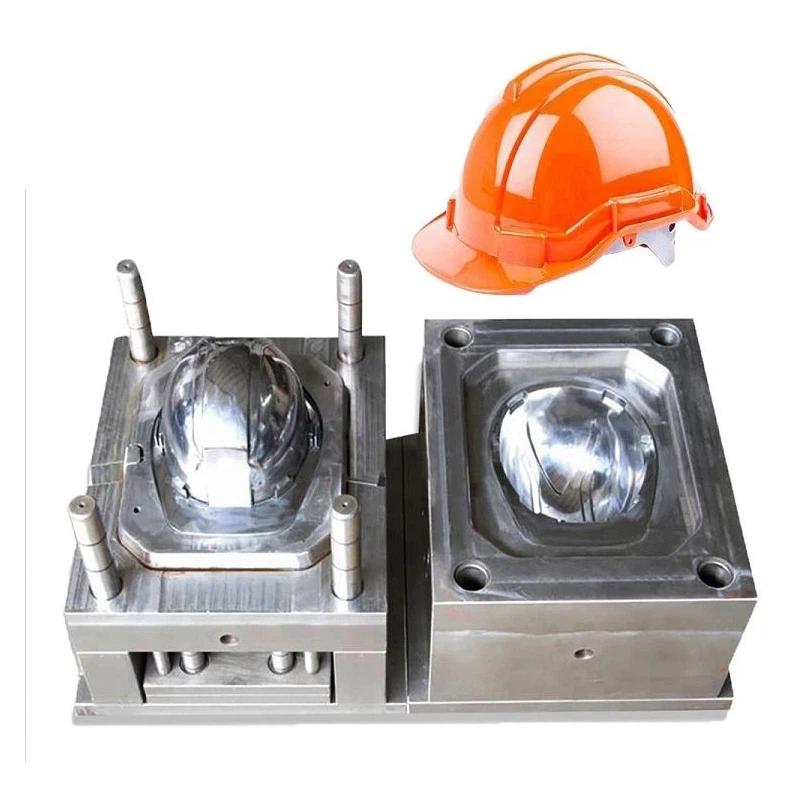
The choice of material for the helmet mould is crucial when it comes to vibration resistance. We usually use high - strength alloys for our Helmet Injection Mold. These alloys are designed to withstand the high stresses and vibrations during the injection molding process.
For example, some of the alloys we use have excellent damping properties. Damping is the ability of a material to absorb and dissipate energy from vibrations. A mould made from a material with good damping properties can reduce the amplitude of vibrations, protecting the mould from damage and ensuring a more stable production process.
Structural Design
The structural design of the helmet mould also plays a vital role in vibration resistance. A well - designed mould should have a balanced structure that can distribute the forces evenly during the injection molding process.
We use advanced CAD (Computer - Aided Design) software to design our moulds. This allows us to simulate the injection molding process and analyze how the mould will respond to vibrations. Based on the simulation results, we can optimize the design of the mould, such as adjusting the thickness of the walls, adding reinforcement ribs, and improving the overall shape of the mould.
For Motorcycle Helmet Mould, which often have more complex shapes compared to other types of helmet moulds, the structural design becomes even more important. We pay extra attention to details like the placement of gates and vents to ensure a smooth flow of plastic and minimize vibrations caused by uneven filling.
Surface Finish
The surface finish of the helmet mould can also impact its vibration resistance. A smooth surface finish reduces friction between the mould and the plastic during the injection molding process. This not only helps in the easy release of the finished helmet but also reduces the chances of vibrations caused by uneven movement of the plastic.
We use precision machining and polishing techniques to achieve a high - quality surface finish on our moulds. This ensures that the plastic flows smoothly through the mould, minimizing any disturbances that could lead to vibrations.
Testing and Quality Assurance
We don't just rely on theoretical designs and material selection. We have a comprehensive testing process to ensure that our helmet moulds meet the vibration - resistance requirements.
Before we deliver a mould to a customer, we conduct vibration tests using specialized equipment. These tests simulate the actual operating conditions of the mould in an injection molding machine. We measure the amplitude and frequency of the vibrations and compare the results with our predefined standards.
If the mould doesn't meet the requirements, we go back to the drawing board. We analyze the test results to identify the root cause of the problem, whether it's a material issue, a design flaw, or a surface finish problem. Then we make the necessary adjustments and retest the mould until it meets our high - quality standards.
Meeting Different Customer Needs
We understand that different customers have different requirements when it comes to helmet moulds. Some customers may need Plastic Safety Helmet Mould for mass - production in a high - speed injection molding environment, where the vibrations are more intense. In such cases, we focus on using materials with even better damping properties and optimizing the structural design to handle the high - speed production.

On the other hand, some customers may have specific design requirements for their helmets, which may affect the vibration - resistance of the mould. We work closely with these customers to understand their needs and come up with customized solutions.
Conclusion
Vibration resistance is a critical factor in the design and production of helmet moulds. As a helmet mould supplier, we are committed to meeting the highest vibration - resistance requirements to ensure the quality and longevity of our moulds. Our combination of high - quality materials, advanced design techniques, and rigorous testing processes allows us to provide our customers with helmet moulds that can withstand the challenges of the injection molding process.
If you're in the market for a reliable helmet mould supplier, we'd love to hear from you. Whether you're a large - scale helmet manufacturer or a startup looking to enter the market, we can offer you customized solutions to meet your specific needs. Don't hesitate to reach out to us for a consultation and let's start a great partnership together.
References
- "Injection Molding Handbook" by O. Sabau
- "Materials Science and Engineering: An Introduction" by William D. Callister Jr. and David G. Rethwisch