

Hey there! I'm a supplier of Grille Cover Moulds, and let me tell you, manufacturing large - scale grille cover moulds is no walk in the park. There are a whole bunch of challenges that come with the territory, and I'm here to break them down for you.
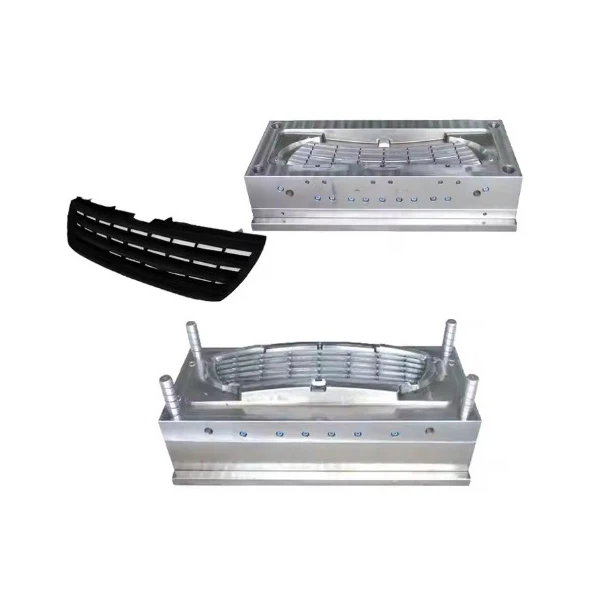
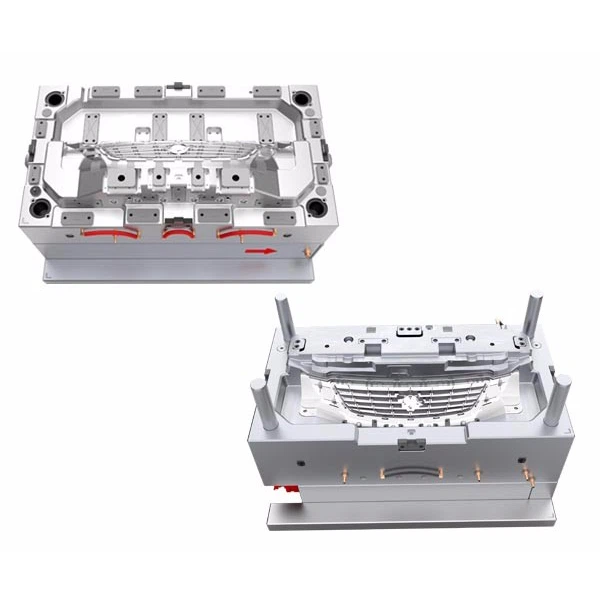
1. Design Complexity
First off, the design part is a real headache. Grille covers come in all sorts of shapes and sizes, especially when we're talking about large - scale ones. They're not just simple flat pieces; they often have intricate patterns, curves, and fine details. For instance, a Radiator Grille Mould might need to fit perfectly with the car's front end design. It has to align with the overall aesthetics of the vehicle while also allowing proper air flow.
The design process involves a lot of back - and - forth between us, the mould makers, and the clients. They have their vision for the grille cover, and we need to translate that into a workable mould design. Sometimes, the clients' ideas are really out - there, and it takes a lot of engineering know - how to make them a reality. We have to consider things like draft angles, which are crucial for the moulding process. If the draft angles aren't right, the grille cover won't be able to be ejected from the mould properly. And let's not forget about the wall thickness. Uneven wall thickness can lead to all sorts of problems during the moulding process, like warping and sink marks.
2. Material Selection
Picking the right materials for large - scale grille cover moulds is another major challenge. The mould has to be strong enough to withstand the high pressures and temperatures during the injection moulding process. We usually go for high - quality steel alloys, but even then, choosing the right grade is tricky.
For example, if we use a steel that's too soft, the mould will wear out quickly. This means we'll have to replace it more often, which is a huge cost for both us and the client. On the other hand, if the steel is too hard, it can be difficult to machine, which adds to the production time and cost.
We also have to think about the corrosion resistance of the material. Since the moulds are often used in industrial environments, they're exposed to various chemicals and moisture. If the material isn't corrosion - resistant, the mould can get damaged, affecting the quality of the grille covers produced. And when it comes to large - scale moulds, the cost of materials is a significant factor. We need to find a balance between quality and cost to make the project profitable.
3. Machining and Precision
Machining large - scale grille cover moulds requires a high level of precision. These moulds can be really big, and even the slightest error in machining can lead to a defective grille cover. We use advanced CNC (Computer Numerical Control) machines to do the job, but even with these high - tech tools, it's not easy.
The machining process involves multiple steps, from rough cutting to finishing. Each step has to be carefully controlled to ensure the dimensions of the mould are accurate. For a Front Grille Mould, for example, the holes and slots for mounting and ventilation need to be exactly the right size and in the right position. Any deviation can cause problems when the grille cover is installed on the vehicle.
Another issue is the surface finish. The surface of the mould has a direct impact on the appearance of the grille cover. A rough surface on the mould can result in a grille cover with a poor finish, which is not acceptable to our clients. So, we have to spend a lot of time and effort on polishing and finishing the mould to get that smooth, high - quality surface.
4. Assembly and Testing
Once the individual parts of the large - scale grille cover mould are machined, the next challenge is assembly. Putting all the parts together correctly is crucial for the proper functioning of the mould. There are many components, such as cores, cavities, and slides, that need to fit together precisely.
During the assembly process, we have to make sure that all the moving parts work smoothly. For example, the slides in the mould need to open and close without any jamming. If there are any issues with the assembly, it can lead to problems during the moulding process, like misaligned grille covers or parts that don't eject properly.
After assembly, we conduct rigorous testing. We run test shots to check the quality of the grille covers produced. This involves injecting plastic material into the mould and inspecting the resulting parts for any defects. If we find any problems, we have to go back and make adjustments to the mould. This can be a time - consuming process, especially for large - scale moulds, as it may involve disassembling and reassembling parts.
5. Time and Cost Management
Manufacturing large - scale grille cover moulds takes a significant amount of time. From the initial design phase to the final testing, the whole process can take weeks or even months. And time is money, as they say. Delays in production can cost us a lot, not to mention disappointing our clients.
There are also many cost factors to consider. As I mentioned earlier, the cost of materials is high, especially for large - scale moulds. The cost of machining, including the use of advanced equipment and skilled labor, is also a major expense. And then there's the cost of testing and any necessary rework.
We have to manage our resources carefully to keep the costs down and meet the production deadlines. This means optimizing our production processes, negotiating good prices with our material suppliers, and ensuring that our workers are efficient.
6. Quality Control and Certification
In the automotive and other industries where grille covers are used, quality control is of utmost importance. We have to ensure that the grille cover moulds we produce meet the highest standards. This involves a series of inspections and tests at every stage of the production process.
We have to check the dimensions, surface finish, and mechanical properties of the mould. For a Air Conditioner Grille Mold, for example, we need to make sure that it can produce grille covers that are both functional and aesthetically pleasing.
In addition to our in - house quality control, we may also need to obtain certain certifications for our moulds. These certifications are often required by our clients, especially for large - scale projects. Meeting these certification requirements adds another layer of complexity to the manufacturing process.
Conclusion
So, as you can see, manufacturing large - scale grille cover moulds is full of challenges. From design complexity to quality control, every step of the process requires careful attention. But despite these challenges, we're committed to providing high - quality moulds to our clients.
If you're in the market for grille cover moulds and want to discuss your project, don't hesitate to reach out. We're here to help you overcome these challenges and get the best possible mould for your needs.
References
- General knowledge from years of experience in the grille cover mould manufacturing industry.
- Industry - specific technical manuals and guidelines for mould design and production.