

When it comes to customizing a helmet mould, numerous factors need to be thoroughly considered. As a professional helmet mould supplier, I've accumulated a wealth of experience in this field. Here, I'll delve into the vital elements that one should take into account during the customization process.
1. Helmet Design and Functionality
The initial step in customizing a helmet mould is to understand the design and functionality requirements of the helmet. Different types of helmets, such as Safety Helmet Mould, are designed for specific purposes. For instance, safety helmets are commonly used in construction sites to protect workers from falling objects, while sports helmets are tailored to provide shock absorption during high - impact activities.
The shape of the helmet is a crucial aspect. It needs to fit the human head comfortably and securely. A well - designed helmet should have a proper curvature and contour to distribute the impact force evenly across the head. The ventilation system also plays an important role, especially for helmets used in sports or hot working environments. Adequate ventilation can prevent overheating and improve the wearer's comfort.
Functionality features like the attachment points for visors, chin straps, and communication systems must be precisely incorporated into the mould design. These features ensure that the final helmet can be equipped with the necessary accessories to meet the user's needs.
2. Material Selection for the Mould
The choice of material for the helmet mould is of utmost importance as it directly affects the quality, durability, and cost - effectiveness of the production process. Common materials used for helmet moulds include steel and aluminum.
Steel moulds are known for their high strength and durability. They can withstand high - pressure injection molding processes and are suitable for large - scale production. Steel molds can produce a large number of helmets with consistent quality over an extended period. However, steel is relatively heavy and more expensive to machine, which may increase the initial investment cost.
On the other hand, aluminum moulds are lighter and more cost - efficient in terms of machining. They are a good choice for small - to - medium - scale production or for prototypes. Aluminum also has better thermal conductivity, which can lead to faster cooling times during the injection molding process. Nevertheless, aluminum moulds may not be as durable as steel moulds and are more prone to wear and tear, especially when producing helmets with a high production volume.
3. Manufacturing Process
The manufacturing process of the helmet mould is another critical factor. Precision machining is essential to ensure the accuracy of the mould cavity. Computer - Numerical Control (CNC) machining is widely used in the production of helmet moulds for its high precision and repeatability. CNC machines can create complex shapes and features with a high degree of accuracy, which is crucial for producing helmets with consistent quality.
The surface finish of the mould is also important. A smooth surface finish on the mould can result in a better - looking and more comfortable helmet. Polishing and texturing processes can be applied to the mould surface to achieve the desired finish. For example, a polished surface can make the helmet easier to clean, while a textured surface can provide better grip.
In addition, the choice of the injection molding technique can impact the quality of the final helmet. There are different types of injection molding processes, such as single - shot injection molding and multi - shot injection molding. Single - shot injection molding is suitable for simple helmet designs, while multi - shot injection molding can be used to create helmets with different materials or colors in a single operation, adding more functionality and aesthetics to the product.
4. Quality Control Standards
Maintaining high - quality control standards is non - negotiable when customizing a helmet mould. The mould should meet the relevant industry standards and regulations. For Plastic Safety Helmet Mould, it must comply with safety standards set by organizations such as the Occupational Safety and Health Administration (OSHA) in the United States or the European Union's Personal Protective Equipment (PPE) Directive.
Quality control should be implemented throughout the entire manufacturing process. This includes inspecting the raw materials, monitoring the machining process, and conducting final inspections on the finished mould. Dimensional accuracy, surface finish, and hardness are some of the key parameters that need to be checked. Non - destructive testing methods, such as ultrasonic testing and X - ray inspection, can be used to detect any internal defects in the mould.
5. Cost - Effectiveness
Cost - effectiveness is a major consideration for any business. When customizing a helmet mould, it's important to balance the quality and cost. While high - quality materials and advanced manufacturing processes can result in a better - performing mould, they also come with a higher price tag.
One way to achieve cost - effectiveness is to optimize the design of the mould. A well - designed mould can reduce the amount of material used and the machining time. For example, using modular designs can allow for easier replacement of worn - out parts, extending the lifespan of the mould and reducing long - term costs.
Another aspect is to consider the production volume. For low - volume production, it may be more cost - effective to use a simpler and less expensive mould, while high - volume production may justify the investment in a more durable and high - precision mould.
6. After - Sales Service
Good after - sales service is an important factor that should not be overlooked. As a helmet mould supplier, we understand that issues may arise during the use of the mould. Providing prompt and efficient after - sales service can ensure that our customers can continue their production without significant interruptions.

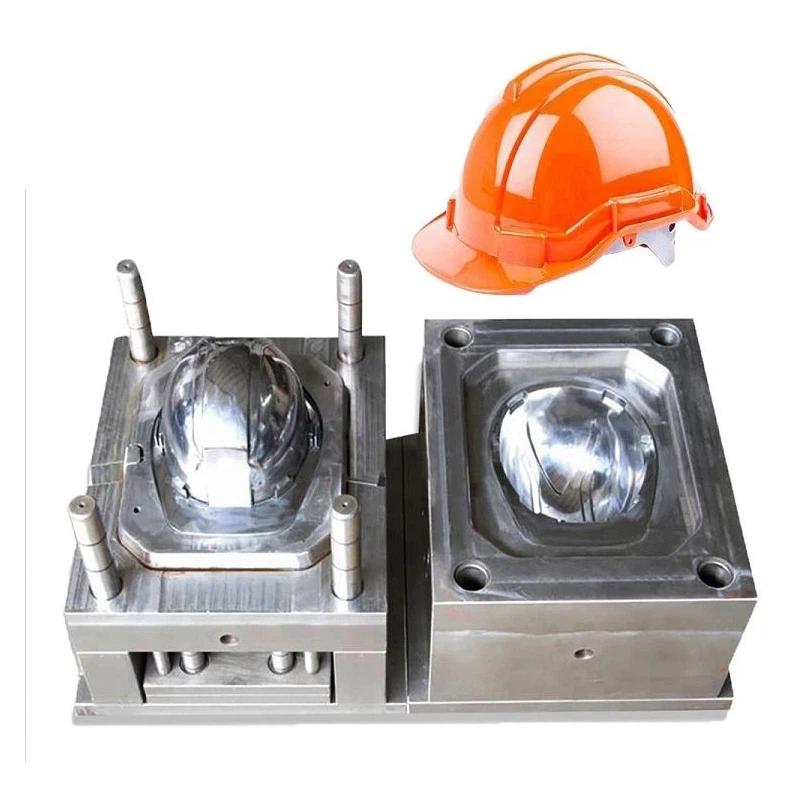
After - sales service includes technical support, maintenance, and repair of the mould. We offer training to our customers on how to operate and maintain the mould properly. In case of any problems, our team of experts can quickly diagnose the issue and provide solutions, either remotely or on - site if necessary.
7. Compatibility with Production Equipment
The helmet mould needs to be compatible with the customer's production equipment. This includes the injection molding machine, the cooling system, and the ejection mechanism. The size, shape, and clamping force requirements of the mould must match the specifications of the injection molding machine.
If the mould is not compatible with the production equipment, it can lead to problems such as poor filling, uneven cooling, and difficulty in ejecting the finished helmet. Therefore, it's essential to have a detailed discussion with the customer about their existing production equipment and make the necessary adjustments to the mould design.
8. Market Trends and Future Requirements
Staying updated with market trends and future requirements is crucial for customizing a helmet mould. The demand for helmets is constantly evolving, driven by changes in technology, safety regulations, and consumer preferences.
For example, there is a growing trend towards lightweight and eco - friendly helmets. As a result, the mould design may need to accommodate the use of new materials and manufacturing processes. Additionally, the integration of smart technologies, such as sensors for impact detection and communication systems, is becoming more popular in the helmet industry. The mould should be designed in a way that allows for the easy incorporation of these future features.
In conclusion, customizing a helmet mould is a complex process that requires careful consideration of multiple factors. From the helmet design and material selection to the manufacturing process, quality control, cost - effectiveness, after - sales service, compatibility with production equipment, and market trends, every aspect plays a vital role in ensuring the success of the customization project. As a reliable Helmet Injection Mold supplier, we are committed to providing our customers with high - quality, cost - effective, and innovative helmet mould solutions. If you are interested in our helmet mould customization services, please feel free to contact us for further discussion and negotiation.
References
- "Handbook of Plastic Molding Technology" by Ozdoganlar, Osman Burak, and Kokini, Jozef L.
- "Injection Molding Handbook" by Rosato, Donald V., Rosato, David V., and Rosato, Michael G.