

Air Conditioner Mould
Air conditioner molds can be used to mass produce various air conditioner parts, including air conditioner frames, air conditioner fans, air conditioner grilles, etc., using injection molding technology. Shuncheng Mould can design and produce a set of air conditioner molds. So far, we have designed and produced many air conditioner molds, such as: air conditioner frame molds, air conditioner cover molds, air conditioner fan molds, air conditioner grille molds, etc. For air conditioner grille and air conditioner cover molds, we use DIN 1.2316 to make the cavity after tempering, and use DIN 1.2738 to produce the core.
-
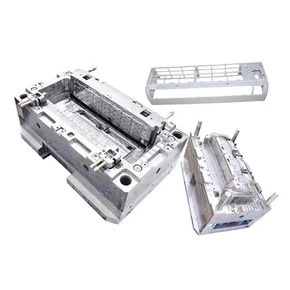
![Plastic Air Conditioner Shell Mould]() Plastic Air Conditioner Shell MouldThe "yellowing" of the air conditioner shell is actually a "yellowing phenomenon". Yellowing refers to the phenomenon in which items turn yellow due to exposure to natural light, ultraviolet rays,...read more
Plastic Air Conditioner Shell MouldThe "yellowing" of the air conditioner shell is actually a "yellowing phenomenon". Yellowing refers to the phenomenon in which items turn yellow due to exposure to natural light, ultraviolet rays,...read more -
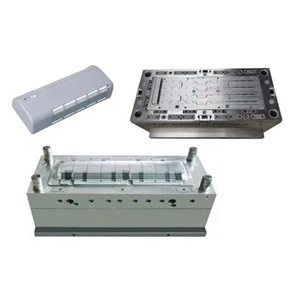
![Plastic Air Conditioner Mould]() Plastic Air Conditioner MouldABS plastic is a thermoplastic plastic with certain toughness, impact resistance and mechanical strength, as well as good electrical insulation and temperature resistance. Most of the casings of...read more
Plastic Air Conditioner MouldABS plastic is a thermoplastic plastic with certain toughness, impact resistance and mechanical strength, as well as good electrical insulation and temperature resistance. Most of the casings of...read more -
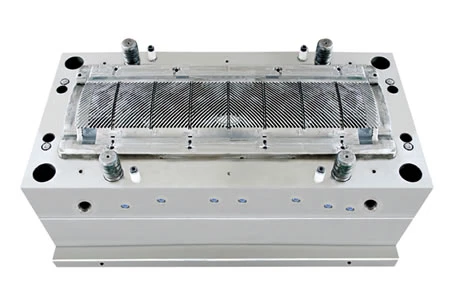
![Air Conditioner Injection Mould]() Air Conditioner Injection MouldPlastic mold, also known as plastic injection mold, is a thermal processing method mainly used for molding and mass production of plastic parts. It uses flowing molten plastic to shape according...read more
Air Conditioner Injection MouldPlastic mold, also known as plastic injection mold, is a thermal processing method mainly used for molding and mass production of plastic parts. It uses flowing molten plastic to shape according...read more


Why Choose Us
Quality assurance
Our plastic moulds company with high quality standards, detailed mould specifications and special requirements, enabling us to offer our customers a comprehensive solution to their injection molding needs.
Comprehensive solution
We have mastered product development, mold design, raw material selection, process optimization, production management, quality control, customer service, international freight forwarding, etc.Can offer our customers a comprehensive solution to their injection molding needs.
Professional team
Through years of experience in the manufacture of injection molding, we have cultivated an excellent team and established a comprehensive system to meet different needs of customers.
Competitive price
We seek to reduce costs for our customers' product development and manufacturing, so as to help customers win in the highly competitive market.
Materials Used in Air Conditioner Mould
We have produced many air conditioner molds, including air conditioner frame molds, air conditioner cover molds, air conditioner fan molds, air conditioner grille molds, etc. Different air conditioner parts (such as frames, covers, fans, grilles, etc.) use different materials. The following are some common plastic materials:
1. Air Conditioner Outer Frame Mold
- Polypropylene: Has good chemical resistance, high rigidity, and heat resistance, making it suitable for parts that require higher strength.
- ABS: High hardness, good impact resistance, and processability, suitable for parts that need good durability and appearance.
2. Air Conditioner Cover Mold
- Polycarbonate: Offers high transparency and excellent impact resistance, making it ideal for covers that require transparency and high durability.
- ABS: Often used for covers due to its impact resistance and durability, particularly for parts that need a good appearance.
3. Air Conditioner Fan Mold
- Glass Fiber Reinforced Polypropylene: Provides excellent strength and rigidity, especially for fan blades that need to bear significant rotational loads.
- Nylon (PA): High heat resistance and wear resistance, suitable for parts that require durability and long-term operation, such as fan blades.
4. Air Conditioner Grille Mold
- Polypropylene: Has good chemical resistance and heat resistance, making it suitable for grilles that will be exposed to the air conditioning environment for a long time.
- ABS: Its good appearance and impact resistance make it a popular material for air conditioner grilles, especially in designs that require a high aesthetic standard.
5. Other Common Materials
- Polyethylene (PE): Primarily used for parts that do not require high strength, offering good chemical resistance.
- Polyvinyl Chloride (PVC): Often used for small parts or connecting pipes, due to its strong corrosion resistance and low cost.
Our strict quliaty control for mould project management
Product Design Inspection:
For any product designs provided by Shuncheng or the customer, including plastic molding processes, mold structure operation, and compatibility of related parts, we conduct a comprehensive analysis and inspection. The more time spent on design, the faster the subsequent production process will be.
Plastic Mold Design Inspection:
We also conduct multiple checks on mold design, such as mold strength, mold flow analysis, injection molding, cooling system, guide systems, specifications of various parts, selection of customer machinery, and any special customer requirements for the mold. All of these checks are performed according to international mold design standards.
Material Procurement Inspection:
We have a strict inspection process and time control for the procurement of mold components, including standardization of parts, accuracy of dimensions, hardness of the steel, and material flow tests.
Process Quality Control:
We strictly control the dimensions of each mold. After processing each part, we inspect it according to the mold design and control tolerances. Each part must meet the standard before proceeding to the next stage of processing. Before CNC milling, all programs are carefully checked. Once completed, we use a coordinate measuring machine to inspect the precision of each part.
Plastic Mold Installation Quality Inspection:
Project managers and quality control personnel should conduct inspections of plastic molds according to company standards to ensure product quality. If any issues are found, they can be immediately corrected, effectively preventing errors. Additionally, we continuously perform independent inspections of the mold's cooling system, hydraulic channels, and hot runner system. The quality control department submits an inspection report within 24 hours of mold testing. The report includes product dimensions, appearance, injection parameters, and physical parameters. Different inspection standards and tools are used for different products.
Plastic Mold Testing:
To some extent, mold testing is aimed at identifying problems in the mold rather than solving them. Therefore, mold testing is divided into multiple steps, including dry running, high-pressure holding pressure, high-speed injection, and long-term mold operation testing.
Our service
Product Design and Development: We provide product drawings and mold design using CAD and other software.
Mold Design and Manufacturing: We design and manufacture various types of plastic molds according to customer requirements.
Mold Flow Analysis: Use advanced software to perform mold flow analysis to optimize mold design.
Mold Inspection and Testing: Provide comprehensive testing of mold strength, injection molding performance, cooling system, etc. to ensure mold quality.
Material Procurement and Testing: Strictly control the procurement and quality inspection of mold raw materials to ensure that the materials meet the standards.
Production Support and Optimization: Provide customers with mold debugging, production process optimization and technical support services.
FAQ
Q: What is an air conditioner mold?
A: An air conditioner mold is a tool used to manufacture parts for air conditioners, such as the outer casing, internal components, and plastic parts. These molds are designed to create precise, high-quality parts used in the assembly of air conditioning units.
Q: What materials are typically used for air conditioner molds?
A: Air conditioner molds are commonly made from high-grade steel or aluminum alloys. The material choice depends on factors such as the complexity of the part, durability requirements, and the type of molding process used (e.g., injection molding).
Q: What is the mold design process for air conditioners?
A: The design process involves:
Conceptualization: Initial design based on the air conditioner's specifications.
3D Modeling: Using CAD software to create a detailed 3D model of the mold.
Mold Flow Analysis: Analyzing the injection flow, cooling efficiency, and possible defects before the mold is built.
Final Design & Prototyping: Refining the mold design based on analysis and creating a prototype for testing.
Q: What factors affect the quality of the mold?
A: Material Selection: Using high-quality steel or aluminum for durability and precision.
Precision in Design: Accurate CAD designs and mold flow analysis ensure minimal defects.
Machining Process: Precision CNC machining and high-level quality control in production.
Cooling System: Efficient cooling channels to ensure uniform molding temperature and reduce cycle time.
Q: How is the mold tested?
A: The mold is tested through a series of trials, including:
Dry Run: Testing the mold without injecting material to check for fit and alignment.
Injection Testing: Running the mold with actual material to check for part quality, surface finish, and dimensional accuracy.
Adjustment: Making necessary adjustments based on test results.
Q: What types of air conditioner components are made using molds?
A: Common air conditioner components made using molds include:
Outer Casing: Plastic or metal casings for the body.
Fan Blades: Injection-molded plastic fan blades.
Grilles and Covers: Air intake and outlet covers.
Internal Components: Small plastic parts like control buttons, knobs, or connectors.
Q: What are the key challenges in making air conditioner molds?
A: Complex Geometry: Air conditioner parts often have intricate designs, requiring precise mold features.
Material Variability: Different parts may require different materials, impacting mold design and manufacturing.
Heat Management: Proper cooling systems must be designed to avoid material warping and ensure fast cycle times.
Durability: Air conditioner molds need to be robust to handle high-volume production and last through multiple production cycles.
We're professional air conditioner mould manufacturers and suppliers in China, specialized in providing high quality customized service. We warmly welcome you to buy air conditioner mould in stock here from our factory. For price consultation, contact us.
custom home appliance mould, home appliance mould for safe regions, home appliance mould for african markets