

Hey there! As a supplier of Baby Car Mold, I often get asked some really interesting questions. One that pops up quite a bit is, "Can I use a baby car mold to make products with internal structures?" Let's dig into this topic and see what we can find out.
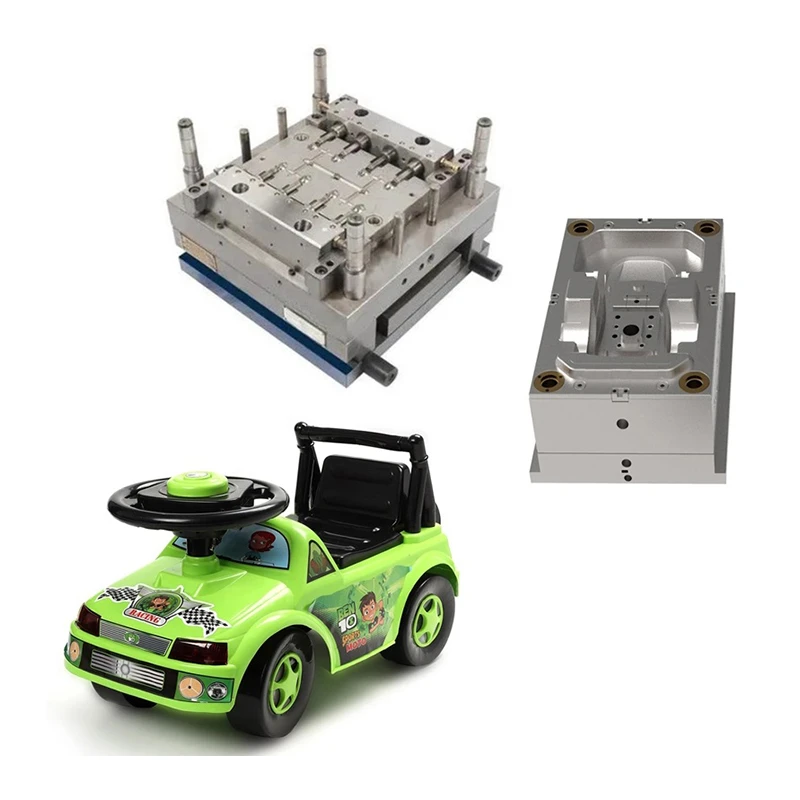

Understanding Baby Car Molds
First things first, let's talk about what a baby car mold is. It's a specialized tool used to create the outer shape of baby cars or similar children's vehicles. These molds are typically made from high - quality materials like steel or aluminum, which can withstand the pressures and temperatures involved in the molding process.
The design of a baby car mold is pretty precise. It has to capture all the details of the car's exterior, from the curves of the body to the placement of the wheels and windows. And as a supplier, I know how important it is to ensure that the mold is made to the highest standards, so that the final product looks great and functions well.
Making Products with Internal Structures
Now, when it comes to making products with internal structures using a baby car mold, it's a bit of a mixed bag. On one hand, it's definitely possible in some cases. But on the other hand, there are some challenges that you need to be aware of.
The Possibilities
If the internal structure is relatively simple, like a hollow cavity inside the baby car for storage or a basic framework to support the shape, then it can be achievable. For example, some baby cars have a small compartment under the seat where you can store toys or snacks. This kind of internal structure can be incorporated into the mold design.
One way to do this is by using a multi - part mold. A multi - part mold consists of different sections that fit together to form the complete mold. By carefully designing these sections, you can create spaces for internal structures. For instance, you can have a core piece that creates the hollow area inside the car. When the molten plastic is injected into the mold, it fills around this core, leaving the desired internal space.
Another option is to use a process called insert molding. In insert molding, pre - made components are placed inside the mold before the plastic is injected. These inserts can form part of the internal structure. For example, you could insert a plastic frame or a metal support into the mold, and the injected plastic would then bond to it, creating a more complex internal structure.
The Challenges
However, there are some significant challenges when trying to make products with complex internal structures using a baby car mold.
One major issue is the flow of the molten plastic. When the plastic is injected into the mold, it needs to flow evenly to fill all the cavities, including the internal ones. If the internal structure is too intricate, the plastic may not be able to reach all the areas. This can result in incomplete filling, which means the final product will have defects.
Another challenge is the removal of the product from the mold. If the internal structure has undercuts or complex shapes, it can be difficult to eject the product from the mold without damaging it. Special ejection mechanisms may need to be designed, which can increase the cost and complexity of the mold.
Also, the design and manufacturing of a mold that can create complex internal structures require a high level of expertise. You need to have a deep understanding of the molding process, materials, and design principles. As a supplier of baby car molds, I've seen firsthand how tricky it can be to get these things right.
Real - World Examples
Let's take a look at some real - world examples to better understand the possibilities and challenges.
Child Safety Seat Mold
A Child Safety Seat Mold is an interesting case. Safety seats often have internal structures for support, such as a rigid frame and padding compartments. The mold for a safety seat needs to be designed in such a way that it can create these internal structures accurately.
Manufacturers usually use a combination of multi - part molds and insert molding techniques. For example, a pre - made metal frame can be inserted into the mold, and then the plastic is injected around it to form the seat's shell. This ensures that the seat has the necessary strength and support. However, designing and manufacturing this type of mold requires a lot of precision and testing to ensure that the final product meets safety standards.
Children Electrical Car Mould
Children Electrical Car Mould is another example. These cars often have internal spaces for batteries, wiring, and control systems. Creating these internal structures in the mold is crucial for the proper functioning of the car.
The challenge here is to ensure that the internal spaces are large enough to accommodate the components, while also maintaining the overall shape and integrity of the car. Additionally, the mold needs to be designed to allow for easy access to the internal components for maintenance and repair.
Conclusion
So, can you use a baby car mold to make products with internal structures? The answer is yes, but with some limitations. Simple internal structures can be achieved with the right design and molding techniques. However, complex internal structures present challenges in terms of plastic flow, product ejection, and mold design.
If you're thinking about using a baby car mold to make products with internal structures, it's important to work with an experienced supplier. As a baby car mold supplier, I have the knowledge and expertise to help you design and manufacture the right mold for your specific needs. Whether you need a mold for a simple baby car or a complex children's vehicle with internal components, I can assist you every step of the way.
If you're interested in learning more or discussing your project, don't hesitate to reach out. We can have a detailed chat about your requirements and come up with the best solution for you. Let's work together to create high - quality products that meet your expectations!
References
- Injection Molding Handbook, by O. Olajide
- Plastics Processing Handbook, by J. Beaumont