

Hey there! I'm a supplier of washing machine moulds, and today I'm gonna take you through the whole process of how a washing machine mould is made. It's a pretty fascinating journey, from the initial design to the final product. So, let's dive right in!
Design Phase
The first step in making a washing machine mould is the design phase. This is where the magic starts. We work closely with our clients to understand their specific requirements. What kind of washing machine are they making? What features does it have? We need to know all these details to create a mould that fits the bill.
We use advanced 3D design software to create a virtual model of the mould. This allows us to visualize the final product and make any necessary adjustments before we start the manufacturing process. We pay close attention to every detail, from the shape and size of the mould to the placement of the injection points.
During the design phase, we also consider the materials that will be used in the washing machine. Different materials have different properties, and we need to make sure that the mould can handle them. For example, if the washing machine is made of plastic, we need to choose a mould material that can withstand the high temperatures and pressures involved in the injection molding process.
Material Selection
Once the design is finalized, it's time to select the materials for the mould. The choice of material is crucial, as it will determine the durability and performance of the mould. We usually use high-quality steel or aluminum alloys for washing machine moulds.
Steel is a popular choice because it's strong, durable, and can withstand high temperatures and pressures. It's also relatively easy to machine, which makes it ideal for complex mould designs. Aluminum alloys, on the other hand, are lighter and more corrosion-resistant than steel. They're also a good choice for moulds that require a high level of precision.
We carefully evaluate the properties of different materials and choose the one that best suits the requirements of the mould. We also consider factors such as cost, availability, and lead time when making our decision.
Machining
After the materials are selected, the next step is machining. This is where the raw materials are transformed into the final mould. We use a variety of machining processes, such as milling, turning, and drilling, to create the shape and features of the mould.
Milling is a process that uses a rotating cutter to remove material from the workpiece. It's commonly used to create flat surfaces, grooves, and pockets in the mould. Turning is a process that uses a lathe to rotate the workpiece while a cutting tool removes material from it. It's used to create cylindrical shapes, such as the holes and shafts in the mould. Drilling is a process that uses a drill bit to create holes in the workpiece.
We use state-of-the-art machining equipment and techniques to ensure that the mould is machined to the highest level of precision. We also perform regular quality checks during the machining process to make sure that the dimensions and tolerances of the mould meet the design specifications.
Heat Treatment
Once the machining is complete, the mould undergoes heat treatment. This is a process that involves heating the mould to a specific temperature and then cooling it down at a controlled rate. Heat treatment is used to improve the hardness, strength, and toughness of the mould.
There are different types of heat treatment processes, such as annealing, quenching, and tempering. Annealing is a process that involves heating the mould to a high temperature and then cooling it down slowly. This helps to relieve internal stresses in the mould and improve its machinability. Quenching is a process that involves heating the mould to a high temperature and then cooling it down rapidly. This helps to increase the hardness of the mould. Tempering is a process that involves heating the quenched mould to a lower temperature and then cooling it down slowly. This helps to reduce the brittleness of the mould and improve its toughness.
We carefully control the heat treatment process to ensure that the mould has the desired properties. We also perform regular quality checks after the heat treatment to make sure that the hardness and strength of the mould meet the design specifications.
Surface Treatment
After the heat treatment, the mould undergoes surface treatment. This is a process that involves applying a coating or finish to the surface of the mould. Surface treatment is used to improve the corrosion resistance, wear resistance, and release properties of the mould.
There are different types of surface treatment processes, such as plating, painting, and nitriding. Plating is a process that involves depositing a thin layer of metal on the surface of the mould. This helps to improve the corrosion resistance and wear resistance of the mould. Painting is a process that involves applying a layer of paint to the surface of the mould. This helps to protect the mould from corrosion and improve its appearance. Nitriding is a process that involves diffusing nitrogen into the surface of the mould. This helps to increase the hardness and wear resistance of the mould.

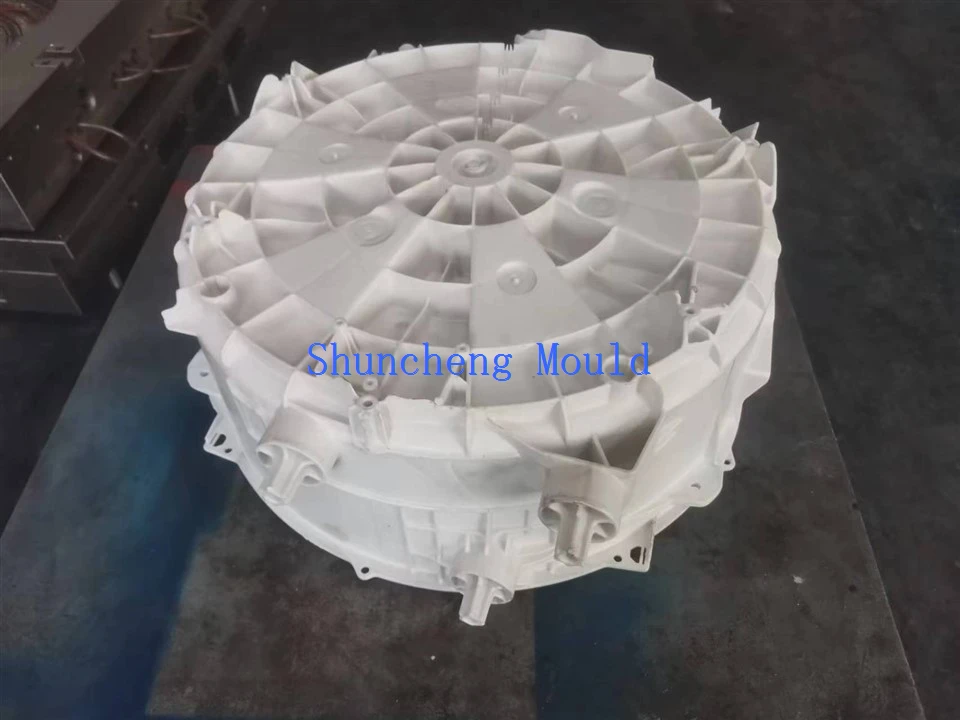
We choose the surface treatment process that best suits the requirements of the mould. We also perform regular quality checks after the surface treatment to make sure that the coating or finish is applied evenly and has the desired properties.
Assembly and Testing
Once the surface treatment is complete, the mould is ready for assembly. This is where all the components of the mould are put together. We carefully assemble the mould to ensure that all the parts fit together properly and that the mould functions correctly.
After the assembly is complete, the mould undergoes testing. This is a process that involves injecting molten plastic into the mould to see if it can produce a high-quality washing machine part. We perform a series of tests to check the dimensions, appearance, and functionality of the part. If any issues are found, we make the necessary adjustments to the mould and repeat the testing process until the part meets the required specifications.
Conclusion
So, there you have it! That's how a washing machine mould is made. It's a complex and precise process that requires a lot of skill and expertise. As a washing machine mould supplier, we're committed to providing our clients with high-quality moulds that meet their specific requirements.
If you're in the market for a washing machine mould, we'd love to hear from you. We offer a wide range of Washing Machine Control Panel Seat Mould, Washing Machine Rear Drum Mould, and Washing Machine Injection Mould. Contact us today to discuss your needs and get a quote.
References
- "Injection Molding Handbook" by O. Olsson and K. Tollefson
- "Mould Design for Plastics" by R. Crawford
- "Manufacturing Engineering and Technology" by S. Kalpakjian and S. Schmid