

Hey there! As a front bumper mould supplier, I've had my fair share of experiences in designing ejector systems for these moulds. An effective ejector system is super crucial for a front bumper mould, 'cause it directly impacts the quality and efficiency of the production process. In this blog, I'll walk you through the key steps and considerations to design an effective ejector system for a front bumper mould.
Understanding the Basics of Ejector Systems
First off, let's talk about what an ejector system is. In simple terms, it's the part of the mould that pushes the finished front bumper out of the mould cavity once the plastic has cooled and solidified. There are different types of ejector systems, like ejector pins, ejector sleeves, and stripper plates. Each type has its own pros and cons, and the choice depends on the specific design of the front bumper and the requirements of the production process.
Ejector pins are probably the most common type. They're small, cylindrical rods that are placed in the mould cavity. When the mould opens, the pins are pushed forward to eject the part. Ejector sleeves are similar to pins but have a hollow center, which can be useful for ejecting parts with holes or bosses. Stripper plates are larger, flat plates that are used to push the part out of the mould. They're often used for parts with large, flat surfaces.
Analyzing the Front Bumper Design
Before you start designing the ejector system, you need to have a good understanding of the front bumper design. Look at the shape, size, and features of the bumper. Are there any undercuts, ribs, or bosses? These features can affect the way the part is ejected from the mould.
For example, if the bumper has undercuts, you'll need to use a more complex ejector system, like a side-action ejector. Side-action ejectors are designed to move in a direction other than the main opening direction of the mould, allowing them to release the undercuts. If the bumper has ribs or bosses, you'll need to make sure that the ejector pins or sleeves are placed in the right locations to avoid damaging these features.
Another important consideration is the wall thickness of the bumper. Thicker walls can require more force to eject, so you may need to use more ejector pins or a stronger ejector system. On the other hand, thinner walls can be more delicate and may require a gentler ejection process.
Choosing the Right Ejector Components
Once you've analyzed the front bumper design, it's time to choose the right ejector components. As I mentioned earlier, the choice of components depends on the design of the bumper and the requirements of the production process.
When choosing ejector pins or sleeves, consider the diameter, length, and material. The diameter of the pins or sleeves should be small enough to fit in the mould cavity but large enough to provide enough force to eject the part. The length of the pins or sleeves should be long enough to reach the part but not so long that they interfere with the operation of the mould. The material of the pins or sleeves should be strong and wear-resistant to ensure a long service life.
You'll also need to choose the right ejector plate and ejector rod. The ejector plate is the part that holds the ejector pins or sleeves, and the ejector rod is the part that connects the ejector plate to the mould. Make sure that the ejector plate and rod are strong enough to withstand the forces involved in the ejection process.
Determining the Ejector Pin Placement
The placement of the ejector pins is crucial for an effective ejector system. You want to make sure that the pins are placed in the right locations to evenly distribute the ejection force and avoid damaging the part.
One way to determine the pin placement is to use a finite element analysis (FEA) software. FEA software can simulate the ejection process and show you where the stresses and strains are concentrated in the part. Based on the results of the simulation, you can adjust the pin placement to minimize the stresses and ensure a smooth ejection.
Another way is to use your experience and common sense. Look at the design of the bumper and think about where the part is likely to stick to the mould. Place the ejector pins in these areas to provide the necessary force to eject the part. You can also place pins in areas where the part is thickest or where there are no important features, to avoid damaging the part.
Considering the Ejection Force and Stroke
The ejection force and stroke are two important parameters that need to be considered when designing the ejector system. The ejection force is the amount of force required to eject the part from the mould, and the stroke is the distance that the ejector pins or sleeves need to travel to eject the part.
The ejection force depends on several factors, including the size and shape of the part, the material of the part, and the surface finish of the mould. You can use empirical formulas or FEA software to calculate the ejection force. Once you know the ejection force, you can choose the right ejector system and components to provide the necessary force.
The stroke depends on the thickness of the part and the design of the ejector system. You need to make sure that the stroke is long enough to eject the part completely but not so long that it causes damage to the mould or the ejector system.
Designing the Ejector Return System
In addition to the ejector system, you also need to design a return system. The return system is used to move the ejector pins or sleeves back to their original positions after the part has been ejected.

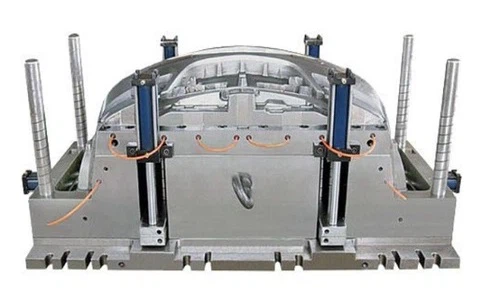
There are different types of return systems, like spring-loaded return systems and mechanical return systems. Spring-loaded return systems use springs to push the ejector pins or sleeves back to their original positions. They're simple and inexpensive but may not be suitable for high-speed or high-volume production. Mechanical return systems use mechanical components, like cams or levers, to move the ejector pins or sleeves back. They're more complex and expensive but can provide more precise control over the return motion.
Testing and Optimizing the Ejector System
Once you've designed the ejector system, it's important to test it to make sure that it works effectively. You can use a prototype mould to test the system. Make a few parts using the prototype mould and observe the ejection process. Look for any signs of damage to the part or the mould, and make sure that the part is ejected smoothly.
If you notice any problems, you'll need to optimize the ejector system. This may involve changing the placement of the ejector pins or sleeves, adjusting the ejection force or stroke, or modifying the return system. Keep testing and optimizing the system until you're satisfied with the results.
Conclusion
Designing an effective ejector system for a front bumper mould is a complex process that requires a good understanding of the front bumper design, the ejector system components, and the production process. By following the steps outlined in this blog, you can design an ejector system that will ensure a smooth and efficient ejection process, resulting in high-quality front bumpers.
If you're in the market for a front bumper mould or need help with ejector system design, don't hesitate to reach out. We're a [your company's specialty] front bumper mould supplier, and we're here to provide you with the best solutions. You can check out our Compression Molds For Automotive, Car Front Bumper Mold, and Bumper Injection Mould on our website. Let's start a conversation and see how we can work together to meet your needs.
References
- "Mold Design Handbook" by Paul A. Wheeler
- "Injection Molding Handbook" by O. Olafsson
- "Plastic Part Design for Injection Molding" by John Beaumont