

Hey there! As a grille mould supplier, I often get asked about the hardness of grille moulds. So, let's dive right into it and break down what this hardness really means and why it's super important.
First off, what do we mean by the hardness of a grille mould? Well, hardness in the context of moulds is a measure of how resistant the mould material is to deformation, scratching, and wear. You see, when we're making grille parts, the mould has to go through a lot. It's constantly in contact with molten plastic at high temperatures and under high pressure. If the mould isn't hard enough, it can quickly start to show signs of wear and tear, which can lead to defects in the grille parts being produced.
There are several factors that affect the hardness of a grille mould. One of the main ones is the material used to make the mould. Common materials for grille moulds include tool steels, such as P20, H13, and S7. Each of these steels has different hardness properties. For example, P20 is a pre - hardened steel that is relatively easy to machine and has a good balance of hardness and toughness. It's often used for less complex grille moulds or for prototypes. On the other hand, H13 is a hot - work tool steel that is known for its high hardness and excellent resistance to thermal fatigue. It's a great choice for high - volume production of grille parts, especially when the mould is subjected to repeated heating and cooling cycles.
The heat treatment process also plays a crucial role in determining the hardness of the grille mould. After the mould is machined from the raw steel, it usually undergoes a series of heat treatment steps. These steps can include quenching and tempering. Quenching involves rapidly cooling the heated steel to increase its hardness, while tempering is done to relieve internal stresses and improve the toughness of the steel. By carefully controlling the heat treatment process, we can achieve the desired hardness for the grille mould.
Another factor is the surface treatment of the mould. A hard surface coating can significantly increase the overall hardness and wear resistance of the mould. For example, coatings like titanium nitride (TiN) or chromium nitride (CrN) can be applied to the surface of the mould. These coatings not only make the mould harder but also reduce friction between the mould and the plastic, which can improve the quality of the grille parts and extend the life of the mould.
Now, why is the hardness of a grille mould so important? Well, for starters, it directly impacts the quality of the grille parts. A hard mould is less likely to deform during the injection - molding process, which means that the grille parts will have a more consistent shape and size. This is crucial, especially in industries like automotive and air conditioning, where precise dimensions are required for proper fit and function.
In addition, a hard grille mould has a longer service life. Since it's more resistant to wear and tear, it can produce a larger number of grille parts before it needs to be repaired or replaced. This can save a lot of money in the long run for manufacturers. For example, if a soft mould starts to wear out after producing a few thousand grille parts, a hard mould might be able to produce tens or even hundreds of thousands of parts before showing significant signs of wear.
Let's talk a bit about the different types of grille moulds and how hardness matters for each of them.
If you're interested in Air Conditioner Grille Mold, the hardness of the mould is essential for ensuring that the grille has the right shape and strength. Air conditioner grilles need to be able to withstand some mechanical stress and also have a smooth surface finish. A hard mould can help achieve these requirements by maintaining its shape during the injection - molding process and preventing any surface defects on the grille.
Radiator Grille Mould is another important type. Radiator grilles are often exposed to harsh environmental conditions, including heat, dust, and vibrations. A hard mould can produce radiator grilles that are more durable and can better withstand these conditions. The hardness of the mould also ensures that the grille has the proper structure to allow for efficient air flow through the radiator.
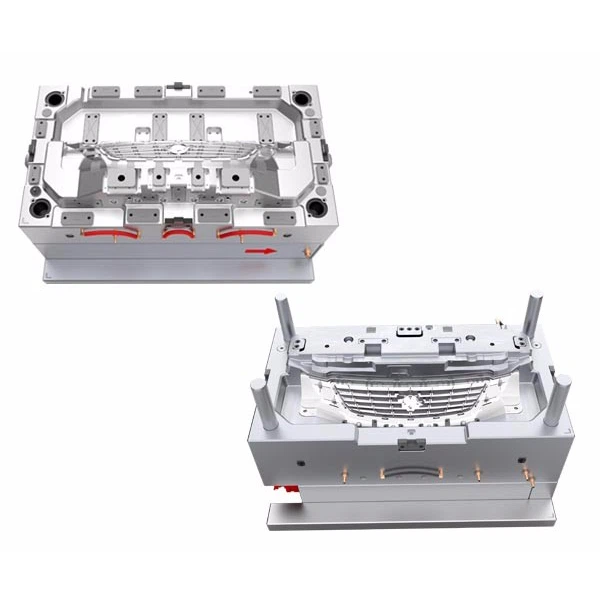
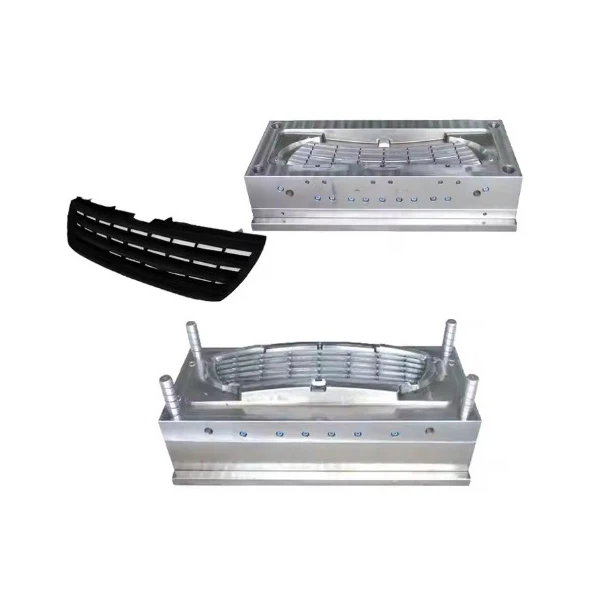
Front Grille Mould is crucial for the aesthetics and functionality of a vehicle. The front grille is one of the most visible parts of a car, so it needs to have a high - quality finish. A hard mould can help produce front grilles with sharp edges and smooth surfaces, which are essential for a good - looking and well - functioning grille.
As a grille mould supplier, we understand the importance of getting the hardness of the mould just right. We use advanced materials and state - of - the - art manufacturing processes to ensure that our grille moulds have the optimal hardness for each application. Whether you're in the automotive industry, the air conditioning industry, or any other field that requires grille parts, we can provide you with a high - quality grille mould that meets your specific needs.
If you're in the market for a grille mould, don't hesitate to reach out. We're here to help you find the perfect solution for your production requirements. Whether you need a simple prototype mould or a high - volume production mould, we have the expertise and resources to deliver. Contact us today to start the conversation about your grille mould needs, and let's work together to create the best grille parts for your business.
References
- "Tool and Die Making Handbook" by George E. Dieter
- "Plastic Injection Molding Handbook" by Rosato and Rosato