

Hey there! As a supplier of Washing Machine Moulds, I often get asked if there are software tools for simulating the performance of these moulds. Well, you bet there are! And in this blog, I'm gonna spill the beans on what these tools are, how they work, and why they're a game - changer for us in the washing machine mould business.
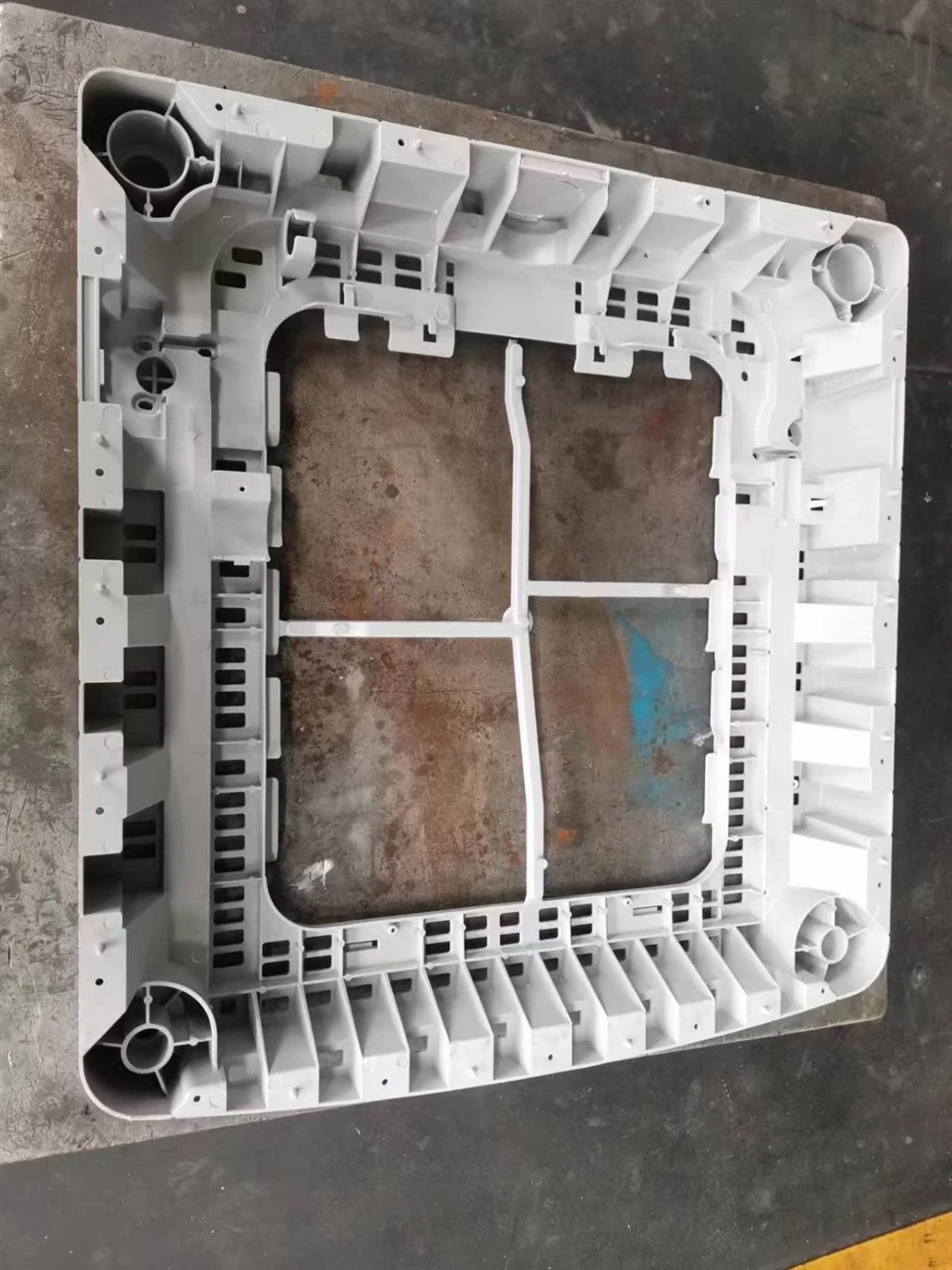
Let's start by understanding why mould performance simulation is so crucial. When we're making washing machine moulds, like the Washing Machine Base Mould, Washing Machine Plastic Injection Mold, and Plastic Washing Machine Mould, we need to make sure they're gonna work just right. A faulty mould can lead to all sorts of problems, like defective parts, production delays, and extra costs. That's where simulation software comes in handy.
One of the most popular software tools for mould simulation is Moldflow. It's like a crystal ball for mould designers. Moldflow can simulate the entire injection - molding process, from the moment the plastic resin is injected into the mould to when the part cools and solidifies. It takes into account things like the type of plastic, the temperature, the pressure, and the flow rate. By running simulations with Moldflow, we can predict how the plastic will flow inside the mould, where there might be air traps or weld lines, and how the final part will shrink.
Another great tool is Autodesk Moldflow Insight. This software is super powerful and offers a wide range of features. It allows us to create detailed 3D models of our washing machine moulds and then simulate the injection - molding process in a virtual environment. We can test different design variations, change the process parameters, and see how they affect the final part quality. For example, if we're designing a Plastic Washing Machine Mould, we can use Autodesk Moldflow Insight to figure out the best gate location. A good gate location is crucial because it affects how the plastic fills the mould cavity evenly.
Simufact Forming is also a useful tool, especially when it comes to simulating the manufacturing process of the mould itself. Washing machine moulds are often made through processes like machining, forging, and heat treatment. Simufact Forming can simulate these processes to predict how the mould material will deform, how the internal stresses will be distributed, and what the final shape and properties of the mould will be. This helps us optimize the manufacturing process and ensure that the mould has the right strength and durability.
Now, let's talk about how these simulation tools actually work. Most of them use a technique called finite element analysis (FEA). FEA breaks down the complex geometry of the mould and the plastic part into small, simple elements. Then, it applies mathematical equations to each element to calculate things like stress, strain, temperature, and flow. By doing this for all the elements in the model, the software can create a detailed picture of how the entire system will behave during the injection - molding process.
For instance, when we're using Moldflow to simulate the injection of plastic into a Washing Machine Base Mould, the software first creates a mesh of the mould cavity. Then, it calculates the flow of the plastic through the mesh based on the properties of the plastic and the injection conditions. It can show us in real - time how the plastic fills the cavity, where it might be flowing too fast or too slow, and if there are any areas where the plastic isn't reaching.

The benefits of using these simulation tools are huge. First of all, they save us a ton of time and money. Instead of making a physical prototype of the mould and then testing it, which can be expensive and time - consuming, we can use simulation software to test different designs and processes in a virtual environment. This allows us to catch potential problems early on and make changes before we start manufacturing the actual mould.
Secondly, these tools improve the quality of our washing machine moulds. By simulating the injection - molding process, we can optimize the design of the mould and the process parameters to ensure that the final parts are of high quality. We can reduce the number of defects, like warping, sink marks, and short shots, and improve the overall part appearance and functionality.
Thirdly, simulation software gives us a competitive edge in the market. In today's fast - paced manufacturing industry, we need to be able to deliver high - quality moulds quickly and at a reasonable price. By using these tools, we can design and manufacture our Washing Machine Plastic Injection Mold more efficiently, which means we can offer better products to our customers and stay ahead of the competition.
However, it's important to note that simulation software is not a magic wand. It's just a tool, and it needs to be used correctly. We still need experienced designers and engineers who know how to interpret the simulation results and make the right decisions. Also, the accuracy of the simulation depends on the quality of the input data. If we use incorrect values for things like the plastic properties or the process parameters, the simulation results might not be accurate.
So, if you're in the market for a high - quality washing machine mould, whether it's a Washing Machine Base Mould, a Washing Machine Plastic Injection Mold, or a Plastic Washing Machine Mould, you can count on us. We use the latest simulation software to ensure that our moulds are designed and manufactured to the highest standards.
If you're interested in learning more about our products or have any questions about washing machine moulds, feel free to reach out to us. We're always happy to have a chat and discuss how we can meet your specific needs. Whether you're a small - scale manufacturer or a large - scale company, we've got the expertise and the technology to provide you with the best washing machine mould solutions.
References
- "Injection Molding Handbook" by O. Olszewski
- "Finite Element Analysis in Engineering" by T. Belytschko, W. K. Liu, and B. Moran
- "Mold Design and Manufacturing for Injection Molding" by P. F. O'Neill