

Tolerance in plastic toy mould design refers to the allowable deviation from a specified dimension or characteristic of the mould. It plays a pivotal role in ensuring the quality, functionality, and safety of plastic toys. As a Plastic Toy Mould supplier, understanding and managing tolerance is not just a technical necessity but a cornerstone of our business.
Understanding Tolerance in Plastic Toy Mould Design
In the realm of plastic toy mould design, tolerance is a multi - faceted concept. It encompasses dimensional tolerance, which dictates how much a particular dimension of the mould can vary from the intended size. For example, if a toy part is designed to have a length of 50mm, a dimensional tolerance of ±0.5mm means that the actual length of the part produced by the mould can range from 49.5mm to 50.5mm.

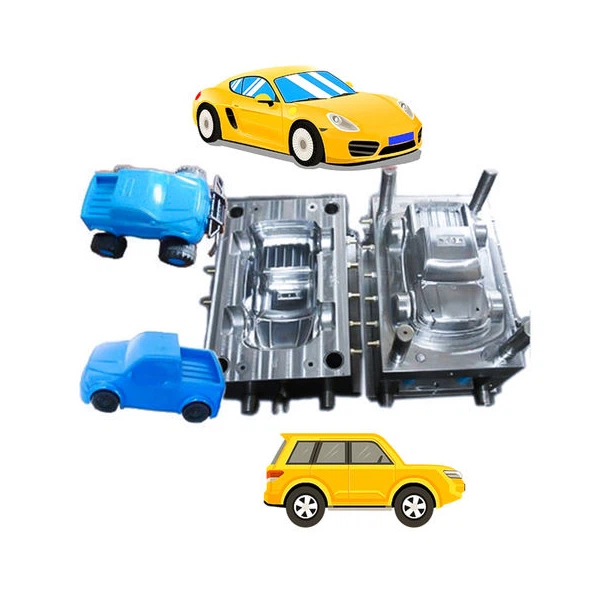
Surface finish tolerance is another crucial aspect. The surface of a plastic toy should be smooth, free of burrs, and have an appropriate texture. Surface finish tolerance defines the acceptable level of roughness, waviness, or other surface irregularities. A high - quality plastic toy for a young child may require a very low surface roughness to prevent any potential harm to the child's skin.
Geometric tolerance is also significant. It deals with the shape, orientation, and location of various features on the toy part. For instance, if a toy has a hole that needs to be precisely located for a button or a small accessory to fit, geometric tolerance ensures that the hole is in the correct position within an acceptable range.
Why Tolerance is Important in Plastic Toy Mould Design
Quality Assurance
One of the primary reasons why tolerance is important is quality assurance. When the tolerance in a plastic toy mould is well - defined and controlled, the toys produced will have consistent quality. Every toy coming out of the mould will closely resemble the design specifications, ensuring that customers receive products that meet their expectations. For example, if a toy is a building block, precise tolerance will ensure that the blocks fit together properly, providing a satisfying play experience for children.
Functionality
Tolerance directly impacts the functionality of plastic toys. Toys often have moving parts, interlocking components, or features that need to work in a specific way. If the tolerance is too large, the parts may not fit together correctly, or the toy may not perform its intended functions. For example, a toy car with wheels that are not within the specified tolerance may not roll smoothly or may even get stuck. On the other hand, if the tolerance is too small, it may be difficult to assemble the toy, leading to production inefficiencies.
Safety
Safety is of utmost importance when it comes to plastic toys, especially those intended for young children. Proper tolerance control helps to eliminate potential safety hazards. For example, if a toy has small parts, tight tolerance ensures that these parts are securely attached and will not break off easily, reducing the risk of choking. Additionally, smooth surface finish tolerance prevents sharp edges or rough surfaces that could cause cuts or abrasions to a child's skin.
Cost - Effectiveness
While it may seem counterintuitive, proper tolerance management can actually lead to cost - effectiveness. By setting appropriate tolerances, we can avoid over - machining or over - manufacturing, which can be expensive. At the same time, it reduces the number of defective products, minimizing waste and rework. For example, if a mould is designed with overly tight tolerances, it may require more precise and expensive machining processes, increasing the production cost. On the other hand, if the tolerances are too loose, there will be a higher rate of defective products, which also adds to the cost.
Our Approach as a Plastic Toy Mould Supplier
As a Plastic Toy Mould supplier, we have a comprehensive approach to managing tolerance in our mould design.
Advanced Design Tools
We utilize advanced computer - aided design (CAD) and computer - aided manufacturing (CAM) tools to precisely define and analyze tolerance in our mould designs. These tools allow us to simulate the manufacturing process and predict how different tolerance levels will affect the final product. For example, we can use CAD software to create a 3D model of the toy part and specify the exact tolerance for each dimension. Then, CAM software can be used to generate the machining instructions for the mould, ensuring that the tolerance is maintained during the manufacturing process.
Quality Control Measures
We have a strict quality control system in place to monitor and verify the tolerance of our plastic toy moulds. This includes using precision measuring instruments such as coordinate measuring machines (CMMs) to measure the dimensions of the mould and the parts produced by it. Our quality control team conducts regular inspections at various stages of the manufacturing process to ensure that the tolerance is within the specified range. If any deviation is detected, we take immediate corrective actions to bring the mould back into compliance.
Collaboration with Customers
We believe in close collaboration with our customers. When designing a plastic toy mould, we work closely with our customers to understand their specific requirements, including the desired tolerance levels. We take into account factors such as the intended use of the toy, the age group of the target market, and any regulatory requirements. By involving our customers in the design process, we can ensure that the final mould meets their expectations and provides the best possible product for their customers.
Related Products
We offer a wide range of plastic toy moulds, including Child Safety Seat Mold and Plastic Toy Injection Mould. Our Plastic Toy Mould products are designed with the highest level of precision and tolerance control to ensure the quality and safety of the toys produced.
Conclusion
In conclusion, tolerance in plastic toy mould design is a critical factor that affects the quality, functionality, safety, and cost - effectiveness of plastic toys. As a Plastic Toy Mould supplier, we are committed to understanding and managing tolerance in every aspect of our mould design and manufacturing process. By using advanced tools, strict quality control measures, and close collaboration with our customers, we ensure that our plastic toy moulds meet the highest standards.
If you are in the market for high - quality plastic toy moulds, we invite you to contact us for a detailed discussion about your requirements. Our team of experts is ready to work with you to design and manufacture the perfect mould for your plastic toys.
References
- Groover, M. P. (2010). Fundamentals of Modern Manufacturing: Materials, Processes, and Systems. Wiley.
- Dieter, G. E., & Schmidt, L. C. (2008). Engineering Design: A Materials and Processing Approach. McGraw - Hill.
- ASME Y14.5 - 2009. Dimensioning and Tolerancing. American Society of Mechanical Engineers.