

The automotive industry is a highly competitive and innovative field, where every component plays a crucial role in ensuring the safety, performance, and aesthetics of a vehicle. The front bumper is one of the most visible and important parts of a car, not only protecting the vehicle from collisions but also contributing to its overall design. As a front bumper mould supplier, we understand the significance of producing high-quality moulds that meet the strict requirements of the automotive industry. One of the key factors in determining the quality of a front bumper mould is its hardness. In this blog post, we will explore the hardness requirements for a front bumper mould and why they are so important.
Understanding the Role of Hardness in Front Bumper Moulds
Hardness is a fundamental property of materials that measures their resistance to deformation, wear, and indentation. In the context of front bumper moulds, hardness is crucial for several reasons. Firstly, a front bumper mould is subjected to high pressures and temperatures during the injection molding process. The molten plastic is injected into the mould cavity at high speed and pressure, which can cause significant stress on the mould surface. A hard mould can withstand these pressures without deforming, ensuring that the final product has the correct shape and dimensions.
Secondly, hardness is essential for wear resistance. The front bumper mould is used repeatedly to produce a large number of bumpers. Each time the mould is used, the plastic rubs against the mould surface, causing wear. A hard mould surface can resist this wear, maintaining its smoothness and precision over a longer period of time. This not only ensures the quality of the bumper but also reduces the need for frequent mould repairs and replacements, saving time and money for the manufacturer.
Thirdly, hardness affects the surface finish of the bumper. A hard mould surface can produce a smoother and more uniform finish on the bumper. This is important for both the aesthetic appeal of the vehicle and its aerodynamics. A smooth surface reduces drag, which can improve fuel efficiency and performance.
Factors Affecting the Hardness Requirement
The hardness requirement for a front bumper mould depends on several factors, including the type of plastic used, the design of the bumper, and the production volume.
Type of Plastic
Different plastics have different properties, and some are more abrasive than others. For example, polypropylene (PP) is a commonly used plastic for front bumpers due to its low cost, good impact resistance, and ease of processing. However, it can be quite abrasive, especially when reinforced with glass fibers. In this case, a harder mould is required to resist the wear caused by the plastic. On the other hand, if a softer plastic such as thermoplastic elastomer (TPE) is used, the hardness requirement may be lower.
Bumper Design
The design of the front bumper also plays a role in determining the hardness requirement. A bumper with complex shapes and thin walls may require a higher hardness to ensure that the mould can withstand the high pressures and stresses during the injection molding process. Additionally, if the bumper has fine details or textures, a harder mould surface is needed to accurately reproduce these features.
Production Volume
The production volume is another important factor. If a large number of bumpers are to be produced, the mould will be subjected to more wear and tear. In this case, a higher hardness is required to ensure the longevity of the mould and the consistency of the product quality. Conversely, for low-volume production, a lower hardness may be acceptable.
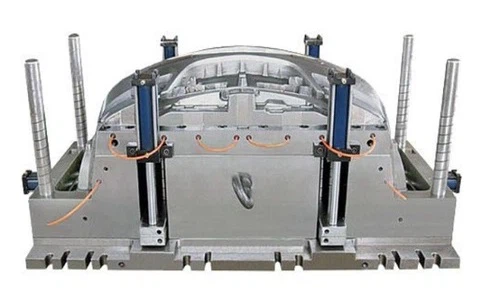
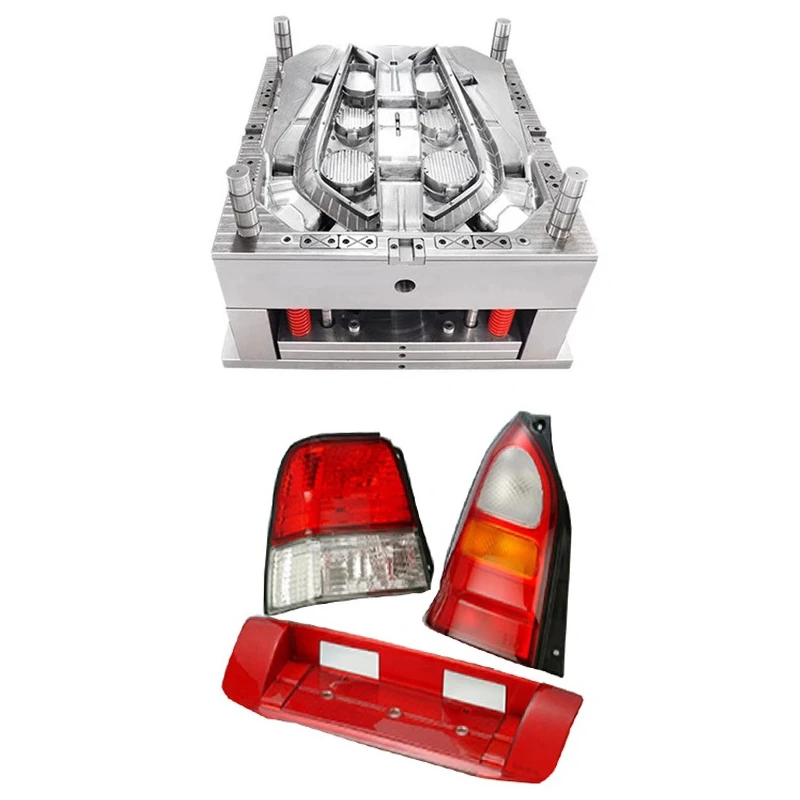
Recommended Hardness Levels
The recommended hardness level for a front bumper mould typically ranges from 48 to 52 HRC (Rockwell hardness scale). This range provides a good balance between wear resistance, toughness, and machinability. A hardness below this range may result in excessive wear and deformation of the mould, while a hardness above this range may make the mould too brittle and difficult to machine.
However, it's important to note that these are general guidelines, and the actual hardness requirement may vary depending on the specific application. For example, if the bumper is used in a high-performance vehicle or in a harsh environment, a higher hardness may be necessary.
Our Expertise in Front Bumper Moulds
As a front bumper mould supplier, we have extensive experience in producing high-quality moulds that meet the hardness requirements of our customers. We use advanced materials and manufacturing processes to ensure that our moulds have the optimal hardness, wear resistance, and surface finish.
Our team of experts works closely with customers to understand their specific needs and requirements. We can provide customized solutions based on the type of plastic, bumper design, and production volume. Whether you need a Car Front Bumper Mold for a small car or a large SUV, we have the expertise and capabilities to deliver a high-quality product.
In addition to front bumper moulds, we also offer a wide range of other automotive moulds, including Car Lamp Injection Mold and Rear Bumper Mould. Our comprehensive product portfolio allows us to provide a one-stop solution for all your automotive moulding needs.
Contact Us for Your Front Bumper Mould Needs
If you are in the market for a front bumper mould, we invite you to contact us for a consultation. Our team of experts can provide you with detailed information about our products and services, as well as answer any questions you may have. We are committed to providing our customers with the highest level of quality and service, and we look forward to working with you to meet your front bumper mould requirements.
References
- "Plastic Materials in Automotive Engineering" by John Murphy
- "Injection Molding Handbook" by O. Olafsson
- "Automotive Design and Manufacturing" by David Crolla