

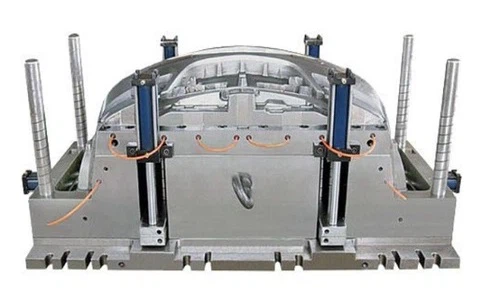
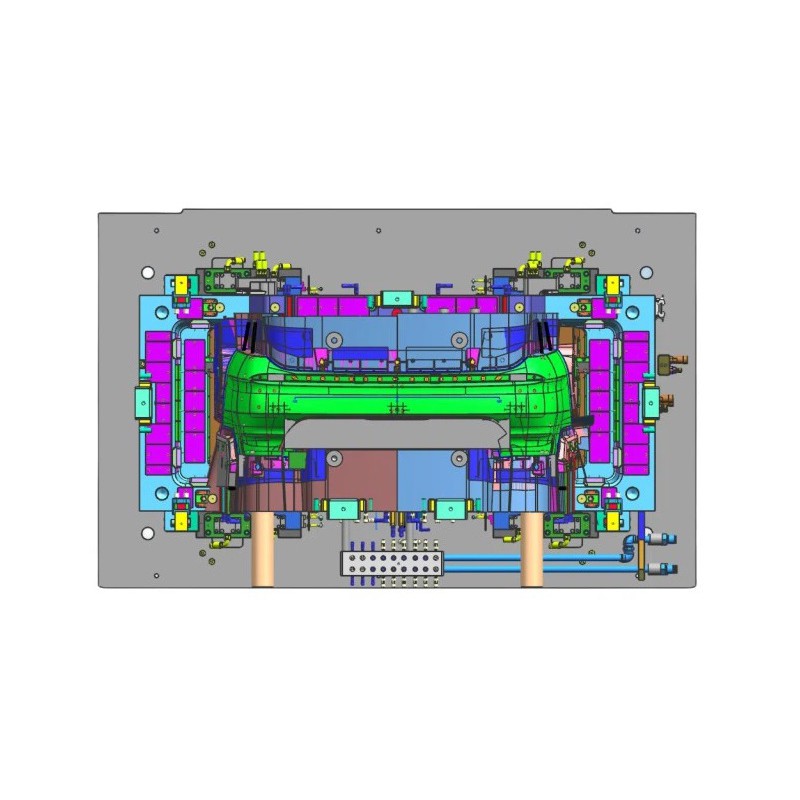
The hardness of a front bumper mould is a critical factor that significantly influences the quality, durability, and performance of the mould itself, as well as the final front bumper products. As a front bumper mould supplier, understanding and controlling this property is of utmost importance.
Understanding the Concept of Hardness in Moulds
Hardness, in the context of front - end bumper moulds, refers to the material's ability to resist deformation, abrasion, and indentation. It is a fundamental mechanical property that is crucial for ensuring the long - term functionality of the mould. When a mould is used in the manufacturing process, it is subjected to high pressures, temperatures, and mechanical forces. A mould with appropriate hardness can withstand these conditions without significant wear or damage.
There are several methods to measure the hardness of a front bumper mould. The Rockwell hardness test is one of the most commonly used methods. In this test, a small indenter is pressed into the surface of the mould material, and the depth of the indentation is measured. The Rockwell hardness number is then determined based on this measurement. Another widely used method is the Brinell hardness test, which uses a ball indenter and measures the diameter of the indentation to calculate the hardness value.
Factors Affecting the Hardness of Front Bumper Moulds
Material Selection
The choice of material is the most fundamental factor affecting the hardness of a front bumper mould. Commonly used materials for front bumper moulds include tool steels, such as P20, H13, and S7. Each of these steels has different chemical compositions and mechanical properties. For example, P20 is a pre - hardened steel that offers good machinability and a moderate level of hardness. It is often used for low - volume production of front bumper moulds. H13, on the other hand, is a hot - work tool steel with excellent heat resistance and high hardness. It is suitable for high - volume production where the mould is exposed to high temperatures and pressures during the injection molding process. S7 is a shock - resistant tool steel, which combines relatively high hardness with good toughness, making it suitable for applications where the mould may be subject to impact forces.
Heat Treatment
Heat treatment is a crucial process that can significantly alter the hardness of a front bumper mould. The main heat - treatment processes for mould steels include quenching and tempering. Quenching involves heating the steel to a high temperature and then rapidly cooling it in a quenching medium, such as oil or water. This process forms a hard and brittle martensitic structure in the steel. However, martensite is too brittle for practical use, so tempering is carried out after quenching. Tempering involves reheating the quenched steel to a lower temperature and holding it for a certain period of time. This process reduces the brittleness of the martensite and improves the toughness of the steel while maintaining a relatively high hardness.
Surface Treatment
Surface treatment can also enhance the hardness of a front bumper mould and improve its wear resistance. One common surface - treatment method is nitriding. Nitriding involves introducing nitrogen into the surface layer of the mould steel, forming a hard nitride layer. This layer can significantly improve the surface hardness and wear resistance of the mould, reducing the friction between the mould and the plastic material during the injection - molding process. Another surface - treatment option is chrome plating, which provides a smooth, hard surface that is resistant to corrosion and wear.
Importance of Appropriate Hardness in Front Bumper Moulds
Product Quality
The hardness of the front bumper mould directly affects the quality of the final front bumper products. A mould with the correct hardness can maintain its shape and dimensions accurately during the injection - molding process. This ensures that the front bumpers produced have consistent wall thicknesses, smooth surfaces, and precise geometries. If the mould is too soft, it may deform under the pressure of the injection - molding process, resulting in defective products with uneven surfaces or incorrect dimensions.
Mould Lifespan
The hardness of the mould is closely related to its lifespan. A mould with high hardness can withstand the repeated wear and tear associated with the injection - molding process, including the friction between the mould and the plastic material, as well as the thermal stress caused by the heating and cooling cycles. This reduces the frequency of mould repairs and replacements, saving both time and cost for the manufacturer.
Production Efficiency
An appropriately hard front bumper mould can improve production efficiency. Since a hard - wearing mould is less likely to suffer from damage or wear, it requires less downtime for maintenance and repair. This allows for a more continuous production process, increasing the overall output of front bumpers.
Our Offerings as a Front Bumper Mould Supplier
As a front bumper mould supplier, we are committed to providing high - quality moulds with optimal hardness. Our team of experienced engineers carefully selects the most suitable materials for each project based on the specific requirements of the client, such as the production volume, the type of plastic material used, and the complexity of the bumper design.
We use state - of - the - art heat - treatment and surface - treatment technologies to ensure that the moulds we produce have the desired hardness and performance characteristics. Our quality control process includes comprehensive hardness testing using advanced measuring equipment to guarantee that each mould meets the highest standards.
We offer a wide range of moulds, including Car Front Bumper Mold, Rear Bumper Mould, and Bumper Injection Mould. Each of these products is designed and manufactured to meet the diverse needs of our clients in the automotive industry.
Contact Us for Your Front Bumper Mould Needs
If you are in the market for high - quality front bumper moulds, we invite you to contact us for further discussion. Our dedicated sales team is ready to provide you with detailed information about our products, answer any questions you may have, and work with you to develop the best solution for your specific requirements. With our expertise and commitment to quality, we are confident that we can be your reliable partner in front bumper mould supply.
References
- Callister, W. D., & Rethwisch, D. G. (2010). Materials Science and Engineering: An Introduction. Wiley.
- Dieter, G. E. (1986). Mechanical Metallurgy. McGraw - Hill.
- Kalpakjian, S., & Schmid, S. R. (2008). Manufacturing Engineering and Technology. Pearson Prentice Hall.