

As a seasoned supplier of grille cover moulds, I've witnessed firsthand the profound impact that temperature can have on the manufacturing process and the final product. In this blog, I'll delve into the various effects of temperature on a grille cover mould, exploring how it influences everything from material flow to the overall quality of the finished grille covers.
Material Flow and Viscosity
One of the most significant ways temperature affects a grille cover mould is through its impact on the material's flow and viscosity. Most grille covers are made from plastic materials such as polypropylene (PP), acrylonitrile butadiene styrene (ABS), or polycarbonate (PC). These thermoplastic materials are heated to a molten state before being injected into the mould cavity.
The temperature of the molten plastic plays a crucial role in determining its viscosity. At higher temperatures, the plastic becomes less viscous, meaning it flows more easily. This can be beneficial as it allows the plastic to fill the intricate details of the grille cover mould more completely, resulting in a more accurate reproduction of the mould's design. However, if the temperature is too high, the plastic may flow too quickly, leading to issues such as flash (excess plastic that seeps out of the mould cavity) or air traps (bubbles in the finished product).
Conversely, at lower temperatures, the plastic becomes more viscous and flows less easily. This can make it difficult for the plastic to fill the mould cavity, especially in areas with thin walls or complex geometries. As a result, the finished grille cover may have incomplete sections or poor surface finish. Therefore, it's essential to maintain the optimal temperature range for the specific plastic material being used to ensure proper material flow and a high - quality finished product.
Shrinkage and Warping
Temperature also has a significant impact on the shrinkage and warping of the grille cover during the cooling process. After the molten plastic is injected into the mould cavity, it begins to cool and solidify. As it cools, the plastic contracts, which can lead to shrinkage. The amount of shrinkage depends on several factors, including the type of plastic material, the thickness of the grille cover, and the cooling rate.

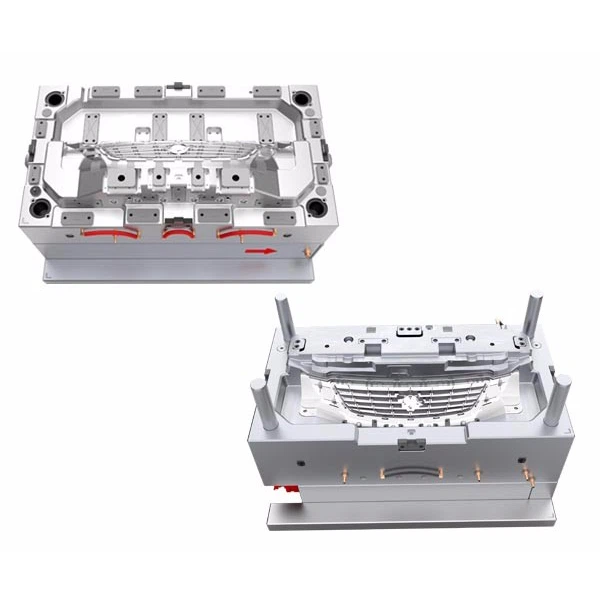
If the cooling process is not properly controlled, uneven shrinkage can occur, causing the grille cover to warp. For example, if one part of the grille cover cools faster than another, the faster - cooling area will shrink more, leading to a distortion in the shape of the finished product. This can be a major problem, as warped grille covers may not fit properly in the intended application, resulting in poor aesthetics and potential functionality issues.
To minimize shrinkage and warping, it's important to control the cooling rate of the plastic in the mould. This can be achieved by using a cooling system within the mould, such as water channels or cooling pins, to ensure that the plastic cools evenly. Additionally, the temperature of the mould itself can be regulated to control the cooling rate. A well - designed cooling system can help maintain a consistent temperature throughout the mould cavity, reducing the risk of uneven shrinkage and warping.
Mould Life and Wear
The temperature of the mould during the manufacturing process can also affect its lifespan and wear. High temperatures can cause thermal stress on the mould, which can lead to cracking, deformation, and other forms of damage over time. This is especially true for moulds made from materials with low thermal conductivity, as they are more likely to experience temperature gradients and thermal shock.
On the other hand, if the mould temperature is too low, the plastic may not flow properly, leading to increased friction between the plastic and the mould surface. This can cause excessive wear on the mould, reducing its lifespan and increasing the need for maintenance and replacement.
To extend the life of the grille cover mould, it's important to maintain a stable and appropriate mould temperature. This can be achieved through the use of temperature - control systems, such as heaters or coolers, to keep the mould within the optimal temperature range. Regular maintenance and inspection of the mould can also help identify and address any potential issues before they become major problems.
Impact on Surface Finish
The temperature of the mould can significantly influence the surface finish of the grille cover. A higher mould temperature can result in a smoother surface finish on the grille cover. This is because at higher temperatures, the plastic has a lower viscosity and can better conform to the surface of the mould cavity. As a result, the finished product will have a more polished and professional appearance.
In contrast, a lower mould temperature can lead to a rougher surface finish. The plastic may not flow as smoothly over the mould surface, leaving behind a textured or uneven appearance. This can be a concern, especially for grille covers that are visible on the exterior of a vehicle or an appliance, as a poor surface finish can detract from the overall aesthetics of the product.
Examples of Different Grille Cover Moulds
We offer a wide range of grille cover moulds, including Automotive Radiator Grille Tooling Mold, Air Conditioner Grille Mold, and Front Grille Mould. Each of these moulds has its own unique requirements when it comes to temperature control.
For automotive radiator grille tooling molds, the temperature needs to be carefully regulated to ensure that the grille cover can withstand the high - temperature environment under the hood of a vehicle. The plastic used for these grille covers often has specific heat - resistant properties, and the mould temperature must be adjusted accordingly to achieve the best results.
Air conditioner grille molds require a different approach. Since these grille covers are typically used in indoor environments, the focus is more on achieving a smooth surface finish and precise dimensions. Maintaining the right temperature during the manufacturing process is crucial to ensure that the grille covers fit perfectly in the air conditioning units and have an attractive appearance.
Front grille moulds for vehicles are often more complex in design, with intricate patterns and details. Temperature control is essential to ensure that the plastic can fill all the details of the mould cavity and that the finished grille cover has a high - quality surface finish. Any issues with temperature - related shrinkage or warping can be particularly noticeable on front grille covers, as they are a prominent part of the vehicle's exterior.
Conclusion
In conclusion, temperature plays a vital role in every aspect of the grille cover moulding process, from material flow and shrinkage to surface finish and mould life. As a grille cover mould supplier, we understand the importance of precise temperature control to produce high - quality grille covers that meet our customers' requirements.
If you're in the market for high - quality grille cover moulds, whether it's an Automotive Radiator Grille Tooling Mold, Air Conditioner Grille Mold, or Front Grille Mould, we're here to help. Our team of experts can work with you to determine the optimal temperature settings for your specific application and ensure that you receive a mould that produces top - notch grille covers. Don't hesitate to reach out to us to discuss your needs and start a procurement negotiation.
References
- "Plastics Processing: Principles and Modeling" by Osswald, T. A., & Hernández - Ortega, S.
- "Mold Design for Injection Molding" by Rosato, D. V., & Rosato, D. P.
- "Injection Molding Handbook" by Rosato, D. V., Rosato, D. P., & Schlotter, M.