

In the dynamic world of automotive design, the front grille serves as a crucial aesthetic and functional element. As a front grille mould supplier, staying attuned to the latest trends in front grille mould design is essential to meet the evolving demands of the automotive industry. This blog will explore the cutting - edge trends that are shaping the future of front grille mould design.
1. Integration of Advanced Materials
The use of advanced materials in front grille mould design is on the rise. Traditional materials like ABS (Acrylonitrile Butadiene Styrene) are still widely used due to their good mechanical properties and cost - effectiveness. However, there is a growing shift towards more high - performance materials.

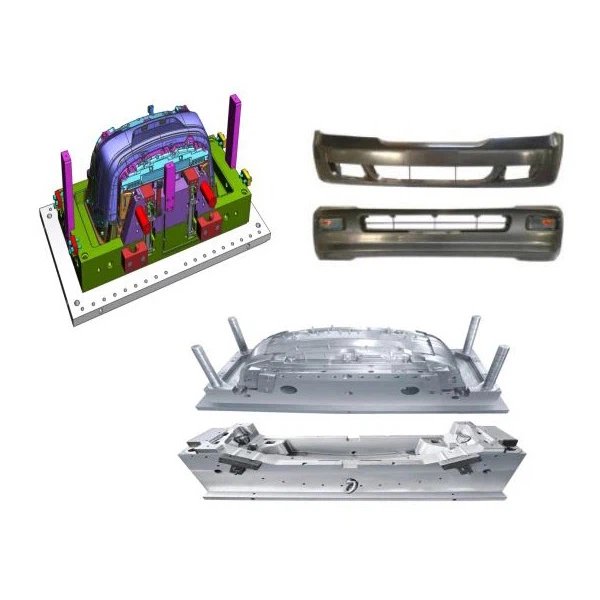
Carbon fiber composites are becoming increasingly popular. These materials offer exceptional strength - to - weight ratios, which can contribute to improved fuel efficiency of vehicles. For front grille moulds, carbon fiber composites allow for the creation of lightweight yet robust grilles. The moulds need to be designed to handle the unique properties of carbon fiber, such as its high stiffness and the need for precise molding to avoid defects.
Another emerging material is polycarbonate. It provides excellent optical clarity, which is useful for grilles with integrated lighting elements. Polycarbonate also has good impact resistance, making it suitable for the front of a vehicle where it may be exposed to various impacts. Designing moulds for polycarbonate requires careful consideration of its thermal properties during the injection - molding process to ensure a high - quality finish.
2. Incorporation of Lighting Technology
Lighting has become a significant aspect of front grille design. LED (Light - Emitting Diode) technology has revolutionized the way grilles are illuminated. Modern front grilles are increasingly featuring integrated LED lights, which can create a distinctive and eye - catching appearance.
Mould designers need to account for the placement and integration of these lighting elements. The moulds must be designed with precise cavities and channels to accommodate the LED strips or bulbs. This may involve creating complex geometries within the mould to ensure proper alignment and protection of the lighting components. For example, some grilles now have lighting patterns that can be customized, such as sequential lighting or dynamic lighting effects. The mould design has to support these features, allowing for the seamless integration of the electronics and the lighting elements.
Moreover, the trend towards more energy - efficient lighting also means that moulds need to be designed to optimize the heat dissipation of the LED lights. Overheating can affect the performance and lifespan of the LEDs, so the mould design should facilitate proper airflow around the lighting areas.
3. Aerodynamic Design
Aerodynamics plays a vital role in vehicle performance, and front grilles are no exception. Modern front grille mould designs are increasingly focused on improving the aerodynamic efficiency of vehicles.
Streamlined shapes are being incorporated into grille designs to reduce drag. Moulds need to be able to create smooth and continuous surfaces that allow air to flow over the grille with minimal resistance. This may involve using advanced machining techniques to achieve the required precision in the mould's surface finish.
Some grilles are also designed with active aerodynamic features. For example, adjustable grille shutters can open or close depending on the vehicle's speed and cooling requirements. Mould designers need to create complex mechanisms within the mould to produce these adjustable parts accurately. The mould design should ensure that the shutters operate smoothly and are durable enough to withstand the rigors of daily use.
4. Customization and Personalization
Consumers today demand more personalized vehicles, and front grilles are a prime area for customization. As a front grille mould supplier, we are seeing an increasing number of requests for unique grille designs.
Moulds are being designed to accommodate a wide range of customization options. This includes different patterns, textures, and colors. For example, some customers may want a grille with a specific logo or a geometric pattern. Mould designers use advanced CAD (Computer - Aided Design) and CAM (Computer - Aided Manufacturing) technologies to create these custom designs.
The ability to produce small - batch or one - off grille designs is also becoming more important. This requires flexible mould design and manufacturing processes. Rapid prototyping techniques, such as 3D printing, are being used to quickly develop and test new grille designs before full - scale production. This allows for faster turnaround times and reduced costs for custom grille projects.
5. Sustainability in Design
Sustainability is a major concern in the automotive industry, and front grille mould design is following suit. There is a growing emphasis on using recyclable materials in grille production.
Mould designers are working on ways to optimize the use of materials during the manufacturing process. This includes reducing waste by designing moulds that can produce grilles with minimal excess material. For example, using advanced nesting algorithms in the mould design can ensure that multiple grille parts are cut from a single sheet of material with maximum efficiency.
In addition, the use of bio - based materials is also being explored. These materials are derived from renewable sources and have a lower environmental impact compared to traditional plastics. Designing moulds for bio - based materials requires an understanding of their unique properties, such as different melting points and flow characteristics.
6. Precision and Quality Control
With the increasing complexity of front grille designs, precision and quality control are of utmost importance. Moulds need to be manufactured with extremely high precision to ensure that the final grille products meet the strict quality standards of the automotive industry.
Advanced metrology techniques are being used to measure and verify the dimensions of the moulds. This includes the use of coordinate measuring machines (CMMs) and optical inspection systems. These tools can detect even the slightest deviations in the mould's dimensions, allowing for timely adjustments during the manufacturing process.
Quality control also extends to the surface finish of the moulds. A smooth and defect - free surface finish is essential for producing high - quality grilles. Mould suppliers are using advanced polishing and coating techniques to achieve the required surface quality.
Connect with Us for Your Front Grille Mould Needs
As a leading front grille mould supplier, we are at the forefront of these exciting trends in front grille mould design. Our team of experienced designers and engineers is dedicated to providing high - quality, innovative mould solutions that meet the diverse needs of the automotive industry.
Whether you are looking for a standard front grille mould or a custom - designed solution, we have the expertise and resources to deliver. We offer a wide range of products, including Automotive Grille Injection Mould, Front Grille Mould, and Automotive Radiator Grille Tooling Mold.
If you are interested in learning more about our front grille mould products or would like to discuss a specific project, we encourage you to reach out to us. Our sales team is ready to assist you with any inquiries and guide you through the procurement process. Let's work together to create the perfect front grille mould for your automotive needs.
References
- Smith, J. (2022). Advanced Materials in Automotive Design. Journal of Automotive Engineering, 45(2), 123 - 135.
- Johnson, A. (2023). Lighting Trends in Automotive Front Grilles. Automotive Design Magazine, 32(4), 56 - 62.
- Brown, C. (2021). Aerodynamic Optimization of Vehicle Front Grilles. International Journal of Vehicle Performance, 18(3), 211 - 220.
- Lee, S. (2023). Customization and Personalization in the Automotive Industry. Automotive Marketing Review, 25(1), 78 - 85.
- Green, T. (2022). Sustainability in Automotive Manufacturing. Environmental Science and Automotive Technology, 12(2), 90 - 98.