

Hey there! As a grille mould supplier, I've had my fair share of experiences with multi - cavity grille moulds. They're pretty popular in the industry, but like anything else, they come with their own set of drawbacks. Let's dive right into it.
High Initial Investment
One of the biggest drawbacks of multi - cavity grille moulds is the high initial investment. These moulds are complex pieces of equipment. They need to be precisely designed and manufactured to ensure that each cavity produces parts that meet the required specifications. The cost of materials, labor, and the advanced technology involved in making these moulds is sky - high.
For example, creating a multi - cavity grille mould requires high - grade steel that can withstand the high pressure and temperature during the injection - molding process. Machining the mould to create multiple cavities with the right dimensions and surface finish is also a time - consuming and expensive process. As a supplier, I know that this high cost often gets passed on to the customers, which can be a deal - breaker for some small - to - medium - sized businesses.
Long Lead Times
Another significant drawback is the long lead times. Designing and manufacturing a multi - cavity grille mould is not a quick process. It involves multiple stages, from the initial design phase to prototyping, testing, and finally, the production of the final mould.
The design phase alone can take weeks or even months, especially if the grille has a complex shape or pattern. Once the design is finalized, the actual manufacturing process begins, which can also be quite lengthy. Machining each cavity to the exact specifications, heat - treating the mould, and then finishing it to ensure a smooth surface all take time. And let's not forget about the testing phase. Each cavity needs to be tested thoroughly to make sure it produces high - quality grille parts. All these steps combined can result in lead times of several months, which can be a problem for companies that need to get their products to the market quickly.
Complex Maintenance
Multi - cavity grille moulds are also a nightmare when it comes to maintenance. With multiple cavities, there are more parts that can wear out or break. Each cavity has its own set of gates, runners, and cooling channels, and any blockage or damage in these areas can affect the quality of the grille parts produced.
Regular cleaning is essential to prevent the build - up of plastic residue and other contaminants. But cleaning multiple cavities is a time - consuming and labor - intensive process. In addition, if a problem occurs in one cavity, it can be difficult to isolate and fix. Sometimes, it may require disassembling the entire mould, which can be a costly and time - consuming affair.
Limited Flexibility
When it comes to product design changes, multi - cavity grille moulds offer limited flexibility. Once the mould is designed and manufactured, making significant changes to the grille design can be extremely difficult and expensive.
For instance, if a customer wants to change the shape, size, or pattern of the grille, it may require modifying each cavity in the mould. This can involve a lot of re - machining, which is not only costly but also time - consuming. In some cases, it may even be more cost - effective to create a new mould altogether. This lack of flexibility can be a major drawback for companies that need to adapt quickly to changing market demands or customer preferences.
Higher Risk of Quality Variations
Multi - cavity grille moulds also come with a higher risk of quality variations between the parts produced in different cavities. Even with the most precise manufacturing processes, there can be slight differences in the dimensions, surface finish, and other quality parameters of the grille parts from one cavity to another.
These variations can be caused by differences in the flow of plastic melt through the runners and gates, variations in the cooling rate of each cavity, or even minor differences in the wear and tear of the mould over time. Quality control becomes a challenge, as each part needs to be inspected carefully to ensure that it meets the required standards. And if there are significant quality variations, it can lead to customer dissatisfaction and potential product recalls.
Costly Tooling for Small - Scale Production
For small - scale production runs, multi - cavity grille moulds can be a costly option. The high initial investment in the mould may not be justified if only a small number of grille parts are needed.
Let's say a company only needs a few hundred grille parts. Investing in a multi - cavity mould, which is designed to produce a large number of parts in each cycle, may not be cost - effective. In such cases, a single - cavity mould or other manufacturing methods may be a better choice.
Increased Energy Consumption
Multi - cavity grille moulds generally consume more energy compared to single - cavity moulds. The larger size of the mould, the need to heat and cool multiple cavities simultaneously, and the higher pressure required for injection all contribute to increased energy usage.
This not only adds to the operational costs but also has environmental implications. As energy costs continue to rise, this can be a significant drawback for companies looking to reduce their production costs and carbon footprint.
Challenges in Cavity Balancing
Achieving proper cavity balancing is a major challenge in multi - cavity grille moulds. Each cavity should receive an equal amount of plastic melt during the injection - molding process to ensure consistent part quality.
However, due to differences in the flow path length, cross - sectional area of the runners and gates, and other factors, it can be difficult to achieve perfect cavity balancing. Imbalanced cavities can result in parts with different weights, dimensions, and mechanical properties. This requires careful design and optimization of the runner and gate system, which can be a complex and time - consuming process.
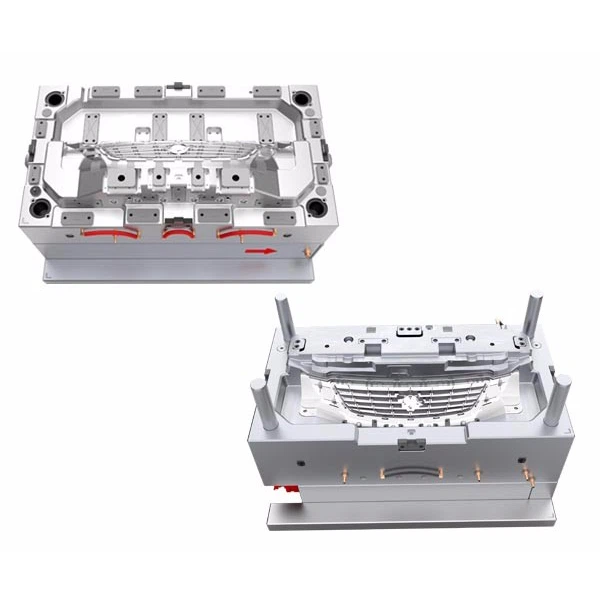
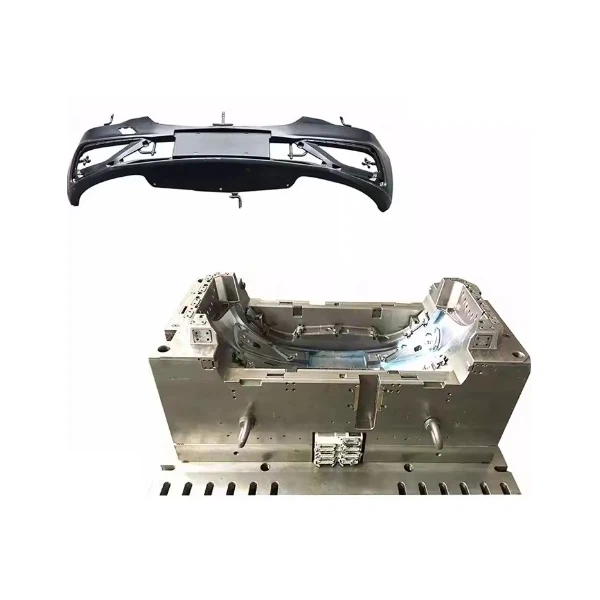
If you're in the market for grille moulds, whether it's a Grille Cover Mould, Radiator Grille Mould, or Front Grille Mould, it's important to consider these drawbacks. But don't let them scare you off completely. Multi - cavity grille moulds also have their advantages, such as high production efficiency for large - scale runs. If you're interested in discussing your specific requirements and finding the best solution for your grille mould needs, feel free to reach out. We're here to help you make an informed decision.
References
- Injection Molding Handbook, by O. Olszewski
- Plastics Processing Technology, by J. Beaumont