

Can a cutlery mould be used for cutlery with different handle designs? This is a question that often arises in the cutlery manufacturing industry. As a cutlery mould supplier, I have encountered this query numerous times from our clients. In this blog post, I will delve into this topic, exploring the possibilities, limitations, and considerations when using a single cutlery mould for cutlery with different handle designs.
The Basics of Cutlery Moulds
Before we discuss the use of a cutlery mould for different handle designs, it's essential to understand the basics of cutlery moulds. Cutlery moulds are precision tools used in the manufacturing process of cutlery. They are typically made from high - quality steel or other durable materials and are designed to shape molten plastic or metal into the desired cutlery shape.
There are various types of cutlery moulds available in the market, such as Cutlery Set Mould and Disposable Tableware Mould. These moulds can be customized to produce different sizes and styles of cutlery, including forks, spoons, and knives.
Possibilities of Using a Single Mould for Different Handle Designs
In some cases, it is possible to use a single cutlery mould for cutlery with different handle designs. One approach is to use interchangeable inserts within the mould. These inserts can be easily removed and replaced, allowing for the production of different handle shapes without the need to replace the entire mould.
For example, a basic cutlery body can be produced using the main part of the mould, and then different handle inserts can be used to create various handle designs. This method can be cost - effective for manufacturers who want to offer a range of handle styles without investing in multiple full - scale moulds.

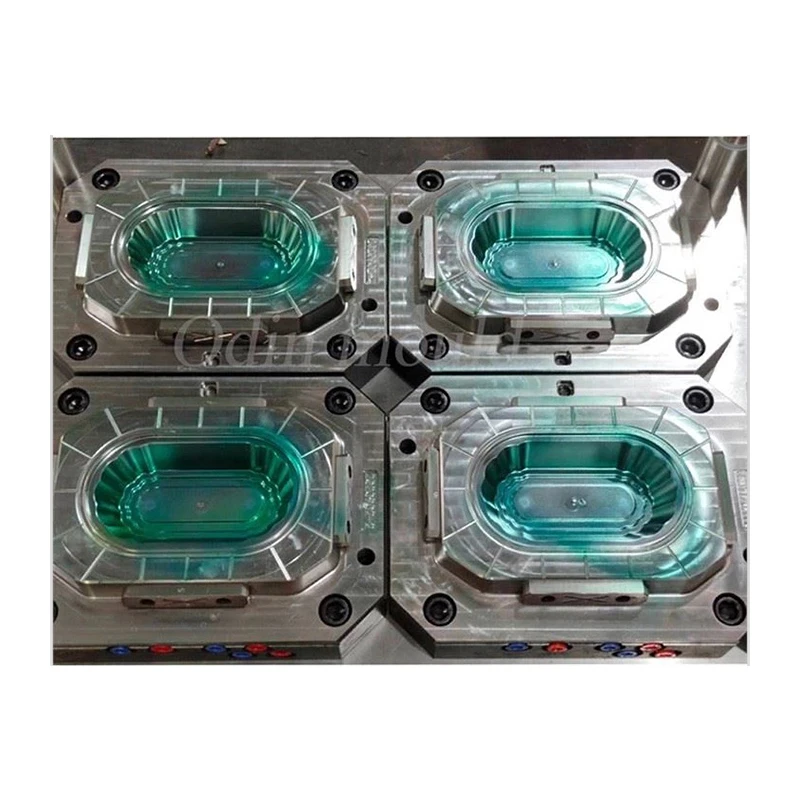
Another possibility is to use flexible or adjustable components within the mould. Some advanced mould designs incorporate features that can be adjusted to modify the handle shape. This can be achieved through mechanical or hydraulic mechanisms that change the internal geometry of the mould cavity, enabling the production of different handle designs on the same mould.
Limitations and Challenges
However, there are several limitations and challenges when using a single cutlery mould for different handle designs. One of the main limitations is the complexity of the handle design. If the handle designs are highly intricate or have significant differences in size, shape, or surface texture, it may be difficult or impossible to use a single mould.
For instance, a handle with a very detailed pattern or a unique ergonomic shape may require a dedicated mould to ensure accurate replication. In such cases, trying to adapt a single mould may result in poor quality or incomplete features on the handle.
Another challenge is the material flow within the mould. Different handle designs may require different material flow patterns during the injection or casting process. If the material does not flow evenly into the mould cavity, it can lead to defects such as air bubbles, voids, or uneven wall thickness in the handle.
Considerations for Manufacturers
When considering using a single cutlery mould for different handle designs, manufacturers need to take several factors into account. Firstly, they need to assess the cost - effectiveness of the approach. While using a single mould with interchangeable inserts or adjustable components may seem cost - saving in the short term, there are additional costs associated with designing, manufacturing, and maintaining these inserts or mechanisms.
Secondly, manufacturers need to ensure the quality of the final product. They should conduct thorough testing and prototyping to verify that the different handle designs can be produced consistently and meet the required quality standards. This may involve using advanced manufacturing technologies such as 3D printing for rapid prototyping and quality control.
Thirdly, the production volume is an important consideration. If the production volume of each handle design is relatively low, using a single mould may be a viable option. However, if the demand for a particular handle design is high, it may be more efficient to use a dedicated mould for that design.
Our Role as a Cutlery Mould Supplier
As a cutlery mould supplier, we understand the needs and challenges of our clients. We offer a wide range of cutlery mould solutions, including Plastic Thin Wall Food Container Packaging Box Mould in addition to our standard cutlery moulds.
We work closely with our clients to understand their specific requirements for different handle designs. Our team of experienced engineers can provide professional advice on whether a single mould can be used for their desired handle designs or if dedicated moulds are necessary. We also offer custom - made moulds and inserts to meet the unique needs of each client.
Conclusion
In conclusion, while it is possible to use a single cutlery mould for cutlery with different handle designs in some cases, there are limitations and challenges that need to be carefully considered. The use of interchangeable inserts, adjustable components, and advanced manufacturing technologies can offer some solutions, but manufacturers need to weigh the cost - effectiveness, quality, and production volume before making a decision.
If you are a cutlery manufacturer interested in exploring the possibilities of using our cutlery moulds for different handle designs, we invite you to contact us for a detailed discussion. Our team is ready to assist you in finding the most suitable mould solutions for your business.
References
- "Mould Design and Manufacturing for Plastic Products" by John Doe
- "Advanced Manufacturing Technologies in the Cutlery Industry" by Jane Smith