

Hey there! I'm a supplier of helmet moulds, and I know firsthand how crucial it is to keep labor costs in check when it comes to helmet mould - based production. High labor costs can eat into your profits big time, so today, I'm gonna share some tips on how you can reduce those expenses without sacrificing quality.
1. Optimize the Production Process
The first step in cutting labor costs is to take a hard look at your production process. Are there any steps that are redundant or inefficient? Maybe you're doing something by hand that could be automated. For example, in the production of Motorcycle Helmet Mould, some of the assembly steps could potentially be automated.
Automation can be a game - changer. It reduces the need for manual labor, which in turn cuts down on labor costs. You can invest in machinery that can perform tasks like cutting, shaping, and even some parts of the finishing process. Sure, the initial investment might be high, but in the long run, it'll pay off. You'll have fewer workers on the production line, and the machines can work around the clock without getting tired or making as many mistakes as humans.
Another aspect of process optimization is workflow design. Make sure your production floor is laid out in a way that minimizes the time workers spend moving around. For instance, have all the necessary tools and materials within easy reach. This way, workers can focus on the actual production tasks instead of wasting time looking for stuff.
2. Train Your Workers Well
Well - trained workers are more efficient. When your employees know exactly what they're doing, they can complete tasks faster and with fewer errors. Instead of having new workers fumble around and make mistakes, invest in proper training programs.
For example, if you're producing Helmet Injection Mold, your workers need to understand the intricacies of the injection molding process. They should know how to set up the machines correctly, monitor the process, and troubleshoot any issues that arise.
You can also cross - train your workers. This means teaching them multiple skills so that they can fill in for each other when needed. If one worker is absent, another can step in and keep the production going. Cross - training also gives your employees more job satisfaction as they get to learn new things and take on more responsibilities.
3. Outsource Non - Core Tasks
Not every task in the helmet mould production process needs to be done in - house. There are some non - core tasks that can be outsourced to other companies. For example, tasks like packaging and shipping can often be handled by a third - party logistics provider.
These providers usually have more experience and better equipment for these tasks. They can do them more efficiently and at a lower cost. You won't have to hire extra workers to do these jobs, and you can focus your resources on the core aspects of helmet mould production, like design and manufacturing.
When outsourcing, make sure you choose a reliable partner. Look at their track record, read reviews, and get references. You want to make sure they can deliver the quality and service you need.
4. Use Lean Manufacturing Principles
Lean manufacturing is all about eliminating waste in the production process. Waste can come in many forms, including excess inventory, overproduction, and unnecessary motion. By applying lean principles, you can make your production process more streamlined and efficient.
For example, in the production of Plastic Safety Helmet Mould, you can implement a just - in - time (JIT) inventory system. This means ordering materials only when you need them, rather than stockpiling a large amount of inventory. This reduces the cost of storing inventory and also minimizes the risk of having obsolete materials.

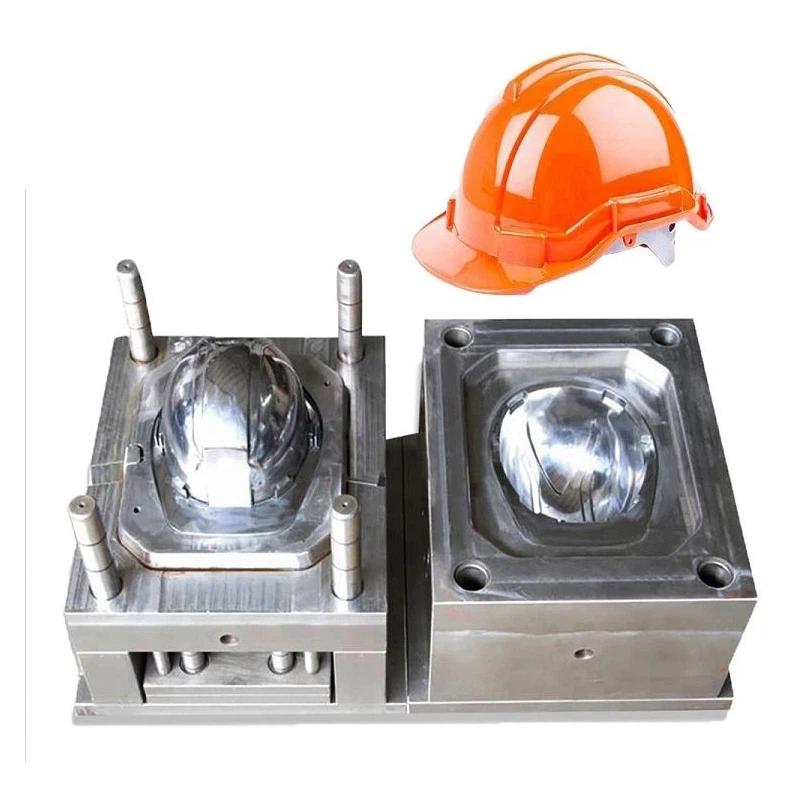
Another lean principle is continuous improvement. Encourage your workers to come up with ideas for improving the production process. They're the ones on the front line, so they often have great insights into what can be done better. By making small, incremental improvements over time, you can significantly reduce labor costs and increase productivity.
5. Negotiate with Suppliers
Your suppliers can also play a role in reducing your labor costs. If you can get better deals on raw materials and other supplies, you'll have more money to invest in other areas, like improving your production process or training your workers.
Talk to your suppliers and see if you can negotiate better prices, longer payment terms, or volume discounts. You might be surprised at how willing they are to work with you. After all, they want to keep your business, so they'll often be open to finding a mutually beneficial arrangement.
6. Implement Performance - Based Incentives
Motivating your workers can have a big impact on labor costs. By implementing performance - based incentives, you can encourage your employees to work more efficiently. For example, you can offer bonuses or other rewards for meeting or exceeding production targets.
This not only increases productivity but also gives your workers a sense of ownership and pride in their work. They'll be more likely to come up with their own ideas for improving the production process and reducing waste.
Conclusion
Reducing labor costs in helmet mould - based production is definitely doable. By optimizing the production process, training your workers, outsourcing non - core tasks, using lean manufacturing principles, negotiating with suppliers, and implementing performance - based incentives, you can make your business more profitable.
If you're interested in our helmet mould products or have any questions about reducing labor costs in your production process, feel free to reach out. We're always happy to have a chat and see how we can help you out.
References
- Lean Manufacturing for Dummies, Wiley Publishing
- The Art of Outsourcing, Infosys Press
- Training and Development Handbook, McGraw - Hill Education