

Can I use a baby car mold to make cars with moving parts?
As a seasoned supplier of baby car molds, I often encounter inquiries from clients who are curious about the potential of using our molds to create cars with moving parts. This is an exciting topic that delves into the intersection of creativity, engineering, and manufacturing. In this blog post, I'll explore the feasibility of using baby car molds for such projects, discuss the challenges and opportunities, and provide some insights based on my industry experience.
Understanding Baby Car Molds
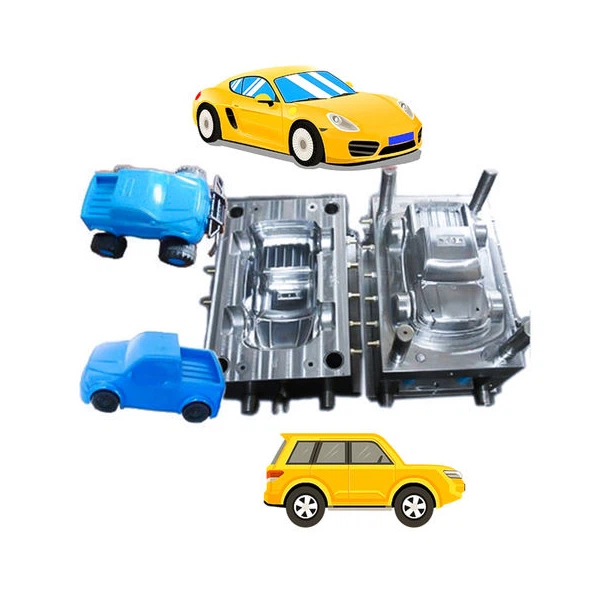
Before we dive into the question of creating cars with moving parts, it's essential to understand what baby car molds are and how they work. Baby car molds are precision tools used in the manufacturing process to produce plastic baby cars. These molds are typically made from high - quality steel or aluminum and are designed to create the shape and structure of the baby car.
The injection molding process is commonly used with baby car molds. In this process, molten plastic is injected into the mold cavity under high pressure. Once the plastic cools and solidifies, the mold opens, and the finished baby car part is ejected. The quality of the mold directly impacts the quality of the final product, including its surface finish, dimensional accuracy, and structural integrity.
The Feasibility of Creating Cars with Moving Parts
The short answer is yes, it is possible to use a baby car mold to make cars with moving parts, but it comes with its own set of challenges.
Design Considerations
When designing a baby car with moving parts, the mold design needs to be carefully planned. For example, if you want to create a car with doors that open and close, the mold must be designed to accommodate the hinges and the movement mechanism. This requires a high level of precision in the mold - making process. The mold cavities for the moving parts need to be shaped in such a way that they allow for smooth movement without any interference or binding.
Material Selection
The choice of plastic material is also crucial when creating cars with moving parts. Different plastics have different properties, such as flexibility, strength, and durability. For moving parts, you need a plastic that can withstand repeated movement without cracking or breaking. For instance, polypropylene (PP) is a popular choice for many baby car parts due to its good impact resistance and flexibility. However, for parts that require more strength, such as gears or axles, a stronger plastic like polycarbonate (PC) might be more suitable.

Manufacturing Process
The manufacturing process for cars with moving parts can be more complex than for static baby cars. In addition to the injection molding of the individual parts, there may be additional assembly steps required. For example, after the parts are molded, the moving mechanisms need to be installed, which may involve gluing, screwing, or snap - fitting the components together. This requires a well - organized production line and skilled workers to ensure that the assembly is done correctly.
Advantages of Using Baby Car Molds for Cars with Moving Parts
Cost - Effectiveness
Using a baby car mold to make cars with moving parts can be cost - effective, especially for small - to - medium - scale production. Instead of investing in separate molds for each part of the car, you can use a single mold to produce multiple components. This reduces the overall tooling cost and can lead to significant savings in the long run.
Customization
Baby car molds offer a high degree of customization. You can modify the design of the mold to create different types of moving parts, such as wheels that spin, steering wheels that turn, or even functional headlights. This allows you to create unique and engaging products that stand out in the market.
Quality Assurance
As a professional baby car mold supplier, we have strict quality control measures in place. Our molds are designed and manufactured to meet high - quality standards, which ensures that the cars with moving parts produced using our molds are of consistent quality. This can enhance the reputation of your brand and increase customer satisfaction.
Challenges and Solutions
Mold Complexity
The design and manufacturing of molds for cars with moving parts are more complex than for static cars. To overcome this challenge, it is essential to work with an experienced mold - making team. At our company, we have a team of skilled engineers and technicians who are experts in designing and manufacturing complex molds. They use advanced CAD/CAM technology to ensure the accuracy and precision of the mold design.
Assembly Difficulties
The assembly of cars with moving parts can be time - consuming and challenging. To address this issue, we can provide detailed assembly instructions and even offer training to your production staff. Additionally, we can design the parts in such a way that they are easy to assemble, for example, by using snap - fit connections instead of complex screw - based assemblies.
Exploring Related Products
If you are interested in other children - related molds, we also offer a wide range of products, such as Children Electrical Car Mould, Child Safety Seat Mold, and Plastic Toy Injection Mould. These molds are designed with the same high - quality standards and can be customized to meet your specific requirements.
Conclusion and Call to Action
In conclusion, using a baby car mold to make cars with moving parts is a feasible and rewarding endeavor. It offers many advantages in terms of cost - effectiveness, customization, and quality assurance. However, it also comes with its own set of challenges that can be overcome with the right expertise and resources.
If you are interested in exploring the possibilities of using our baby car molds to create cars with moving parts or any of our other products, we would love to hear from you. Whether you are a small - scale manufacturer looking to start a new product line or a large - scale enterprise seeking to expand your offerings, we have the experience and capabilities to support your project. Please feel free to reach out to us to discuss your specific needs and start a procurement negotiation.
References
- "Injection Molding Handbook" by Rosato, Donald V., and Rosato, Dominick V.
- "Plastics Materials" by Brydson, John A.
- Industry research reports on children's toy manufacturing and mold - making.