

Hey there! As a cutlery mould supplier, I often get asked a bunch of questions from customers. One question that pops up quite a bit is, "Can a cutlery mould be used for cutlery with different lengths?" Well, let's dig into this topic and see what's what.
First off, let's understand a bit about cutlery moulds. Cutlery moulds are used to create all sorts of utensils like spoons, forks, and knives. They're made using high - tech manufacturing processes to ensure that they can produce high - quality cutlery. At our place, we've got a wide range of moulds, including the Plastic Spoon Mold, which is super popular for making plastic spoons of various designs.
Now, back to the main question. In theory, it's possible to use a cutlery mould for cutlery with different lengths, but it's not as straightforward as it sounds. You see, most cutlery moulds are designed with a specific set of dimensions in mind. The cavity in the mould, which is where the molten plastic or metal (depending on the material used for the cutlery) is injected, is made to create a particular shape and size of cutlery.
If you want to make cutlery with different lengths using the same mould, there are a few things you need to consider. One of the major factors is the flow of the material inside the mould. When you change the length of the cutlery, the way the material fills the cavity can change significantly. For example, if you try to make a longer spoon in a mould that was originally designed for a shorter one, the plastic or metal might not flow evenly to the end of the new, extended shape. This can lead to issues like incomplete filling, air bubbles, or uneven thickness in the cutlery.
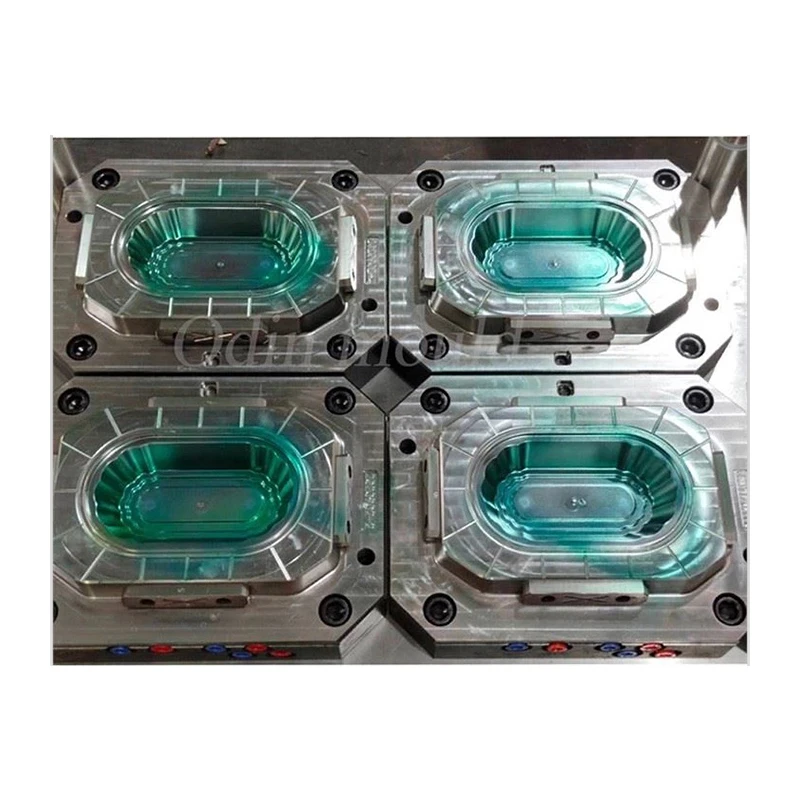

Another aspect to think about is the cooling process. Cutlery needs to cool down properly after the material is injected into the mould. A change in length can affect how quickly or slowly the cutlery cools. Longer cutlery might take more time to cool compared to shorter ones. If the cooling is not uniform, it can cause warping or distortion in the final product.
However, there are some workarounds. One option is to modify the mould. We can make adjustments to the mould to accommodate different lengths. This might involve adding or removing some parts of the mould, or changing the way the material is injected. But this process can be quite expensive and time - consuming. It requires a team of skilled engineers who know how to work with the mould's design and materials.
Let's take a look at some of our other moulds, like the Plastic Thin Wall Food Container Packaging Box Mould. While it's not directly related to cutlery length, it shows our expertise in creating custom - made moulds. We can apply some of the same principles when it comes to modifying cutlery moulds for different lengths.
We also have the Foldable Spoon Mold. This type of mould is a bit more flexible in terms of design. The foldable feature itself requires some unique engineering, and it gives us an idea of how we can think outside the box when it comes to cutlery design. We could potentially use similar innovative thinking to make a mould work for different cutlery lengths.
In some cases, if the difference in length is not too significant, we might be able to get away with making minor adjustments to the injection process. For example, we can change the injection pressure or the speed at which the material is injected. This can help the material flow better into the cavity and compensate for the slight change in length.
But for larger differences in length, a completely new mould might be the best option. A new mould can be designed from scratch to meet the exact requirements of the desired cutlery length. This ensures that the cutlery is produced with high quality and consistency.
When it comes to cost, using an existing mould and trying to modify it can be cheaper in the short term, especially if the changes are minor. However, if the modifications are extensive, it can end up costing almost as much as making a new mould. On the other hand, a new mould might have a higher upfront cost, but it can save you money in the long run by producing high - quality cutlery with fewer defects.
So, to sum it up, while it's possible to use a cutlery mould for cutlery with different lengths, it's a complex process that involves careful consideration of many factors. At our company, we have the expertise and experience to help you decide the best approach. Whether it's modifying an existing mould or creating a new one, we're here to assist you every step of the way.
If you're in the market for cutlery moulds or have any questions about making cutlery with different lengths, don't hesitate to reach out. We're always happy to have a chat and discuss your specific needs. Let's work together to create the perfect cutlery for your business!
References:
- General knowledge of cutlery mould manufacturing processes
- Experience gained from working with various cutlery mould projects over the years