

When it comes to manufacturing plastic spools, choosing the right type of plastic is crucial for the success of the plastic spool moulding process. As a reputable Plastic Spool Mould supplier, we understand the significance of this decision and are here to guide you through the various plastics suitable for plastic spool moulds.
Polypropylene (PP)
Polypropylene is one of the most commonly used plastics for plastic spool moulds. It offers a wide range of benefits that make it an ideal choice for this application. Firstly, PP has excellent chemical resistance, which means it can withstand exposure to various chemicals without degrading. This is particularly important for spools that may come into contact with different substances during their use, such as lubricants or cleaning agents.
Secondly, polypropylene has a relatively low density, making it lightweight. This is advantageous as it reduces the overall weight of the spool, which can be beneficial for transportation and handling. Additionally, its low density also contributes to cost savings in terms of raw material usage.
Another key advantage of PP is its good flexibility and impact resistance. Spools made from polypropylene can withstand a certain amount of bending and impact without cracking or breaking. This is essential for spools that may be subjected to rough handling or vibrations during storage or transportation.
In terms of processing, polypropylene has a relatively low melting point, which makes it easy to mould. It has good flow properties, allowing it to fill the intricate details of the plastic spool mould accurately. This results in high - quality spools with consistent dimensions and smooth surfaces. For example, in the production of Cable Spool Plastic Injection Mold, polypropylene can be used to create spools that are suitable for winding cables of different sizes and types.
High - Density Polyethylene (HDPE)
High - density polyethylene is another popular choice for plastic spool moulds. HDPE is known for its high strength and durability. It has a higher density compared to polypropylene, which gives it better resistance to wear and tear. Spools made from HDPE can withstand heavy loads and rough usage, making them suitable for industrial applications.
One of the significant advantages of HDPE is its excellent moisture resistance. It does not absorb water easily, which helps to prevent the growth of mold and mildew on the spools. This is particularly important for spools that are used in outdoor or humid environments.
HDPE also has good chemical resistance, similar to polypropylene. It can resist the effects of many acids, alkalis, and solvents, ensuring the longevity of the spools. In the manufacturing of Cable Spool Mould, HDPE can be used to create spools that can protect cables from environmental factors while providing a strong and stable structure for winding.
From a processing perspective, HDPE has good flow characteristics during the injection moulding process. It can be moulded into complex shapes with relatively high precision. However, it has a higher melting point than polypropylene, which requires slightly more energy during the moulding process.
Acrylonitrile Butadiene Styrene (ABS)
Acrylonitrile Butadiene Styrene is a thermoplastic polymer that combines the properties of acrylonitrile, butadiene, and styrene. ABS offers a good balance of strength, toughness, and rigidity. It has excellent impact resistance, even at low temperatures. This makes it suitable for spools that may be used in cold environments or in applications where they are likely to be dropped or knocked.
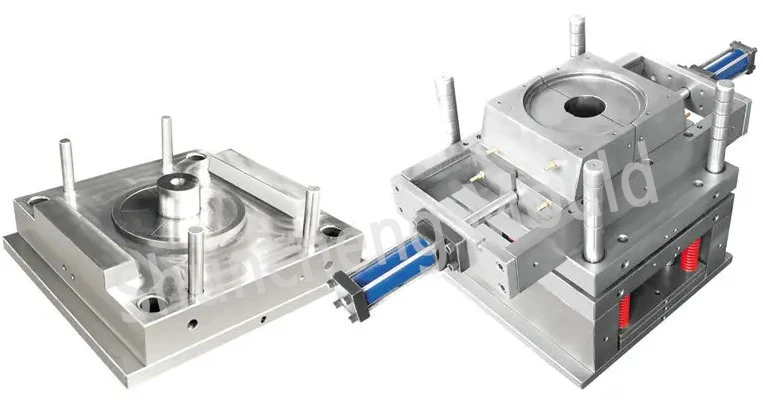
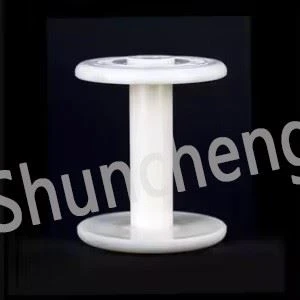
ABS has a smooth and glossy surface finish, which gives the spools an aesthetically pleasing appearance. It also has good dimensional stability, meaning that the spools will maintain their shape and size over time. This is important for applications where precise dimensions are required, such as in the production of Plastic Bobbin Coil Mold.
In terms of processing, ABS is relatively easy to mould. It has good flow properties and can be processed using various moulding techniques, including injection moulding. However, it is more expensive than polypropylene and HDPE, which may be a consideration for cost - sensitive projects.
Polycarbonate (PC)
Polycarbonate is a high - performance plastic that offers exceptional clarity, high strength, and heat resistance. Spools made from polycarbonate are transparent, which can be an advantage in applications where visual inspection of the wound material is required. For example, in the case of optical fiber spools, the transparency of polycarbonate allows for easy inspection of the fiber for any damage or defects.
PC has excellent impact resistance, even at high levels of stress. It can withstand significant force without breaking, making it suitable for spools that are used in high - stress environments. Polycarbonate also has good heat resistance, which means it can maintain its properties at elevated temperatures. This is important for spools that may be exposed to heat during the manufacturing process or in their end - use applications.
However, polycarbonate is more expensive than other plastics and requires more precise processing conditions. It has a relatively high melting point and is more sensitive to moisture, which means it needs to be dried thoroughly before the moulding process.
Polyethylene Terephthalate (PET)
Polyethylene terephthalate is a strong and lightweight plastic that is commonly used in the packaging industry. It has good mechanical properties, including high tensile strength and stiffness. PET is also known for its excellent clarity and barrier properties. Spools made from PET can provide good protection for the wound material against moisture, oxygen, and other environmental factors.
PET has a high melting point and good dimensional stability. It can be moulded into precise shapes and sizes, which is important for spool applications. In addition, PET is recyclable, which makes it an environmentally friendly option. However, similar to polycarbonate, PET requires careful drying before the moulding process to prevent hydrolysis, which can affect the quality of the final product.
Choosing the Right Plastic for Your Plastic Spool Mould
When selecting the appropriate plastic for a plastic spool mould, several factors need to be considered. Firstly, the intended application of the spool is crucial. If the spool is for industrial use and will be subjected to heavy loads and rough handling, plastics like HDPE or ABS may be more suitable. For applications where transparency and heat resistance are required, polycarbonate could be the best choice.
Cost is another important factor. Polypropylene and HDPE are generally more cost - effective compared to ABS, polycarbonate, and PET. If the project has a tight budget, these plastics may be the preferred option.
The processing requirements of the plastic also need to be taken into account. Some plastics, like polypropylene, are easier to process and require less energy during the moulding process. Others, such as polycarbonate and PET, require more precise processing conditions and additional steps, such as drying.
As a Plastic Spool Mould supplier, we have extensive experience in working with different types of plastics. We can help you select the most suitable plastic for your specific requirements. Our team of experts can provide guidance on the properties of each plastic, the processing considerations, and the overall cost - effectiveness of your project.
If you are in the market for high - quality plastic spool moulds and need advice on the right plastic to use, we encourage you to contact us for a detailed discussion. Our goal is to provide you with the best solutions that meet your needs and ensure the success of your plastic spool production.
References
- "Handbook of Plastic Materials and Technology" by Irvin I. Rubin
- "Plastics Processing: Principles and Modeling" by John A. Strong
- Industry reports on plastic materials and their applications in moulding processes.