

As a supplier of Toy Car Molds, I often get asked about the maximum number of toys that can be made from a single toy car mold. This is a question that combines both the art and science of toy manufacturing, and the answer depends on a variety of factors.
Understanding the Basics of Toy Car Mold Manufacturing
Before we delve into the numbers, it's important to understand how toy car molds are made and used. A toy car mold is a precision - engineered tool that is typically made from high - quality steel or aluminum. The mold is designed to create a specific shape and size of a toy car, with all the details such as the body, wheels, and any decorative elements.
The process of making toys from a mold involves injecting molten plastic into the mold cavity. Once the plastic cools and solidifies, the mold opens, and the finished toy car is ejected. This process can be repeated over and over again, but the number of times is not limitless.
Factors Affecting the Number of Toys from a Single Mold
1. Material Quality of the Mold
The material used to make the mold plays a crucial role in determining its lifespan. High - grade steel molds are more durable and can withstand a larger number of injection cycles compared to aluminum molds. Steel molds can typically endure between 100,000 to 1,000,000 injection cycles, while aluminum molds usually have a lifespan of around 50,000 to 200,000 cycles. This means that, in theory, a high - quality steel mold could produce anywhere from 100,000 to 1,000,000 toy cars, while an aluminum mold might yield 50,000 to 200,000.
2. Design Complexity
The complexity of the toy car design also affects the mold's lifespan. A simple toy car with a smooth body and basic features will put less stress on the mold during the injection process compared to a car with intricate details, sharp edges, or multiple moving parts. Complex designs may cause more wear and tear on the mold, reducing the total number of toys that can be produced. For example, a mold for a basic, block - shaped toy car might last longer and produce more units than a mold for a highly detailed race car with spoilers, decals, and working doors.
3. Injection Molding Conditions
The conditions under which the injection molding process takes place are critical. Factors such as the temperature of the molten plastic, the pressure applied during injection, and the cooling time can all impact the mold's longevity. If the plastic is injected at too high a temperature or pressure, it can cause the mold to deform or wear out more quickly. Similarly, insufficient cooling time can lead to warping of the toy cars and also damage the mold over time. Maintaining optimal injection molding conditions is essential for maximizing the number of toys produced from a single mold.
4. Maintenance and Care
Proper maintenance and care of the mold can significantly extend its lifespan. Regular cleaning, lubrication, and inspection for wear and damage are necessary. If any signs of wear are detected early, the mold can be repaired or refurbished, allowing it to continue producing toys. For instance, if a small crack is found in the mold, it can be welded and polished, potentially adding thousands more injection cycles to its lifespan.
Real - World Examples and Case Studies
Let's look at some real - world scenarios to better understand the potential number of toys from a single mold. A small - scale toy manufacturer that produces simple, plastic toy cars using an aluminum mold might expect to produce around 80,000 to 120,000 units. This manufacturer uses standard injection molding conditions and performs regular maintenance on the mold.
On the other hand, a large - scale production facility with high - quality steel molds and advanced injection molding technology can produce well over 500,000 toy cars from a single mold. These facilities have strict quality control measures in place to ensure optimal injection molding conditions and invest in regular mold maintenance.
Comparing with Other Types of Molds in the Toy Industry
In the toy industry, there are other types of molds besides toy car molds. For example, Child Safety Seat Mold and Children Electrical Car Mould have different requirements and production capabilities.
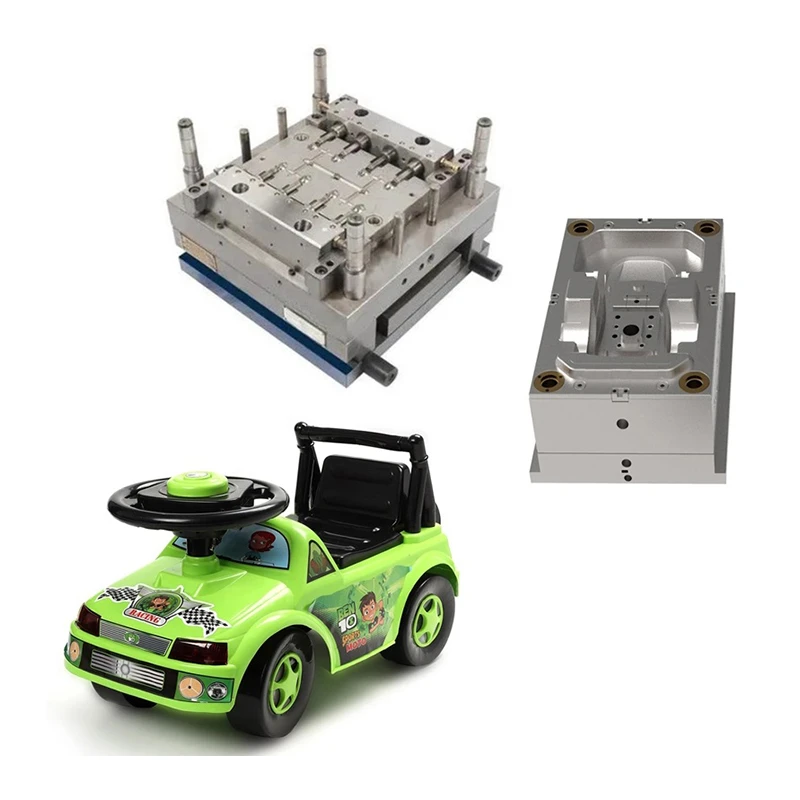

Child safety seat molds are often larger and more complex. They need to meet strict safety standards, which means that the molds are usually made from high - strength materials and are subject to more rigorous testing. Due to their size and complexity, the number of units produced from a single child safety seat mold might be lower compared to a toy car mold, typically in the range of 50,000 to 150,000 units.
Children electrical car molds are also complex, as they need to accommodate the electrical components and the more detailed design of an electrical toy car. The production volume from a single children electrical car mold can vary widely depending on the design and the quality of the mold, but it is generally in the range of 100,000 to 300,000 units.
Conclusion and Call to Action
In conclusion, the maximum number of toys that can be made from a single toy car mold can vary greatly depending on factors such as the material quality of the mold, design complexity, injection molding conditions, and maintenance. While a high - quality steel mold has the potential to produce up to 1,000,000 toy cars, real - world production numbers are often lower due to various practical considerations.
If you are in the toy manufacturing business and are looking for high - quality Toy Car Mold, we are here to help. Our team of experts can provide you with detailed information about our molds, including their expected lifespan and production capabilities. We can also offer advice on how to optimize your injection molding process to maximize the number of toys produced from each mold.
Contact us today to start a discussion about your toy manufacturing needs. Whether you are a small - scale producer or a large - scale factory, we have the right Toy Car Molds for you.
References
- "Injection Molding Handbook" by Ossenbruggen, F.
- "Plastic Materials and Processes" by Strong, A. B.
- Industry reports from the toy manufacturing and injection molding sectors.