

Hey there! As a front bumper mould supplier, I often get asked about the injection pressure for a front bumper mould. It's a crucial factor that can significantly impact the quality and efficiency of the bumper production process. So, let's dive right into it and explore what injection pressure is all about in the context of front bumper moulds.
First off, what exactly is injection pressure? Well, in simple terms, injection pressure is the force applied to the molten plastic material to push it into the mould cavity during the injection molding process. When it comes to front bumper moulds, getting the right injection pressure is like hitting the sweet spot. Too low, and the plastic might not fill the entire mould cavity properly, leading to incomplete parts with voids or thin sections. On the other hand, too high a pressure can cause issues like excessive flash (the excess plastic that squeezes out of the mould), warping of the bumper, or even damage to the mould itself.
Now, determining the ideal injection pressure for a front bumper mould isn't a one - size - fits - all deal. There are several factors that come into play.
One of the most important factors is the type of plastic material being used. Different plastics have different flow characteristics. For example, polypropylene (PP), which is commonly used for front bumpers, has a relatively good flowability compared to some other engineering plastics. So, it might require a lower injection pressure to fill the mould. On the contrary, materials like polycarbonate (PC) or acrylonitrile butadiene styrene (ABS) blends, which are also used in some high - end bumper applications, may need a higher injection pressure due to their higher viscosity.
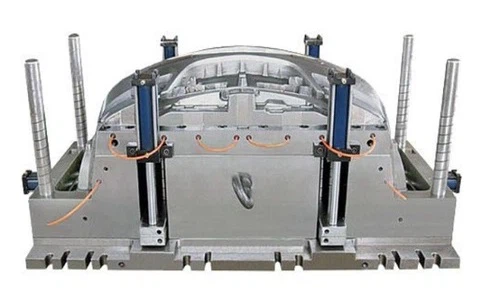
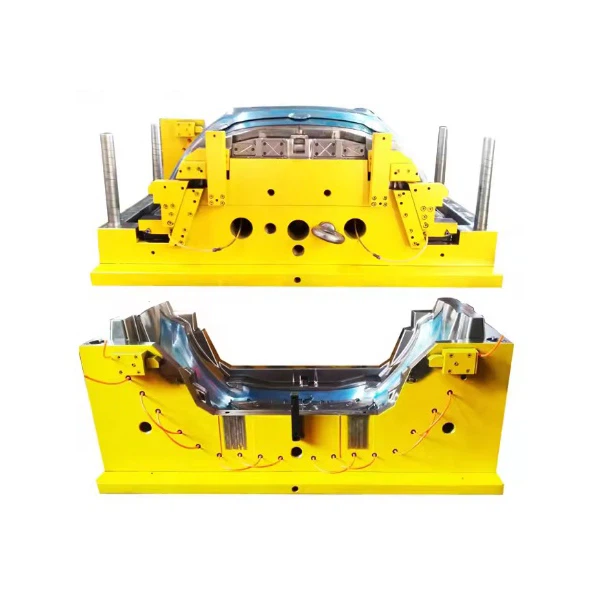
The size and complexity of the front bumper design also matter a great deal. A large, full - sized SUV front bumper with lots of intricate details, such as integrated fog light housings, air intakes, and sharp curves, will need a higher injection pressure to ensure that the plastic reaches every nook and cranny of the mould. In contrast, a smaller, more straightforward bumper design for a compact car might get by with a lower pressure.
The wall thickness of the bumper is another key consideration. Thicker walls generally require more pressure to fill completely. This is because the plastic has to flow a greater distance through the thicker sections, and there's more resistance to the flow. If the wall thickness varies across the bumper, the injection pressure needs to be carefully adjusted to account for these differences.
The condition and design of the mould itself play a role as well. A well - designed mould with smooth channels and proper venting will allow the plastic to flow more easily, potentially requiring a lower injection pressure. On the other hand, a mould with rough surfaces, narrow gates (the entry points for the plastic into the mould cavity), or poor venting may need a higher pressure to overcome the resistance.
Typically, the injection pressure for front bumper moulds can range anywhere from 500 to 2000 bar. But again, this is just a rough estimate. For a simple, small - sized bumper made from a highly flowable plastic, the pressure might be closer to the lower end of this range, say around 500 - 800 bar. However, for a large, complex bumper with a high - viscosity plastic, the pressure could go up to 1500 - 2000 bar or even higher in some cases.
At our company, we have a team of experienced engineers who use advanced simulation software to analyze the flow of plastic in the mould. This helps us to predict the optimal injection pressure before we even start the actual production process. We also conduct extensive testing and fine - tuning to ensure that we're getting the best results.
When it comes to choosing the right mould for your front bumper production, we offer a wide range of options. You can check out our Compression Molds For Automotive which are great for certain types of bumper manufacturing processes. Our Bumper Injection Mould is designed to provide high - quality, consistent results. And if you're specifically looking for a Car Front Bumper Mold, we've got you covered.
If you're in the market for front bumper moulds, whether you're a small - scale manufacturer or a large automotive parts supplier, we're here to help. We understand that every project is unique, and we're committed to providing you with the best solutions tailored to your specific needs. Whether it's determining the right injection pressure or choosing the perfect mould design, our team is ready to assist you every step of the way.
So, if you're interested in discussing your front bumper mould requirements, don't hesitate to reach out. We're looking forward to having a chat with you and seeing how we can work together to create high - quality front bumpers.
References
- "Injection Molding Handbook" by O. Olsson, S. Engström, and M. R. Karger - Kocsis
- "Plastics in Automotive Engineering" by H. Domininghaus