

Automation has become a transformative force across various industries, and the washing machine mould manufacturing sector is no exception. As a supplier of washing machine moulds, I have witnessed firsthand the profound impact that automation has had on our business. In this blog post, I will explore the various ways in which automation has influenced washing machine mould manufacturing, from design and production to quality control and cost management.
Design and Prototyping
One of the most significant impacts of automation in washing machine mould manufacturing is in the design and prototyping phase. In the past, designing a washing machine mould was a time - consuming and labor - intensive process. Engineers had to rely on manual drafting and physical prototypes, which often led to long lead times and higher costs.
With the advent of automation, computer - aided design (CAD) software has revolutionized the way we design washing machine moulds. CAD allows us to create detailed 3D models of the moulds with high precision. We can easily make modifications to the design, test different geometries, and simulate the performance of the mould before it is even manufactured. This not only speeds up the design process but also reduces the risk of errors and rework.
For example, when designing a Washing Machine Seat Mould, CAD software enables us to optimize the shape and structure of the seat to ensure a perfect fit with the washing machine. We can also analyze the flow of plastic during the injection molding process, which helps in determining the best gate locations and runner systems.
In addition to CAD, 3D printing has emerged as a powerful tool in the prototyping stage. It allows us to quickly produce physical prototypes of the washing machine moulds. These prototypes can be used for functional testing, design verification, and customer approval. 3D printing significantly reduces the time and cost associated with traditional prototyping methods, enabling us to bring new products to the market faster.
Production Process
Automation has also had a major impact on the actual production of washing machine moulds. The traditional manufacturing process involved a high degree of manual labor, which was not only time - consuming but also prone to human error.
Today, automated machining centers are widely used in the production of washing machine moulds. These machines can perform a variety of operations, such as milling, drilling, and turning, with high precision and repeatability. They are programmed to follow a set of instructions, which ensures that each part of the mould is manufactured to the exact specifications.
For instance, in the production of a Washing Machine Control Panel Seat Mould, automated machining centers can create the complex shapes and features of the control panel seat with great accuracy. This results in a higher quality product and reduces the need for manual finishing operations.
Robotic systems have also been integrated into the production line. Robots can handle tasks such as loading and unloading workpieces, changing tools, and performing quality inspections. They can work continuously without getting tired, which increases the productivity of the manufacturing process. Moreover, robots can work in hazardous environments, such as areas with high temperatures or toxic fumes, which improves the safety of the workers.
Another aspect of automation in production is the use of injection molding machines with advanced control systems. These machines can precisely control the temperature, pressure, and speed of the injection process, ensuring consistent quality of the molded parts. They can also be integrated with other automated systems, such as conveyor belts and handling robots, to create a fully automated production line.

Quality Control
Quality control is of utmost importance in washing machine mould manufacturing. A defective mould can lead to a large number of defective washing machine parts, which can result in significant losses for both the manufacturer and the end - user.
Automation has greatly improved the quality control process in our industry. Automated inspection systems, such as coordinate measuring machines (CMMs) and optical inspection systems, can quickly and accurately measure the dimensions and surface quality of the moulds. These systems can detect even the slightest deviations from the design specifications, allowing us to take corrective actions immediately.
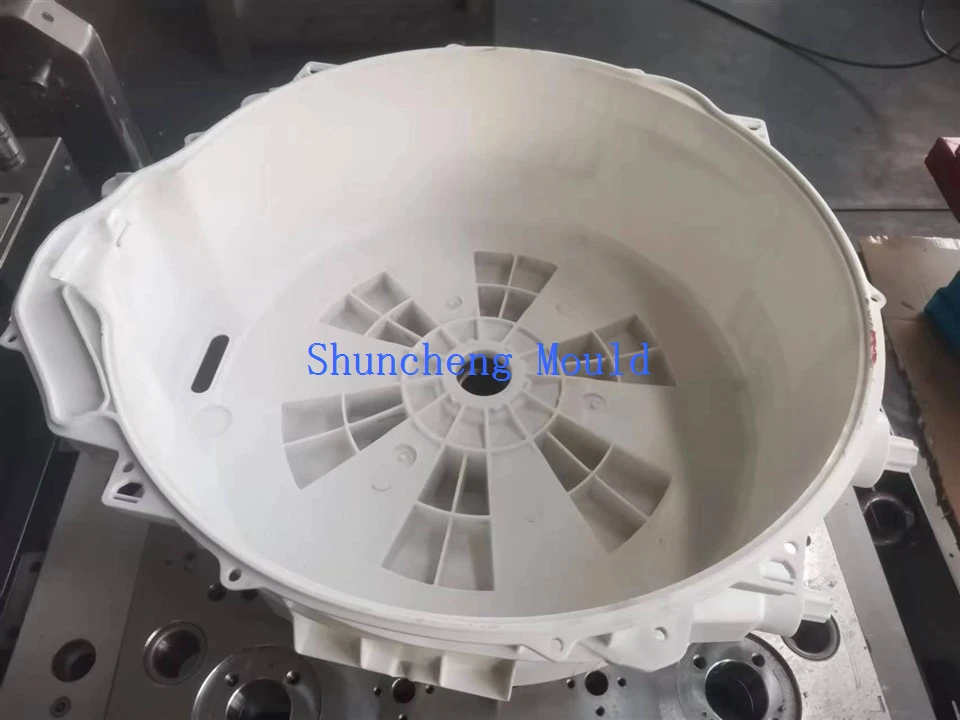
For example, when manufacturing a Washing Machine Rear Drum Mould, CMMs can measure the internal and external dimensions of the drum mould to ensure that it meets the required tolerances. Optical inspection systems can detect surface defects, such as cracks and scratches, which may affect the performance of the mould.
In addition to these inspection systems, statistical process control (SPC) techniques are also used in combination with automation. SPC involves collecting and analyzing data from the production process to monitor and control the quality. By using automated data collection systems, we can quickly identify trends and patterns in the data, which helps in predicting and preventing quality issues before they occur.
Cost Management
Automation has a direct impact on cost management in washing machine mould manufacturing. Although the initial investment in automation technology can be high, the long - term benefits are significant.
In terms of labor costs, automation reduces the need for a large number of manual workers. With automated machines and robotic systems performing most of the tasks, the labor requirements are minimized. This not only reduces the direct labor costs but also eliminates the costs associated with employee training, benefits, and absenteeism.
Automation also improves the efficiency of the manufacturing process, which leads to lower production costs. Faster production times, reduced rework, and better quality control all contribute to cost savings. For example, by using automated machining centers, we can produce more washing machine moulds in less time, which spreads the fixed costs over a larger number of units.
Moreover, automation reduces the waste generated during the manufacturing process. Precise control of the production parameters, such as material usage and energy consumption, helps in minimizing waste. This not only saves costs but also has a positive impact on the environment.
Challenges and Future Outlook
While automation has brought many benefits to washing machine mould manufacturing, it also presents some challenges. One of the main challenges is the high initial investment required for automation technology. Small and medium - sized enterprises may find it difficult to afford the latest automated equipment and software.
Another challenge is the need for skilled workers to operate and maintain the automated systems. As the manufacturing process becomes more automated, workers need to have a higher level of technical skills and knowledge. Training programs need to be implemented to ensure that the workforce can adapt to the new technology.
Looking to the future, the trend of automation in washing machine mould manufacturing is likely to continue. Advancements in artificial intelligence and machine learning will further enhance the capabilities of automated systems. For example, AI - powered robots can learn from the production data and make real - time adjustments to improve the quality and efficiency of the manufacturing process.
In conclusion, automation has had a profound impact on washing machine mould manufacturing. It has revolutionized the design, production, quality control, and cost management aspects of our business. As a washing machine mould supplier, we are committed to embracing automation technology to provide our customers with high - quality, cost - effective, and innovative products. If you are interested in purchasing washing machine moulds, we invite you to contact us for further discussion and procurement negotiation.
References
- Groover, M. P. (2015). Automation, Production Systems, and Computer - Integrated Manufacturing. Pearson.
- Womack, J. P., & Jones, D. T. (1996). Lean Thinking: Banish Waste and Create Wealth in Your Corporation. Simon & Schuster.
- Pahl, G., Beitz, W., Feldhusen, J., & Grote, K. H. (2007). Engineering Design: A Systematic Approach. Springer.