

In the ever - evolving landscape of manufacturing, grille cover moulds play a crucial role across various industries, including automotive, home appliances, and electronics. As a leading grille cover mould supplier, I am constantly on the lookout for the latest technologies that can enhance the quality, efficiency, and cost - effectiveness of our products. In this blog, I will explore some of the most cutting - edge technologies in grille cover mould manufacturing.
1. 3D Printing in Grille Cover Mould Manufacturing
One of the most revolutionary technologies in recent years is 3D printing, also known as additive manufacturing. This technology has found its way into grille cover mould manufacturing due to its numerous advantages.
Design Flexibility
Traditional mould manufacturing methods often have limitations when it comes to complex geometries. With 3D printing, we can create grille cover moulds with intricate designs that were previously impossible or extremely difficult to achieve. For example, we can design grilles with complex lattice structures that not only look aesthetically pleasing but also offer improved airflow and functionality. This level of design flexibility allows us to meet the diverse and unique requirements of our customers.
Rapid Prototyping
3D printing enables rapid prototyping of grille cover moulds. Instead of waiting weeks or even months for a traditional mould to be machined, we can print a prototype within a matter of days or even hours. This significantly reduces the product development cycle, allowing our customers to test and validate their grille designs more quickly. By getting feedback early in the process, we can make necessary adjustments and improvements, ultimately leading to a better - quality final product.
Cost - Effective Small - Batch Production
For small - batch production runs, 3D printing can be a cost - effective alternative to traditional mould manufacturing. The setup costs for traditional moulds are often high, especially for complex designs. In contrast, 3D printing eliminates the need for expensive tooling and machining processes, making it more economical for producing a limited number of grille cover moulds. This is particularly beneficial for customers who are launching new products or need custom - made grille covers in small quantities.
2. High - Precision Machining Technologies
High - precision machining remains a cornerstone of grille cover mould manufacturing. Advancements in machining technologies have led to improved accuracy, surface finish, and productivity.
5 - Axis Machining
5 - axis machining has revolutionized the way we manufacture grille cover moulds. Unlike traditional 3 - axis machining, which is limited to three linear axes of motion, 5 - axis machining allows the cutting tool to move along five axes simultaneously. This enables us to machine complex curved surfaces and undercuts with high precision. For grille cover moulds, which often have intricate shapes and contours, 5 - axis machining ensures that every detail is accurately reproduced. The result is a high - quality mould that produces grille covers with excellent dimensional accuracy and a smooth surface finish.
CNC Machining with Intelligent Control Systems
Computer Numerical Control (CNC) machining has been further enhanced with intelligent control systems. These systems use advanced algorithms and sensors to optimize the machining process in real - time. For example, they can automatically adjust the cutting speed, feed rate, and tool path based on the material properties and cutting conditions. This not only improves the machining efficiency but also reduces the risk of errors and tool wear. With CNC machining and intelligent control systems, we can achieve consistent quality across all our grille cover moulds, ensuring that our customers receive products that meet or exceed their expectations.
Micro - Machining
Micro - machining is becoming increasingly important in grille cover mould manufacturing, especially for grille designs that require fine details and small features. This technology allows us to machine features with extremely small dimensions, such as micro - holes and fine patterns. Micro - machining is particularly useful for grille covers used in electronic devices and high - end automotive applications, where precise airflow control and aesthetic appeal are critical. By using micro - machining techniques, we can create grille covers with unique and sophisticated designs that set our customers' products apart from the competition.
3. Advanced Materials for Grille Cover Moulds
The choice of materials for grille cover moulds has a significant impact on the performance and quality of the final product. New and advanced materials are being developed to meet the demanding requirements of modern grille cover applications.
High - Performance Tool Steels
High - performance tool steels are widely used in grille cover mould manufacturing due to their excellent hardness, wear resistance, and toughness. These steels can withstand the high pressures and temperatures generated during the injection moulding process, ensuring a long service life for the mould. New grades of tool steels are being developed with improved properties, such as better corrosion resistance and higher thermal conductivity. This allows us to produce grille cover moulds that are more durable and can operate under more challenging conditions.
Composite Materials
Composite materials are also being explored for use in grille cover moulds. Composites offer a combination of high strength, low weight, and excellent corrosion resistance. They can be tailored to have specific mechanical and thermal properties, making them suitable for a variety of grille cover applications. For example, carbon fiber composites can be used to create lightweight yet strong grille cover moulds, which are ideal for automotive applications where weight reduction is a key consideration. Additionally, composite materials can be more easily molded into complex shapes, further expanding the design possibilities for grille covers.

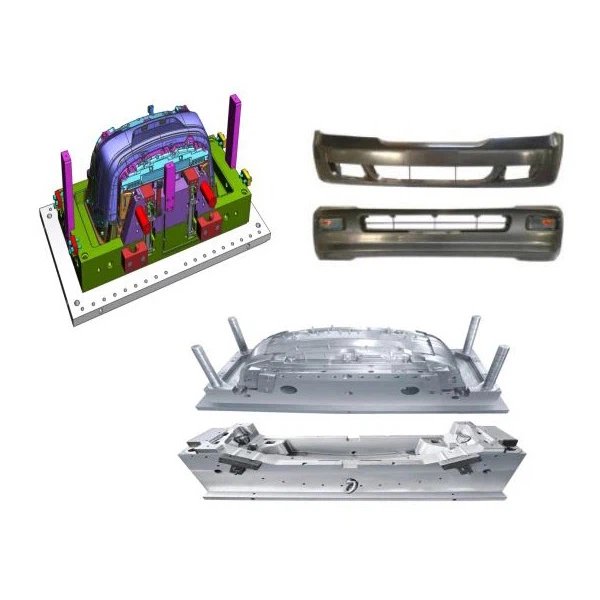
4. Simulation and Digital Twin Technologies
Simulation and digital twin technologies are playing an increasingly important role in grille cover mould manufacturing. These technologies allow us to virtualize the manufacturing process and predict the performance of the grille cover moulds before they are physically produced.
Mold Flow Analysis
Mold flow analysis is a simulation technique that predicts the flow of molten plastic during the injection molding process. By analyzing factors such as melt temperature, pressure, and flow rate, we can optimize the design of the grille cover mould to ensure uniform filling, minimize air traps, and reduce the risk of warping and shrinkage. Mold flow analysis also helps us to select the appropriate gate location and size, which is crucial for achieving a high - quality grille cover. By using mold flow analysis, we can avoid costly trial - and - error processes and ensure that our grille cover moulds are designed for optimal performance.
Digital Twin Technology
Digital twin technology creates a virtual replica of the grille cover mould and the manufacturing process. This digital twin can be used to monitor and analyze the performance of the physical mould in real - time. For example, sensors can be installed on the mould to collect data on temperature, pressure, and vibration. This data is then transmitted to the digital twin, where it is analyzed to detect any potential issues or anomalies. By using digital twin technology, we can proactively identify and address problems before they cause significant downtime or quality issues. This not only improves the reliability and productivity of our manufacturing process but also reduces maintenance costs.
5. Surface Treatment Technologies
Surface treatment technologies are essential for enhancing the performance and appearance of grille cover moulds.
PVD Coating
Physical Vapor Deposition (PVD) coating is a popular surface treatment for grille cover moulds. PVD coatings offer excellent wear resistance, corrosion resistance, and low friction coefficients. By applying a PVD coating to the mould surface, we can extend the service life of the mould and improve the release properties of the grille covers. This results in fewer defects and a higher - quality surface finish on the grille covers. Additionally, PVD coatings can be customized to achieve different colors and finishes, allowing us to meet the aesthetic requirements of our customers.
Electroplating
Electroplating is another common surface treatment method for grille cover moulds. It involves depositing a thin layer of metal, such as chrome or nickel, onto the mould surface. Electroplating can improve the hardness, corrosion resistance, and surface smoothness of the mould. It also provides a decorative finish, which can enhance the appearance of the grille covers. Electroplating is a well - established and cost - effective surface treatment option that has been widely used in the automotive and home appliance industries.
Our Product Offerings
As a grille cover mould supplier, we offer a wide range of products to meet the needs of different industries. Our product portfolio includes Automotive Grille Injection Mould, Air Conditioner Grille Mold, and Automotive Radiator Grille Tooling Mold. These products are manufactured using the latest technologies and high - quality materials, ensuring that they meet the highest standards of quality and performance.
Conclusion
The grille cover mould manufacturing industry is constantly evolving, driven by technological advancements. From 3D printing and high - precision machining to advanced materials and simulation technologies, these innovations are enabling us to produce grille cover moulds with higher quality, greater efficiency, and more design flexibility. As a grille cover mould supplier, we are committed to staying at the forefront of these technological trends and using them to provide our customers with the best - in - class products and services.
If you are interested in our grille cover moulds or have any specific requirements, we invite you to contact us for a detailed discussion. Our team of experts is ready to assist you in finding the perfect solution for your grille cover needs. Let's work together to bring your innovative grille designs to life.
References
- Smith, J. (2020). "Advances in 3D Printing for Manufacturing Applications." Journal of Manufacturing Technology, 25(3), 45 - 52.
- Brown, A. (2019). "High - Precision Machining: The Future of Mould Manufacturing." International Journal of Machining Science, 18(2), 67 - 74.
- Green, C. (2021). "Surface Treatment Technologies for Moulds: A Review." Surface Engineering Journal, 30(4), 89 - 96.