

Hey there! As a supplier of Baby Car Molds, I often get asked about the curing time for resin in these molds. It's a crucial factor that can significantly impact the quality and production efficiency of baby car products. So, let's dive right in and explore this topic in detail.
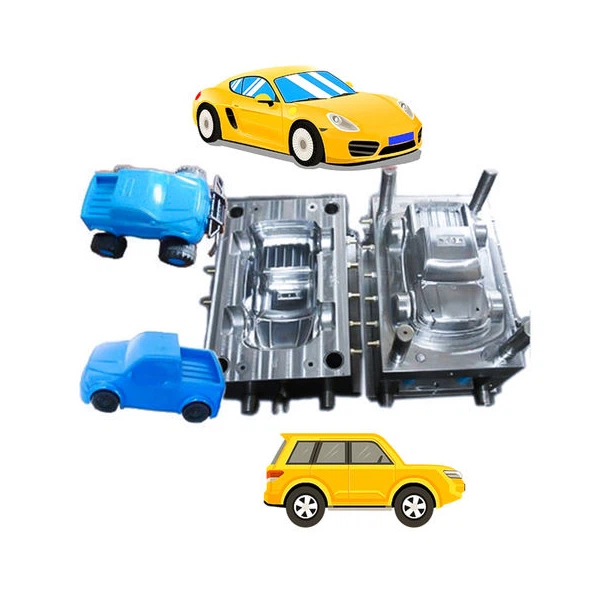

First off, what exactly is resin curing? Well, resin curing is the process where the resin changes from a liquid state to a solid state. This transformation is essential for creating a durable and well - formed baby car part within the mold. The curing time can vary depending on several factors, and understanding these factors is key to getting the best results.
One of the most significant factors affecting resin curing time is the type of resin being used. There are different types of resins available in the market, such as epoxy resin, polyester resin, and polyurethane resin. Each type has its own unique chemical properties, which directly influence the curing time.
Epoxy resin is a popular choice for baby car molds due to its excellent strength, adhesion, and chemical resistance. Generally, epoxy resin has a relatively long curing time compared to some other resins. At room temperature (around 20 - 25°C or 68 - 77°F), it can take anywhere from 24 to 72 hours to fully cure. However, this time can be reduced by using a catalyst or by increasing the temperature.
Polyester resin, on the other hand, cures faster than epoxy resin. At room temperature, it can cure within 1 to 4 hours. But it's important to note that polyester resin may not have the same level of strength and durability as epoxy resin, so it might not be suitable for all baby car parts.
Polyurethane resin offers a good balance between curing time and properties. It can cure in a relatively short time, usually within 1 to 2 hours at room temperature. Polyurethane resin is also known for its flexibility and impact resistance, which can be beneficial for certain baby car components.
Another factor that affects resin curing time is the temperature. As I mentioned earlier, increasing the temperature can speed up the curing process. For example, if you heat epoxy resin to around 60 - 80°C (140 - 176°F), the curing time can be reduced to a few hours. However, it's crucial to be careful when heating the resin, as overheating can cause the resin to bubble, crack, or lose its mechanical properties.
The humidity in the environment also plays a role in resin curing. High humidity can slow down the curing process, especially for some types of resins. Moisture in the air can react with the resin and interfere with the chemical reactions that cause curing. So, it's best to work in a dry environment when using resin in baby car molds.
The thickness of the resin layer is yet another factor. Thicker layers of resin will take longer to cure than thinner layers. This is because the heat and chemical reactions need to penetrate through the entire thickness of the resin to achieve full curing. If you're working with thick resin layers, you may need to use a slower - curing resin or adjust the temperature and humidity accordingly.
Now, let's talk about how the curing time impacts the production of baby car molds. If the curing time is too long, it can slow down the production process, increasing the cost and reducing the overall efficiency. On the other hand, if the curing time is too short, the resin may not fully cure, resulting in a weak and brittle part.
As a Baby Car Mold supplier, I always recommend my customers to test different resins and curing conditions to find the optimal combination for their specific needs. This way, they can ensure high - quality products while maintaining a reasonable production speed.
If you're interested in other types of children - related molds, we also offer Child Safety Seat Mold, Plastic Toy Injection Mould, and Toy Car Mold. These molds are designed with the same level of precision and quality as our baby car molds.
In conclusion, the curing time for resin in a baby car mold depends on various factors, including the type of resin, temperature, humidity, and resin layer thickness. By understanding these factors and making the right adjustments, you can achieve the best results in your baby car production.
If you're in the market for high - quality baby car molds or have any questions about resin curing, don't hesitate to reach out. We're here to help you with all your mold - related needs and ensure a smooth and efficient production process.
References
- "Resin Technology Handbook" by Resin Experts Publishing
- "Molding Processes for Children's Products" by Industry Insights Press