

As a supplier of Plastic Toy Mould, I've witnessed firsthand the various factors that can limit the production capacity of these crucial tools. In this blog post, I'll delve into the key production capacity limitations of plastic toy moulds, drawing on my experience in the industry.
1. Material Limitations
The choice of materials for plastic toy moulds is a critical factor that can significantly impact production capacity. High - quality mould steels are commonly used due to their excellent hardness, wear resistance, and heat resistance. However, these materials come with their own limitations.
First, the availability of certain grades of mould steel can be a constraint. Some high - performance steels are produced in limited quantities, and lead times for procurement can be long. This means that if a sudden surge in demand for a particular plastic toy mould occurs, we may not be able to source the required material promptly, thus delaying the production of the mould.
Second, the machining of mould steel is a complex and time - consuming process. The harder the steel, the more difficult it is to machine, which can slow down the overall production of the mould. For example, some advanced mould steels with high alloy content require specialized cutting tools and machining techniques. This not only increases the cost but also reduces the number of moulds that can be produced within a given time frame.
2. Design Complexity
The design of a plastic toy mould plays a crucial role in determining its production capacity. Complex designs with intricate details, undercuts, and thin walls pose significant challenges during the manufacturing process.
When it comes to complex geometries, the machining time for the mould cavity and core increases substantially. For instance, a Toy Car Mold with detailed interior features and complex body curves requires precise machining operations. Each curve and detail needs to be carefully crafted, often using multi - axis machining centers, which are more time - consuming compared to simple two - dimensional machining.
Undercuts in the toy design also add to the complexity. Special ejection mechanisms need to be incorporated into the mould to release the plastic toy from the mould cavity. Designing and manufacturing these ejection systems can be a complex task, and any misalignment or malfunction can lead to production delays. Additionally, thin - walled designs require high - precision injection molding processes. The mould needs to be able to withstand high pressures during injection, and the cooling system must be carefully designed to ensure uniform cooling of the thin walls. Otherwise, defects such as warping and sink marks may occur, reducing the production yield and overall capacity.
3. Manufacturing Equipment and Technology
The quality and capabilities of the manufacturing equipment used to produce plastic toy moulds have a direct impact on production capacity. Outdated or insufficient equipment can severely limit the number of moulds that can be produced.

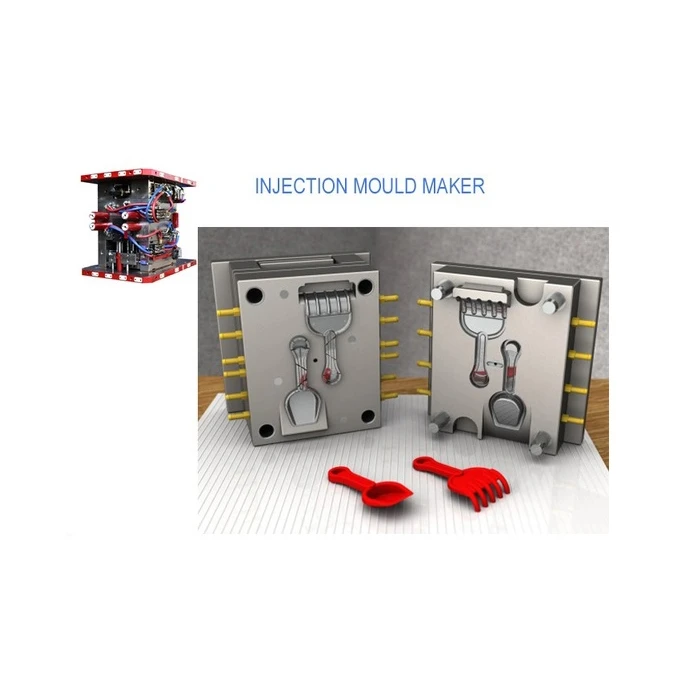
For example, a traditional milling machine may have limited precision and speed compared to a modern five - axis machining center. A five - axis machine can perform complex machining operations in a single setup, reducing the need for multiple setups and re - alignments. This not only improves the accuracy of the mould but also significantly reduces the machining time.
In addition to machining equipment, the injection molding machines used to test and produce plastic toys from the moulds also play a role. If the injection molding machine has a limited clamping force or shot size, it may not be able to handle large - scale or high - volume production. For instance, a small - sized injection molding machine may only be suitable for producing small plastic toys, and trying to use it for larger toys may result in incomplete filling of the mould cavity or other defects.
4. Workforce Skills and Experience
The skills and experience of the workforce involved in the production of plastic toy moulds are vital for ensuring high - quality and efficient production. A lack of skilled workers can lead to production bottlenecks.
Skilled machinists are required to operate the complex manufacturing equipment used in mould production. They need to have a deep understanding of machining processes, tool selection, and programming. If there is a shortage of such skilled workers, the production speed will inevitably be affected. For example, an inexperienced machinist may make mistakes during the machining process, such as incorrect tool settings or improper programming, which can lead to scrapped parts and rework.
In addition, tool and die makers with experience in plastic toy mould design and manufacturing are essential. They are responsible for ensuring that the mould design meets the requirements of the plastic toy and that the mould functions properly during the injection molding process. Without their expertise, it is difficult to produce high - quality moulds in a timely manner.
5. Cooling System Efficiency
The cooling system in a plastic toy mould is crucial for controlling the temperature of the plastic during the injection molding process. An inefficient cooling system can significantly limit production capacity.
If the cooling channels in the mould are not designed properly, uneven cooling may occur. This can lead to warping, shrinkage, and other defects in the plastic toy. To correct these defects, the production process may need to be halted, and adjustments may need to be made to the cooling system.
Moreover, slow cooling times due to an inefficient cooling system mean that the cycle time for each injection molding operation increases. Longer cycle times result in fewer plastic toys being produced per hour, reducing the overall production capacity of the mould. For example, in a large - scale production environment, a few seconds of additional cooling time per cycle can add up to a significant reduction in the number of toys produced over a day or a week.
6. Maintenance and Downtime
Regular maintenance of plastic toy moulds is essential to ensure their long - term performance and production capacity. However, maintenance activities also result in downtime.
Moulds need to be cleaned, inspected, and repaired periodically to prevent wear and tear, corrosion, and other issues. During the maintenance process, the mould is taken out of production, which reduces the overall production time. For example, if a mould needs to be disassembled for a thorough cleaning and inspection, it may be out of commission for several hours or even days, depending on the complexity of the mould.
In addition, unexpected breakdowns can occur, leading to unplanned downtime. These breakdowns can be caused by factors such as mechanical failures, electrical problems, or wear of critical components. Resolving these issues often requires specialized technicians and replacement parts, which can further delay the resumption of production.
Conclusion
In conclusion, the production capacity of plastic toy moulds is limited by a variety of factors, including material limitations, design complexity, manufacturing equipment and technology, workforce skills and experience, cooling system efficiency, and maintenance and downtime. As a Plastic Toy Mould supplier, we are constantly striving to overcome these limitations to meet the growing demand for high - quality plastic toy moulds.
We invest in advanced manufacturing equipment, train our workforce to improve their skills, and optimize our design and production processes. By doing so, we aim to increase the production capacity of our plastic toy moulds while maintaining high - quality standards.
If you are in the market for Plastic Toy Injection Mould or other plastic toy moulds, we would be delighted to discuss your requirements. Our team of experts is ready to provide you with customized solutions and high - quality products. Contact us today to start a procurement discussion and take your plastic toy production to the next level.
References
- "Plastic Injection Molding Handbook" by O. Olabisi
- "Tool and Die Making Technology" by C. A. Brandt