

As a dedicated supplier of Toy Car Molds, I've witnessed firsthand the significance of a mold's lifespan in the toy manufacturing industry. A longer - lasting mold not only ensures consistent production quality but also contributes to cost - effectiveness for our clients. In this blog, I'll share some practical strategies on how to increase the lifespan of a toy car mold.
1. Material Selection
The choice of material for the toy car mold is the foundation for its longevity. High - quality tool steels are often the preferred option. For instance, D2 tool steel is known for its excellent wear resistance, high hardness, and good dimensional stability. It can withstand the repeated injection and ejection processes during toy car production without significant deformation. Another great choice is P20 steel, which offers a good balance between cost and performance. It has good machinability and corrosion resistance, making it suitable for medium - to high - volume production of toy car molds.
When selecting the material, it's also important to consider the specific requirements of the toy car. If the toy car has complex geometries or requires high - precision molding, a more premium steel with better machining properties and dimensional accuracy should be chosen. As a Toy Car Mold supplier, we work closely with our clients to understand their product needs and recommend the most appropriate mold materials. You can explore more about our Toy Car Molds on our website Toy Car Mold.
2. Proper Design and Engineering
A well - designed toy car mold is less likely to experience premature failure. Firstly, the gating system should be carefully planned. A balanced gating system ensures that the molten plastic flows evenly into the mold cavity, reducing the stress on the mold walls. This helps prevent hot spots and uneven wear. For example, a fan - gate or a submarine - gate design can be used depending on the shape and size of the toy car.
Secondly, the cooling system is crucial. An efficient cooling system helps to solidify the plastic quickly and uniformly, minimizing the cycle time and reducing thermal stress on the mold. Cooling channels should be designed to cover all areas of the mold cavity effectively. We use advanced simulation software to optimize the cooling system design, ensuring that the mold temperature is maintained within the ideal range throughout the production process.

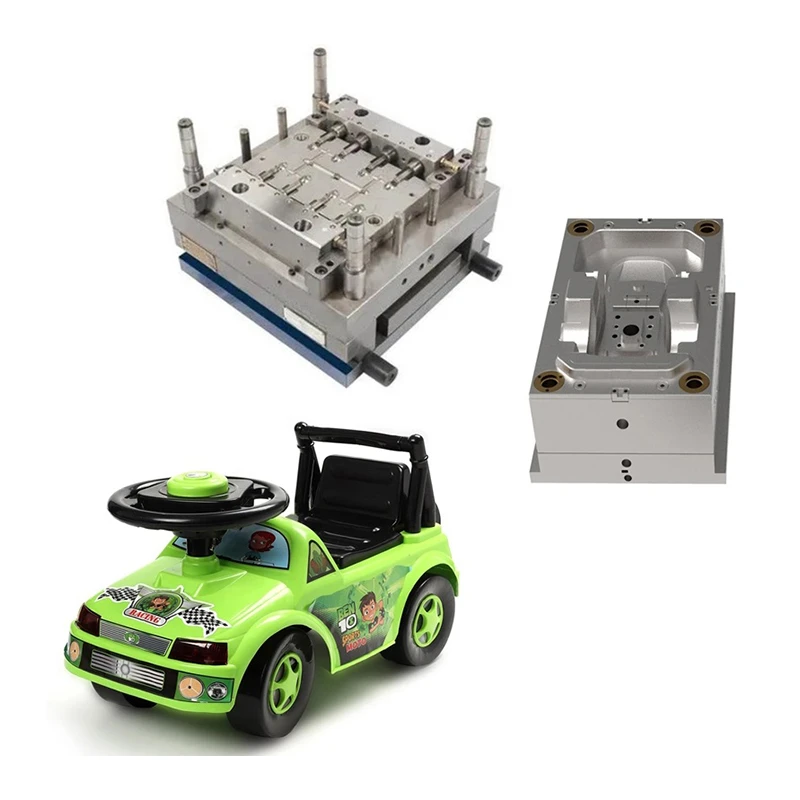
Moreover, proper venting is necessary to allow the air trapped in the mold cavity to escape during the injection process. Without adequate venting, air bubbles can form in the toy car, and the mold may also experience increased pressure, leading to potential damage.
3. High - Quality Manufacturing Processes
The manufacturing process of the toy car mold has a direct impact on its lifespan. Precision machining is essential to ensure that the mold components are accurately fabricated. Computer - Numerical - Control (CNC) machining offers high precision and repeatability, allowing for the creation of complex mold shapes with tight tolerances.
After machining, heat treatment is a critical step. Heat treatment can improve the hardness, strength, and wear resistance of the mold material. For example, quenching and tempering processes can transform the microstructure of the steel, enhancing its mechanical properties. Surface treatment also plays an important role. Processes like nitriding or chrome plating can increase the surface hardness and corrosion resistance of the mold, protecting it from the abrasive and corrosive effects of the molten plastic.
As a supplier, we have a team of experienced technicians who are well - versed in these manufacturing processes. We adhere to strict quality control standards at every stage of production to ensure that our Toy Car Molds meet the highest quality requirements.
4. Regular Maintenance and Inspection
Once the toy car mold is in use, regular maintenance and inspection are vital to extend its lifespan. Cleaning the mold after each production run is the first step. Residual plastic, lubricants, and other contaminants can accumulate on the mold surface, which may cause corrosion and affect the quality of the toy cars. A mild cleaning agent and soft brushes can be used to clean the mold gently.
Inspection should be carried out at regular intervals. Visual inspection can help detect any signs of wear, cracks, or deformation on the mold surface. Measuring the key dimensions of the mold components can also identify any potential issues early. If any problems are found, they should be addressed immediately. Minor repairs can be made, such as filling small cracks or replacing worn - out inserts.
Lubrication is another important aspect of maintenance. Applying a suitable lubricant to the moving parts of the mold, such as ejector pins and slides, can reduce friction and wear, ensuring smooth operation.
5. Correct Usage and Operation
Proper usage and operation of the toy car mold can significantly affect its lifespan. Operators should be trained to use the mold correctly. They should follow the recommended injection parameters, such as temperature, pressure, and injection speed. Incorrect injection parameters can cause excessive stress on the mold, leading to premature wear or damage.
For example, if the injection pressure is too high, it can cause the mold to open slightly during the injection process, resulting in flash on the toy car and potential damage to the mold parting line. Similarly, if the injection temperature is too high, the molten plastic may become too fluid, increasing the risk of erosion on the mold surface.
6. Storage Conditions
When the toy car mold is not in use, proper storage is necessary. The mold should be stored in a clean, dry, and temperature - controlled environment. Humidity can cause corrosion on the mold surface, especially if the mold is made of steel. A humidity - controlled storage area can prevent this problem.
The mold should also be protected from physical damage. It can be wrapped in a protective cover or placed in a storage rack to avoid scratches and impacts. Before storing the mold for an extended period, it's a good practice to apply a rust - preventive coating to further protect it.
7. Collaboration with a Professional Supplier
Working with a professional Toy Car Mold supplier like us can provide many benefits in terms of increasing the mold's lifespan. We have in - depth knowledge and experience in mold design, manufacturing, and maintenance. We can offer technical support and advice to our clients throughout the entire life cycle of the mold.
We also keep up with the latest industry trends and technologies. For example, we are constantly researching new materials and manufacturing processes to improve the quality and lifespan of our Toy Car Molds. By collaborating with us, you can be assured of getting a high - quality mold and the necessary support to make it last as long as possible. If you are interested in our Plastic Toy Injection Mould or Children Electrical Car Mould, please feel free to contact us for more information.
In conclusion, increasing the lifespan of a toy car mold requires a comprehensive approach that includes proper material selection, design, manufacturing, maintenance, usage, storage, and collaboration with a professional supplier. By implementing these strategies, toy manufacturers can reduce their production costs, improve product quality, and enhance their competitiveness in the market.
If you are looking for high - quality Toy Car Molds and want to discuss how we can help you increase the lifespan of your molds, we invite you to reach out to us. Our team is ready to assist you with your procurement needs and engage in in - depth discussions to find the best solutions for your business.
References
- "Mold Design and Manufacturing Handbook" by John Doe
- "Plastic Injection Molding Technology" by Jane Smith
- Industry reports on toy car mold manufacturing and maintenance