

As a supplier of Rear Bumper Mould, I have witnessed firsthand the challenges and complexities involved in the production process. The efficiency of rear bumper mould production is crucial not only for meeting market demand but also for maintaining a competitive edge in the industry. In this blog, I will share some strategies and insights on how to improve the efficiency of rear bumper mould production based on my years of experience.
1. Advanced Design and Engineering
The first step in improving the efficiency of rear bumper mould production is to invest in advanced design and engineering. A well - designed mould can significantly reduce production time and costs.
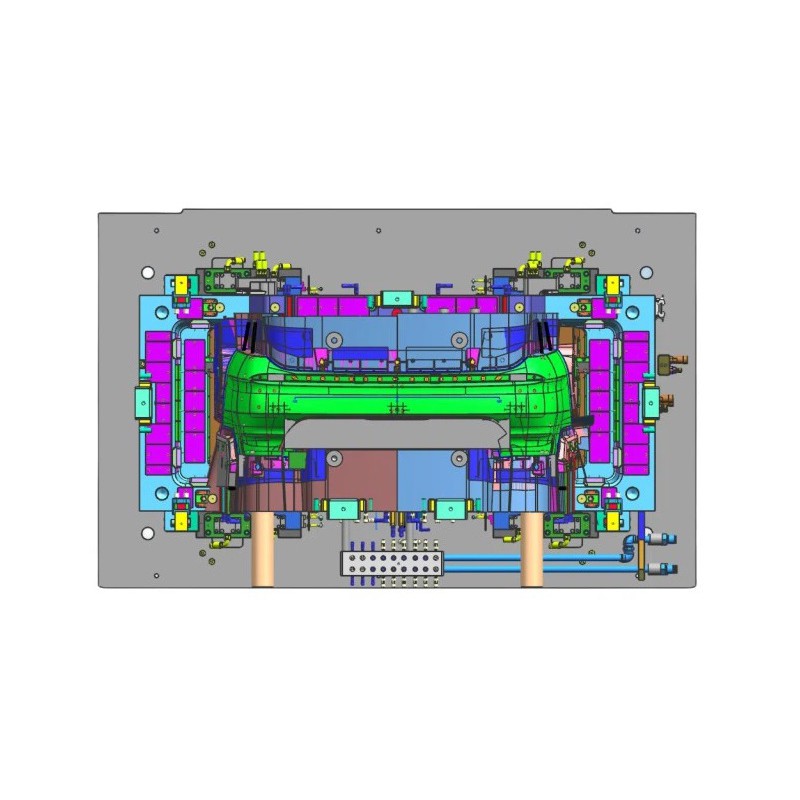
- 3D Modeling and Simulation: Utilize 3D modeling software to create a virtual prototype of the rear bumper mould. This allows for detailed analysis of the mould structure, including the flow of plastics, cooling channels, and ejection mechanisms. By simulating the injection molding process, potential issues such as air traps, warping, and uneven cooling can be identified and resolved before the actual production of the mould. For example, Moldflow is a widely used software for injection molding simulation. It can predict the filling pattern, pressure distribution, and part quality in the virtual environment, enabling engineers to optimize the design.
- Modular Design: Adopt a modular design approach for rear bumper moulds. This means dividing the mould into smaller, interchangeable components. Modular design offers several advantages. Firstly, it simplifies the manufacturing process as each module can be produced independently, reducing the overall production time. Secondly, it makes maintenance and repair easier. If a particular part of the mould is damaged, only the corresponding module needs to be replaced, rather than the entire mould. Moreover, modular design allows for greater flexibility in adapting to different rear bumper designs. You can find more about our Rear Bumper Mould on our website.
2. High - Quality Materials and Precision Manufacturing
The choice of materials and the quality of manufacturing play a vital role in the efficiency of rear bumper mould production.
- Selecting the Right Materials: Use high - quality tool steel for the mould cavity and core. The material should have good hardness, toughness, and wear resistance to withstand the high pressure and temperature during the injection molding process. For instance, P20 and H13 are commonly used tool steels in the production of rear bumper moulds. P20 is suitable for general - purpose moulds, while H13 is preferred for high - production and high - performance applications due to its excellent thermal fatigue resistance.
- Precision Machining: Employ advanced machining techniques such as CNC (Computer Numerical Control) machining to ensure the accuracy and surface finish of the mould. CNC machines can perform complex operations with high precision, reducing the need for manual finishing and minimizing errors. Additionally, wire - cutting EDM (Electrical Discharge Machining) can be used for creating intricate shapes and for finishing the mould to a high level of accuracy. This results in a mould that can produce rear bumpers with consistent quality, reducing the number of rejects and rework.
3. Optimized Production Process
Streamlining the production process is essential for improving efficiency.
- Lean Manufacturing Principles: Implement lean manufacturing principles in the production of rear bumper moulds. This includes eliminating waste, reducing lead times, and optimizing workflow. For example, organize the production area in a logical manner to minimize the movement of materials and tools. Use visual management techniques such as Kanban systems to control the flow of work and ensure that each stage of the production process is completed on time.
- In - house Production and Integration: Try to have as much of the production process in - house as possible. This allows for better control over the quality, cost, and schedule. For instance, if your company can handle the machining, heat treatment, and surface finishing of the mould components internally, it can reduce the reliance on external suppliers and avoid potential delays. Moreover, integrating different production processes can lead to better communication and coordination among the production teams.
4. Efficient Cooling System
A well - designed cooling system is critical for the efficiency of rear bumper mould production.
- Cooling Channel Design: Optimize the design of the cooling channels in the mould. The cooling channels should be evenly distributed around the mould cavity to ensure uniform cooling of the plastic part. This helps to prevent warping and shrinkage of the rear bumper, reducing the need for post - processing. For example, conformal cooling channels can be used, which follow the shape of the mould cavity more closely than traditional straight - drilled cooling channels. Conformal cooling channels provide more efficient heat transfer, reducing the cooling time and cycle time of the injection molding process.
- Cooling Medium and Temperature Control: Use an appropriate cooling medium, such as water or oil, and maintain precise temperature control. The temperature of the cooling medium can significantly affect the cooling rate and the quality of the final product. By using advanced temperature control systems, the cooling process can be optimized to achieve the shortest possible cycle time without sacrificing the quality of the rear bumper.
5. Skilled Workforce and Training
The skills and knowledge of the workforce are key factors in improving the efficiency of rear bumper mould production.
- Hiring Skilled Workers: Recruit experienced and skilled workers in the fields of mould design, machining, and injection molding. A team of experts can handle complex tasks more efficiently and can come up with innovative solutions to production problems.
- Continuous Training: Provide regular training for the workforce to keep them updated with the latest technologies and techniques in mould production. For example, training on new software for mould design, advanced machining operations, and quality control methods can enhance the skills of the workers and improve the overall efficiency of the production process.
6. Quality Control and Inspection
Implement a strict quality control and inspection system throughout the production process.
- In - process Inspection: Conduct in - process inspections at each stage of the mould production. This helps to identify and correct any defects early, preventing them from escalating and causing further delays. For example, after machining a mould component, inspect its dimensions, surface finish, and hardness to ensure that it meets the specifications.
- Final Inspection: Perform a comprehensive final inspection of the completed rear bumper mould before it is shipped to the customer. This includes functional testing, dimensional checking, and surface quality assessment. By ensuring that the mould meets the highest quality standards, you can reduce the risk of returns and rework, saving time and resources.
7. Collaboration and Supply Chain Management
Collaborate closely with suppliers and customers to improve the efficiency of rear bumper mould production.
- Supplier Collaboration: Establish long - term partnerships with reliable suppliers of raw materials and components. Good communication with suppliers can ensure the timely delivery of high - quality materials, reducing the risk of production delays. For example, work with your steel supplier to develop a just - in - time inventory system, which can help to minimize inventory costs while ensuring a continuous supply of materials.
- Customer Feedback: Actively seek feedback from customers during the design and production process. Customers can provide valuable insights into their specific requirements and expectations. By incorporating customer feedback, you can produce rear bumper moulds that better meet their needs, reducing the likelihood of rework and improving customer satisfaction.
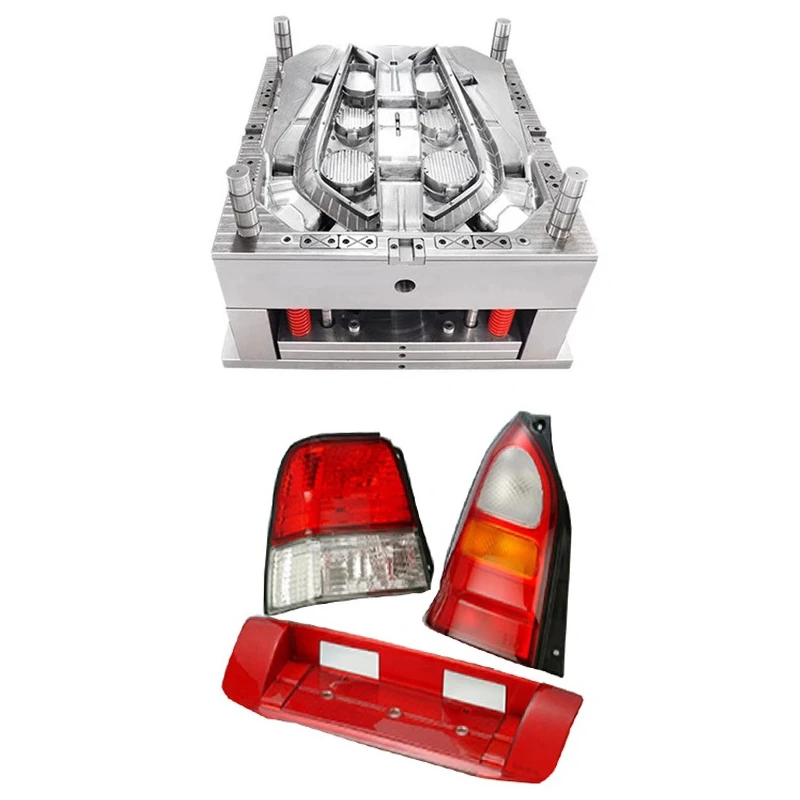
If you are interested in our Rear Bumper Mould or other products like Car Lamp Injection Mold and Front Bumper Mould, we welcome you to contact us for procurement and further discussion. We are committed to providing high - quality products and efficient services to meet your needs.
References
- "Mold Design Handbook" by Peter F. Otten
- "Injection Molding Handbook" by O. O. Olajide and M. J. Pucog
- Journal of Manufacturing Processes research papers on mould production efficiency