

In the manufacturing industry of washing machines, the precision of washing machine moulds plays a pivotal role. As a professional washing machine mould supplier, I understand deeply the significance of precision in moulds and the methods to ensure it. This blog will delve into how to guarantee the precision of a washing machine mould, covering aspects from design to production and quality control.
Design Phase: The Foundation of Precision
The design phase is the cornerstone of ensuring the precision of a washing machine mould. A well - designed mould can significantly reduce the occurrence of errors in the subsequent production process.
In - depth Understanding of Washing Machine Requirements
Before starting the design, it is essential to have a comprehensive understanding of the specific requirements of the washing machine. This includes the size, shape, and functionality of various parts of the washing machine. For example, if it is a Plastic Washing Machine Mould, we need to know the type of plastic to be used, its shrinkage rate, and the mechanical properties required for the final product. Different plastics have different shrinkage rates during the cooling process after injection. If this factor is not considered during the design, the final product may deviate from the expected size.
Advanced Design Software and Tools
Utilizing advanced design software is crucial. Software such as CAD (Computer - Aided Design) and CAE (Computer - Aided Engineering) can help designers create highly accurate 3D models of the mould. CAD allows for precise drawing of the structure and dimensions of the mould, while CAE can simulate the injection molding process. Through CAE simulation, we can predict issues such as filling patterns, pressure distribution, and temperature changes during the injection molding process. This helps in optimizing the design to ensure uniform filling of the plastic in the mould cavity, reducing the risk of defects such as air bubbles, warping, and uneven wall thickness.
Collaboration between Designers and Engineers
Effective communication and collaboration between designers and engineers are also vital. Designers are responsible for creating the overall concept and appearance of the mould, while engineers have in - depth knowledge of the manufacturing process and material properties. By working together, they can ensure that the design is not only aesthetically pleasing but also manufacturable. For instance, engineers can provide feedback on whether a certain design feature is feasible to manufacture with the available machining processes and equipment.
Material Selection: The Key to Durability and Precision
The choice of materials for the washing machine mould has a direct impact on its precision and service life.
High - Quality Steel Alloys
For most washing machine moulds, high - quality steel alloys are commonly used. These alloys offer excellent mechanical properties, such as high hardness, good wear resistance, and high thermal conductivity. High hardness ensures that the mould can withstand the high pressure and temperature during the injection molding process without deforming. Good wear resistance is essential because the mould is in contact with the plastic melt and the ejector pins during each cycle, and wear can lead to dimensional changes over time. High thermal conductivity helps in efficient heat transfer, which is crucial for controlling the cooling rate of the plastic and reducing the risk of warping.
Consideration of Corrosion Resistance
In addition to the basic mechanical properties, corrosion resistance is also an important factor, especially for Washing Machine Inner Drum Bottom Mould and Washing Machine Base Mould. These parts may come into contact with water and detergents during the operation of the washing machine. If the mould material is not corrosion - resistant, rust and corrosion can occur, which will affect the surface finish and dimensional accuracy of the final product. Therefore, materials with appropriate corrosion - resistant coatings or alloys with inherent corrosion resistance should be selected.
Manufacturing Process: Precision Machining and Assembly
The manufacturing process of the washing machine mould involves multiple steps, and each step requires strict precision control.
Precision Machining
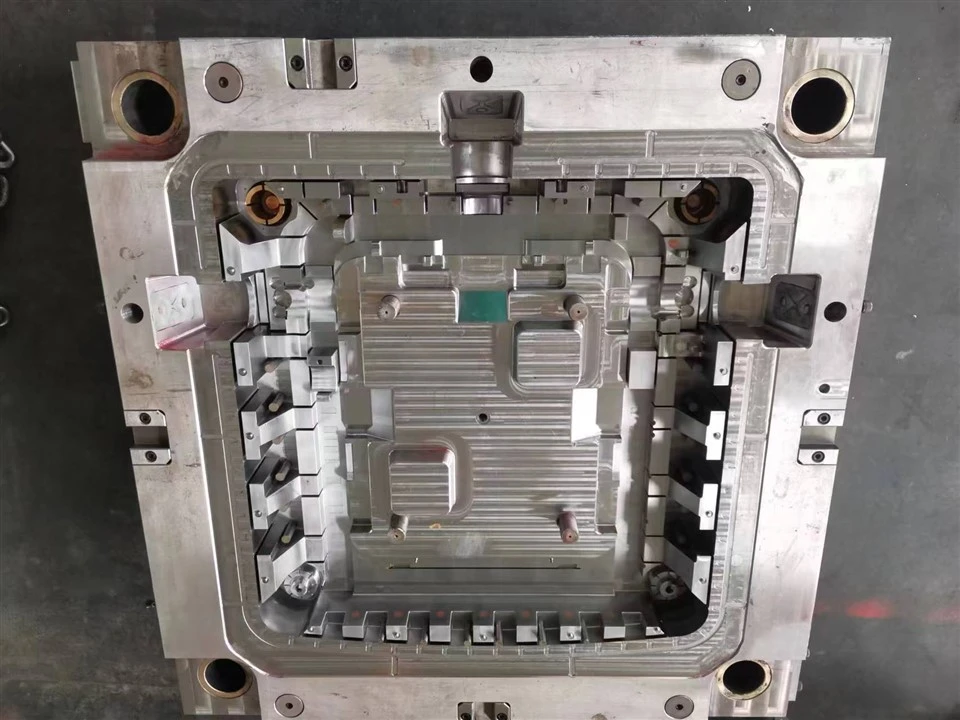
Precision machining is the core of mould manufacturing. Processes such as milling, turning, and grinding are used to shape the mould components. High - precision machining equipment, such as CNC (Computer Numerical Control) machines, is essential. CNC machines can achieve extremely high machining accuracy, with tolerances as low as a few micrometers. During the machining process, strict quality control measures should be implemented. Regular measurement and inspection of the machined parts using precision measuring tools such as coordinate measuring machines (CMM) are necessary to ensure that the dimensions meet the design requirements.
Assembly and Alignment
After machining, the assembly of the mould components is a critical step. Each part must be accurately aligned and assembled to ensure the overall precision of the mould. The use of alignment pins and fixtures can help in achieving accurate positioning. During the assembly process, it is necessary to check the fit between different parts, such as the clearance between the core and the cavity. Any misalignment or improper fit can lead to problems such as flash (excess plastic) during the injection molding process.
Quality Control: Ensuring Consistency and Precision
Quality control is an ongoing process throughout the entire life cycle of the washing machine mould.
In - process Inspection
In - process inspection is carried out at each stage of the manufacturing process. This includes checking the raw materials for defects, inspecting the machined parts for dimensional accuracy, and verifying the assembly quality. By detecting and correcting problems early in the process, we can avoid costly rework and ensure that the final mould meets the required precision standards.
Final Inspection and Testing
Before the mould is delivered to the customer, a comprehensive final inspection and testing are conducted. This includes a detailed dimensional inspection using CMM to ensure that all dimensions are within the specified tolerances. Functional testing is also carried out by performing trial injection molding runs. During these runs, the quality of the produced parts is carefully examined for defects such as surface finish, dimensional accuracy, and mechanical properties. Any issues identified during the testing phase are addressed before the mould is approved for delivery.
Continuous Improvement
Quality control is not a one - time activity but a continuous improvement process. By analyzing the data collected from inspections and testing, we can identify areas for improvement in the design, manufacturing process, or material selection. This feedback loop helps in enhancing the precision and quality of future moulds.
Conclusion
Ensuring the precision of a washing machine mould is a complex and systematic process that involves multiple aspects, from design and material selection to manufacturing and quality control. As a washing machine mould supplier, we are committed to providing high - precision moulds that meet the strict requirements of our customers. By adhering to the principles and methods outlined in this blog, we can produce moulds that not only ensure the quality of the washing machine parts but also improve the efficiency and productivity of the manufacturing process.
If you are interested in our washing machine moulds or have specific requirements for precision moulds, we welcome you to contact us for further discussion and procurement negotiation. We look forward to working with you to achieve your manufacturing goals.
References
- “Injection Molding Handbook” by O. Ocampo
- “Mould Design and Manufacturing Technology” by Zhang San