

Ensuring the dimensional accuracy of plastic spools made by a mould is a critical aspect in the manufacturing process, especially for a Plastic Spool Mould supplier like us. Dimensional accuracy directly impacts the functionality, compatibility, and overall quality of the plastic spools. In this blog, we will explore various factors and strategies to guarantee the precise dimensions of plastic spools during the moulding process.
Understanding the Importance of Dimensional Accuracy
Plastic spools are used in a wide range of industries, such as electronics, textiles, and cable management. In the electronics industry, for instance, spools are used to wind delicate wires. If the dimensions of the spool are not accurate, it can lead to improper winding, which may cause damage to the wires or affect the performance of the electronic device. In the textile industry, spools are used to hold yarns. Any deviation in the dimensions can result in uneven winding, leading to production issues and quality problems in the final textile products.
In cable management, spools are used to store and transport cables. Precise dimensions ensure that the cables can be wound neatly and that the spools can be stacked and stored efficiently. Therefore, maintaining dimensional accuracy is crucial for meeting the specific requirements of different industries and ensuring customer satisfaction.
Factors Affecting Dimensional Accuracy
Mould Design
The design of the mould is the foundation for achieving dimensional accuracy. A well - designed mould should take into account the shrinkage rate of the plastic material, the flow characteristics of the melt, and the cooling process. The shrinkage rate varies depending on the type of plastic used. For example, polypropylene has a relatively high shrinkage rate compared to some engineering plastics. The mould designer needs to accurately calculate the shrinkage rate and design the mould cavity with appropriate allowances.
The flow characteristics of the plastic melt also play a significant role. If the melt does not flow evenly through the mould cavity, it can cause uneven filling and result in dimensional variations. The gate location and size in the mould design are crucial factors. A properly placed gate can ensure a smooth and uniform flow of the melt, reducing the risk of dimensional inaccuracies.
Material Selection
The choice of plastic material has a direct impact on the dimensional accuracy of the spools. Different plastics have different physical and chemical properties, such as shrinkage rate, thermal expansion coefficient, and moisture absorption. For example, nylon is a hygroscopic material, which means it can absorb moisture from the environment. This moisture absorption can cause dimensional changes in the spool over time.
When selecting a plastic material, we need to consider the application requirements of the spool. For applications that require high dimensional stability, engineering plastics with low shrinkage rates and good mechanical properties, such as polycarbonate or acetal, may be more suitable. On the other hand, for cost - sensitive applications, commodity plastics like polypropylene or polyethylene can be used, but more attention needs to be paid to the mould design and processing parameters to compensate for their relatively high shrinkage rates.
Moulding Process Parameters
The moulding process parameters, including temperature, pressure, and cooling time, have a significant influence on the dimensional accuracy of the plastic spools. The temperature of the plastic melt affects its viscosity and flowability. If the temperature is too low, the melt may not flow smoothly through the mould cavity, leading to incomplete filling and dimensional defects. If the temperature is too high, it can cause excessive shrinkage and degradation of the plastic material.
The injection pressure also needs to be carefully controlled. Insufficient pressure may result in incomplete filling, while excessive pressure can cause flash and deformation of the spool. The cooling time is another critical parameter. A proper cooling time ensures that the plastic spool solidifies uniformly and reduces the internal stress, which can otherwise lead to warping and dimensional changes.
Strategies to Ensure Dimensional Accuracy
Advanced Mould Manufacturing Techniques
We, as a Plastic Spool Mould supplier, invest in advanced mould manufacturing techniques to ensure the precision of the mould. Computer - Numerical - Control (CNC) machining is widely used in our mould production. CNC machines can achieve high - precision machining, with an accuracy of up to a few micrometers. This high - precision machining ensures that the mould cavity has the exact dimensions required for the plastic spool.
Electrical Discharge Machining (EDM) is another technique we use, especially for complex mould geometries. EDM can create fine details and sharp edges in the mould, which is essential for achieving accurate dimensions in the plastic spool. Additionally, we use 3D printing technology for rapid prototyping of the mould. This allows us to quickly test and optimize the mould design before mass production, reducing the risk of dimensional inaccuracies.
Quality Control during Moulding
During the moulding process, we implement strict quality control measures to ensure dimensional accuracy. We use in - line inspection systems, such as coordinate measuring machines (CMMs) and laser scanners, to measure the dimensions of the plastic spools in real - time. These inspection systems can detect any dimensional deviations immediately and allow us to adjust the moulding process parameters accordingly.
We also conduct regular sampling inspections. A certain percentage of the produced spools are randomly selected and sent to the quality control laboratory for detailed measurement and analysis. This helps us to monitor the overall quality of the production and identify any potential issues early on.
Post - Processing and Finishing
After the moulding process, post - processing and finishing operations can further improve the dimensional accuracy of the plastic spools. For example, trimming can be used to remove any excess plastic or flash from the spool. This ensures that the spool has clean edges and accurate dimensions.
Heat treatment can also be applied to relieve the internal stress in the spool. By heating the spool to a specific temperature and then cooling it slowly, we can reduce the internal stress and prevent warping and dimensional changes over time.
Our Product Range
As a Plastic Spool Mould supplier, we offer a wide range of moulds for different types of plastic spools. Our Injection Plastic Spool Bobbin Mould is designed for high - precision injection moulding of spool bobbins. It is suitable for various plastic materials and can produce spools with excellent dimensional accuracy.
Our Plastic Cone Bobbin Mould is specifically designed for manufacturing cone - shaped bobbins. The unique design of this mould ensures that the cone bobbins have consistent dimensions and smooth surfaces.
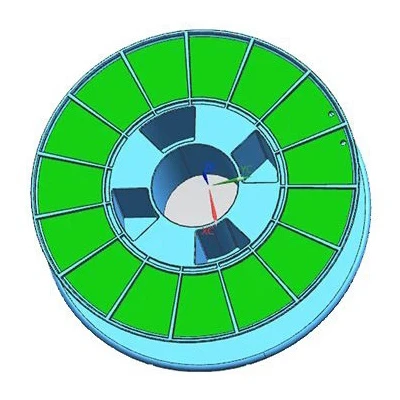
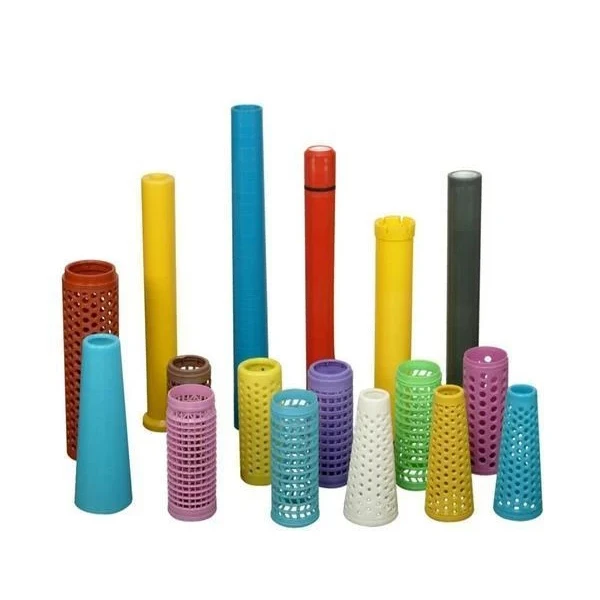
We also provide Cable Spool Mould for the cable industry. These moulds are engineered to produce cable spools with precise dimensions, which can effectively wind and store cables.
Conclusion
Ensuring the dimensional accuracy of plastic spools made by a mould is a complex but achievable task. By carefully considering factors such as mould design, material selection, and moulding process parameters, and implementing advanced manufacturing techniques and strict quality control measures, we can produce plastic spools with high dimensional accuracy.
If you are looking for a reliable Plastic Spool Mould supplier, we are here to provide you with high - quality moulds and excellent service. We are committed to meeting your specific requirements and helping you achieve the best results in your plastic spool production. Contact us for more information and to discuss your procurement needs.
References
- "Plastic Injection Moulding Handbook" by Osswald, Turng, and Gramann.
- "Mould Design for Plastics" by George Mallinson.
- Industry reports on plastic spool manufacturing and quality control.