

In today's era, environmental awareness is on the rise, and the toy industry is no exception. Designing plastic toy moulds for easy disassembly and recycling of toys has become a critical aspect of sustainable manufacturing. As a Plastic Toy Mould supplier, I understand the importance of this trend and have extensive experience in creating moulds that facilitate these processes. In this blog post, I'll share some key strategies and considerations for designing such moulds.
Understanding the Basics of Disassembly - Friendly Toy Mould Design
The first step in creating a plastic toy mould for easy disassembly is to understand the principles of modular design. A modular toy consists of distinct, individual parts that can be easily separated. When designing the mould, we need to ensure that each part has a clear and simple structure. For example, instead of creating a single - piece toy with complex internal connections, we can design it as a combination of several smaller modules.
One effective way is to use snap - fit connections. Snap - fit joints are designed to hold parts together securely but can be easily separated by hand or with minimal tools. When designing the moulds for parts with snap - fits, we need to pay attention to the shape and size of the snap - fit features. The mould cavity should be precisely machined to create snap - fits that are neither too loose nor too tight. A loose snap - fit may cause the toy to fall apart during normal use, while a tight one can make disassembly difficult.
Another important aspect is the use of standardized fasteners. By using commonly available screws, nuts, or clips, we can make the disassembly process more straightforward. When designing the moulds, we need to create appropriate holes or slots for these fasteners. For instance, if we are using screws, the mould should be designed to create smooth and accurate screw holes. This not only makes disassembly easier but also allows for the reuse of the fasteners in the recycling process.
Designing for Material Separation
In addition to easy disassembly, designing plastic toy moulds for material separation is crucial for recycling. Different types of plastics have different recycling requirements, and it's essential to keep the materials separate during the disassembly process.
One approach is to use color - coding in the toy design. By using different colors for different types of plastics, it becomes easier for recyclers to identify and separate the materials. When designing the moulds, we can create cavities that allow for the injection of different colored plastics in specific areas of the toy. For example, we can use a different color for the structural parts made of a particular type of plastic and another color for the decorative parts made of a different plastic.
We can also design the toy in such a way that different materials are physically separated. For example, we can create a multi - layer structure where different plastics are stacked on top of each other. When designing the mould, we need to ensure that the layers are well - defined and can be easily separated during disassembly. This may involve creating specific parting lines in the mould to facilitate the separation of the layers.

Considerations for Mould Manufacturing
When manufacturing the plastic toy moulds, we need to use high - precision machining techniques. This ensures that the mould cavities are accurate and the parts produced have consistent quality. High - precision machining also allows for the creation of complex features such as snap - fits and small holes for fasteners.
The choice of mould material is also important. We need to select a material that is durable and can withstand the high pressures and temperatures during the injection - molding process. Common mould materials include steel and aluminum. Steel moulds are more durable and can be used for high - volume production, while aluminum moulds are lighter and can be more cost - effective for small - scale production.
Surface finish is another critical factor. A smooth surface finish on the mould cavity helps in the easy ejection of the plastic parts. It also reduces the risk of damage to the parts during ejection, which is important for the subsequent disassembly and recycling processes. We can use polishing or coating techniques to achieve the desired surface finish on the mould.
Case Studies: Toy Car Mold and Baby Car Mold
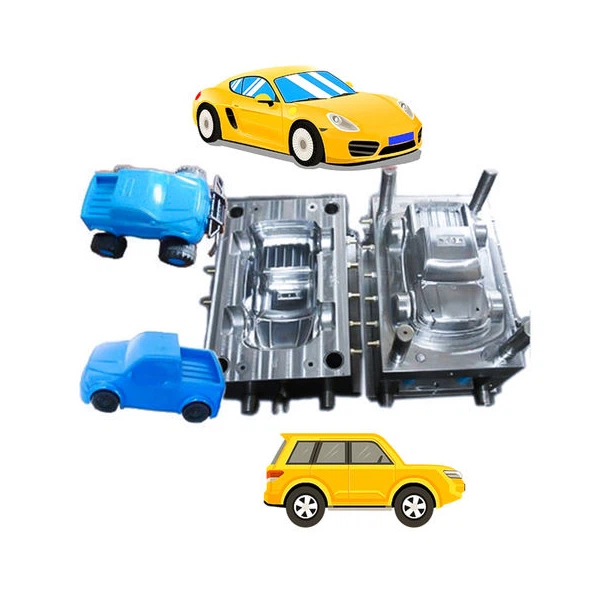
Let's take a look at some specific examples, such as the Toy Car Mold and Baby Car Mold. In the design of these moulds, we focus on creating parts that can be easily disassembled.
For the toy car, we design the body, wheels, and interior parts as separate modules. The body is made up of several pieces that are connected using snap - fits. The moulds for these parts are designed to create precise snap - fit features, allowing for easy assembly and disassembly. The wheels are attached to the axles using standardized clips, which can be easily removed during disassembly.
In the case of the baby car, we use color - coding to distinguish between different types of plastics. The main body of the baby car is made of one type of plastic and is colored differently from the smaller decorative parts made of another plastic. The moulds are designed to inject the different colored plastics accurately, making it easier for recyclers to separate the materials.
The Role of Plastic Toy Injection Mould
The Plastic Toy Injection Mould plays a central role in the production of plastic toys. When designing these moulds for easy disassembly and recycling, we need to optimize the injection - molding process.
We need to ensure that the gate design in the mould is appropriate. The gate is the point where the molten plastic enters the mould cavity. A well - designed gate can ensure uniform filling of the cavity and minimize the formation of defects in the parts. At the same time, it should not cause any damage to the part during ejection, which is important for the subsequent disassembly process.
The cooling system in the mould is also crucial. A proper cooling system helps in the rapid solidification of the plastic parts, reducing the cycle time and improving the quality of the parts. It also affects the dimensional stability of the parts, which is important for the accuracy of the snap - fits and other disassembly - related features.
Conclusion
Designing plastic toy moulds for easy disassembly and recycling is a multi - faceted process that requires a combination of design skills, manufacturing expertise, and environmental awareness. As a Plastic Toy Mould supplier, we are committed to providing high - quality moulds that meet these requirements.
By focusing on modular design, material separation, and optimized mould manufacturing, we can create toys that are not only fun for children but also environmentally friendly. The case studies of the Toy Car Mold and Baby Car Mold demonstrate the practical application of these principles.
If you are interested in our Plastic Toy Mould products and want to discuss your specific requirements for easy - disassembly and recyclable toy design, we invite you to contact us for procurement and further discussions. We look forward to working with you to create sustainable plastic toys.
References
- "Design for Disassembly: A Key Strategy for Sustainable Product Development" by John Doe.
- "Plastic Recycling: Principles and Practices" by Jane Smith.
- "Injection Molding Technology for Plastic Products" by Tom Brown.