

When it comes to automotive production, the rear bumper is a critical component that not only enhances the vehicle's aesthetics but also plays a significant role in safety. As a Rear Bumper Mould supplier, I understand the importance of choosing the right mould for your production. In this blog, I will share some key factors to consider when selecting a rear bumper mould to ensure optimal results for your manufacturing process.
1. Material Compatibility
The first step in choosing the right rear bumper mould is to consider the material you will be using for the bumper. Common materials for rear bumpers include polypropylene (PP), acrylonitrile butadiene styrene (ABS), and thermoplastic olefin (TPO). Each material has its own unique properties, such as strength, flexibility, and heat resistance. The mould must be designed to work with the specific material to ensure proper filling, cooling, and ejection of the bumper.
For example, if you are using polypropylene, which is a lightweight and cost - effective material, the mould should be able to withstand the relatively low melting temperature and high flowability of PP. On the other hand, if you choose ABS, which offers better impact resistance, the mould needs to be more robust to handle the higher injection pressures required.
2. Design Complexity
The design of the rear bumper can vary greatly depending on the vehicle model and brand. Some bumpers have simple, smooth surfaces, while others feature complex shapes, intricate details, and integrated components such as fog lights and reflectors. The complexity of the design directly affects the mould's manufacturing process and cost.
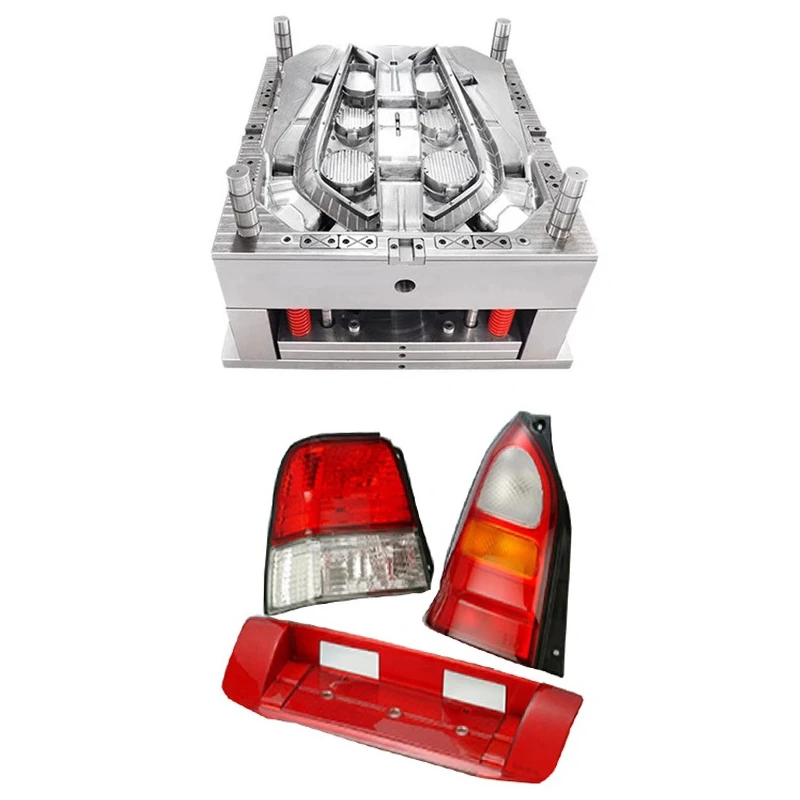
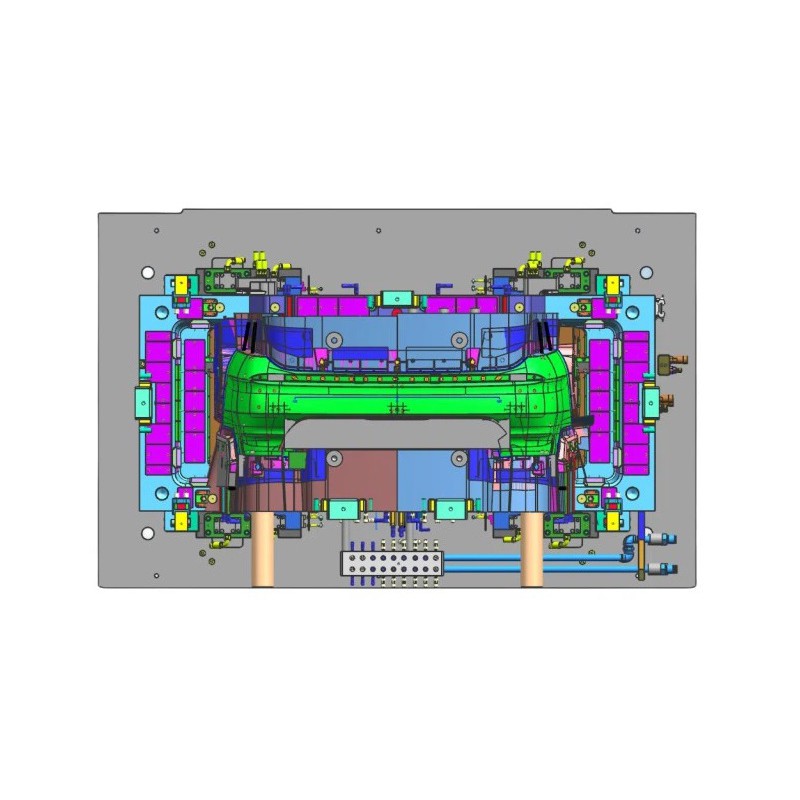
A simple design may require a basic two - plate mould, which is relatively inexpensive and easy to manufacture. However, for a more complex design, a multi - plate mould or a mould with side actions may be necessary. Side actions are used to create undercuts or features that cannot be ejected directly from the mould. These types of moulds are more expensive and time - consuming to produce but are essential for achieving the desired bumper design.
3. Production Volume
Your production volume is another crucial factor in choosing the right rear bumper mould. If you are planning to produce a small number of bumpers, a prototype mould or a low - cost aluminium mould may be sufficient. These moulds are quick to manufacture and can be used for initial testing and small - scale production.
However, for high - volume production, a steel mould is the better choice. Steel moulds are more durable and can withstand the repeated injection cycles required for mass production. They offer better dimensional stability and longer service life, which is essential for maintaining the quality and consistency of the bumpers over time.
4. Precision and Tolerance
In the automotive industry, precision and tolerance are of utmost importance. The rear bumper must fit perfectly onto the vehicle, aligning with other body parts and meeting strict quality standards. The mould must be able to produce bumpers with high precision and tight tolerances.
A high - quality mould will be manufactured using advanced machining techniques, such as computer numerical control (CNC) machining, to ensure accurate dimensions and smooth surfaces. Additionally, the mould should be properly heat - treated to prevent deformation and ensure long - term stability.
5. Mould Manufacturer's Experience and Reputation
Choosing a reliable mould manufacturer is as important as considering the technical aspects of the mould. An experienced manufacturer will have the expertise and knowledge to design and produce a high - quality rear bumper mould that meets your specific requirements.
Look for a manufacturer with a proven track record in the automotive industry. Check their portfolio of previous projects, customer testimonials, and certifications. A reputable manufacturer will also offer after - sales support, including mould maintenance, repair, and technical assistance.
6. Cost - effectiveness
Cost is always a consideration in any production process. While it may be tempting to choose the cheapest mould available, it is important to balance cost with quality. A low - cost mould may not meet the required standards and may result in higher production costs in the long run due to frequent repairs and replacements.
Compare the prices of different mould manufacturers, taking into account the materials, design complexity, production volume, and additional services offered. A more expensive mould may actually be more cost - effective in the long term if it offers better quality, longer service life, and higher production efficiency.
7. Compatibility with Production Equipment
Ensure that the rear bumper mould is compatible with your existing production equipment, such as injection moulding machines. The mould's size, weight, and injection requirements must match the capabilities of your equipment.
Check the mould's clamping force requirements, injection pressure, and cooling system design. If the mould is not compatible with your equipment, you may need to invest in new machinery, which can significantly increase your production costs.
Conclusion
Choosing the right rear bumper mould is a complex decision that requires careful consideration of multiple factors. As a Rear Bumper Mould supplier, I am committed to providing high - quality moulds that meet the diverse needs of our customers. Whether you are looking for a simple prototype mould or a high - volume production mould, we have the expertise and resources to deliver the best solution for your automotive production.
If you are interested in our Rear Bumper Mould or have any questions about the mould selection process, please feel free to contact us for a consultation. We also offer a wide range of other automotive moulds, such as Front Bumper Mould and Car Lamp Injection Mold. Our team of experts is ready to assist you in making the right choice for your production.
References
- "Injection Molding Handbook" by O. Olsson and P. Wickman
- "Automotive Plastics and Composites" by K. Friedrich and R. Karger - Kocsis
- Industry reports on automotive mould manufacturing from leading market research firms