

How many front grilles can be produced from one mould?
As a front grille mould supplier, one of the most frequently asked questions I encounter is, "How many front grilles can be produced from one mould?" This question is crucial for automotive manufacturers and other clients as it directly impacts production costs, efficiency, and overall project planning. In this blog post, I'll delve into the factors that determine the number of front grilles a single mould can produce and provide some insights based on industry experience.
Factors Affecting the Production Quantity of Front Grilles from One Mould
1. Material and Design Complexity
The material used for the front grille and its design complexity play a significant role in determining the number of grilles a mould can produce. For instance, if the grille is made of high - strength plastics like polycarbonate or acrylonitrile butadiene styrene (ABS), which are commonly used in the automotive industry for their durability and aesthetic appeal, the wear and tear on the mould can vary.
Complex designs with intricate patterns, sharp edges, or undercuts require more precise moulds. These complex features can cause more stress on the mould during the injection - molding process. As a result, the mould may experience more rapid wear, reducing the total number of grilles it can produce. On the contrary, simpler grille designs with smooth surfaces and fewer details can generally be produced in larger quantities from a single mould.
2. Mould Quality and Construction
The quality of the mould itself is a major determinant. High - quality moulds are typically made from premium materials such as hardened steel or aluminum alloys. These materials offer better resistance to wear, corrosion, and thermal stress. A well - constructed mould with proper heat treatment and surface finishing can withstand a greater number of injection - molding cycles.
For example, a mould that is precision - machined using advanced manufacturing techniques like computer numerical control (CNC) machining will have a more consistent cavity and core, ensuring uniform grille production. This precision reduces the likelihood of defects and extends the mould's lifespan, allowing for a larger number of front grilles to be produced.
3. Production Environment and Process Parameters
The production environment, including temperature, humidity, and cleanliness, can affect the mould's performance. High temperatures can cause the mould to expand, potentially altering the dimensions of the grille and increasing the wear on the mould. Similarly, a dusty or dirty environment can introduce contaminants into the mould cavity, leading to surface defects on the grilles and reducing the mould's lifespan.
Proper process parameters, such as injection pressure, temperature, and cooling time, are also critical. Incorrect settings can result in incomplete filling of the mould cavity, warping of the grille, or excessive stress on the mould. By optimizing these parameters, manufacturers can ensure high - quality grille production and extend the mould's service life.
4. Maintenance and Care
Regular maintenance and care of the mould are essential for maximizing the number of grilles it can produce. This includes cleaning the mould after each production run to remove any residual plastic, lubricating moving parts, and inspecting for signs of wear or damage.
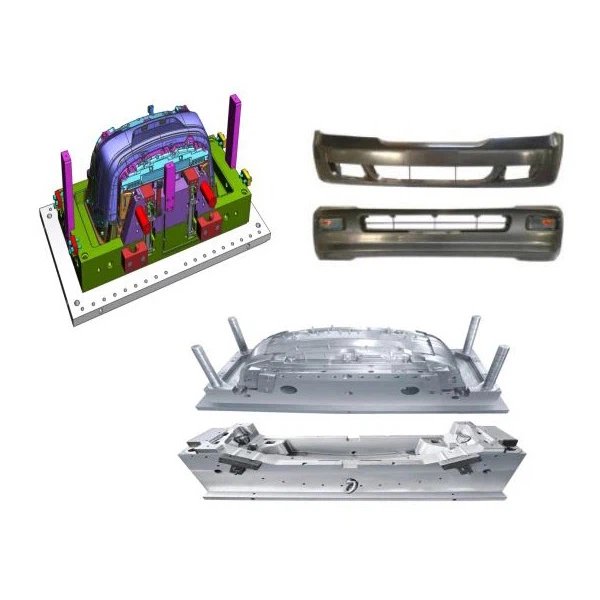

If any issues are detected early, they can be repaired promptly, preventing further damage to the mould. For example, if a small scratch is found on the mould surface, it can be polished out before it causes defects in the grille. By following a strict maintenance schedule, the mould can continue to produce high - quality grilles for a longer period.
Estimating the Production Quantity
Based on industry standards and our experience as a front grille mould supplier, a well - maintained and high - quality mould can produce anywhere from 50,000 to 500,000 front grilles. However, this is a very broad range, and the actual number can vary significantly depending on the factors mentioned above.
For simple grille designs made from common plastics and using a high - quality mould in an optimized production environment, it is possible to achieve the upper end of this range. On the other hand, complex designs or less - than - ideal production conditions may limit the production quantity to the lower end or even less.
Industry Examples and Case Studies
Let's take a look at some real - world examples. A client who ordered a Grille Cover Mould for a relatively simple grille design used in a mass - produced economy car. By using a high - quality steel mould and optimizing the production process, they were able to produce over 300,000 grilles from a single mould. The grille had a smooth surface and a basic shape, which reduced the stress on the mould during the injection - molding process.
In contrast, another client ordered an Air Conditioner Grille Mold with a very complex design featuring multiple layers and intricate patterns. Due to the complexity of the design, the mould experienced more wear and tear, and they were only able to produce around 80,000 grilles before the mould needed significant repairs.
Impact on Cost and Production Planning
The number of grilles a mould can produce has a direct impact on the cost per grille. A mould that can produce a large number of grilles will have a lower cost per unit, as the initial investment in the mould is spread over a greater quantity. This is especially important for large - scale production runs, where cost savings can be substantial.
For production planning, knowing the estimated number of grilles a mould can produce helps manufacturers determine how many moulds they need to order. If a manufacturer plans to produce a large number of grilles over a long period, they may need to invest in multiple moulds to ensure continuous production. On the other hand, for smaller production runs, a single high - quality mould may be sufficient.
Conclusion
In conclusion, the number of front grilles that can be produced from one mould depends on a variety of factors, including material and design complexity, mould quality, production environment, and maintenance. As a front grille mould supplier, we work closely with our clients to understand their specific requirements and provide the best - suited moulds.
If you are in the automotive industry or any other industry that requires front grilles and are interested in learning more about our Automotive Radiator Grille Tooling Mold or other grille moulds, we encourage you to reach out to us for a detailed discussion. We can help you estimate the number of grilles a mould can produce based on your specific design and production needs, and guide you through the process of procurement and production.
References
- "Injection Molding Handbook" by O. Osswald, T. Turng, and P. Gramann
- "Plastics in Automotive Engineering" by J. Karger - Kocsis and G. Friedrich