

Hey there! As a supplier of grille moulds, one question I get asked a lot is, "How long does it take to make a grille mould?" Well, the answer isn't as straightforward as you might think. There are a bunch of factors that can influence the production time, and I'm gonna break it all down for you in this blog.
Factors Affecting the Production Time
Design Complexity
The design of the grille mould plays a huge role in determining how long it'll take to make. If the grille has a simple, basic design with few intricate details, the mould can be produced relatively quickly. On the other hand, if it's a complex design with lots of curves, patterns, and fine details, it'll take much longer. For example, a grille for a high - end luxury car might have a very elaborate design that requires a lot of precision work. The designers and engineers have to spend more time creating the CAD models and ensuring that every detail is perfect. This could add weeks or even months to the production process.
Material Selection
The type of material used for the grille mould also impacts the production time. Different materials have different properties, and some are more difficult to work with than others. For instance, steel is a common material for grille moulds because it's strong and durable. However, machining steel can be a time - consuming process, especially if you need a high - quality finish. Aluminum, on the other hand, is lighter and easier to machine, so it can reduce the production time. But it might not be as suitable for some high - pressure or high - temperature applications. So, depending on the requirements of the grille, the choice of material can either speed up or slow down the manufacturing process.
Manufacturing Process
There are several manufacturing processes involved in making a grille mould, such as CNC machining, EDM (Electrical Discharge Machining), and surface finishing. Each process takes a certain amount of time, and the overall production time is the sum of all these individual processes. CNC machining is used to cut and shape the basic structure of the mould. The more complex the shape, the longer the machining time. EDM is often used for creating fine details and cavities that are difficult to achieve with traditional machining methods. Surface finishing is crucial for ensuring a smooth and defect - free surface on the mould. This can involve processes like polishing, texturing, and coating, which all add to the production time.
Quality Control
Quality control is an essential part of the grille mould production process. Before the mould is shipped to the customer, it has to go through a series of inspections and tests to ensure that it meets the required standards. This includes dimensional checks, hardness tests, and functionality tests. If any defects are found during the quality control process, the mould has to be reworked, which can significantly extend the production time. For example, if the dimensions of the mould are slightly off, it might need to be machined again to correct the error.
Typical Production Timeframes
Simple Grille Moulds
For simple grille moulds with basic designs and standard materials, the production time can range from 2 to 4 weeks. These are usually the types of grille moulds used for mass - produced vehicles where the design doesn't require a lot of customization. The manufacturing process is relatively straightforward, and the quality control checks are also less time - consuming.
Medium - Complexity Grille Moulds
Medium - complexity grille moulds, which have more detailed designs and might require special materials or manufacturing processes, typically take 4 to 8 weeks to produce. These could be grille moulds for mid - range vehicles or those with some unique features. The additional time is spent on design refinement, more precise machining, and more thorough quality control.
Complex Grille Moulds
Complex grille moulds, such as those for high - end sports cars or concept vehicles, can take 8 weeks or more to produce. These moulds often have extremely intricate designs, require the use of high - performance materials, and involve multiple advanced manufacturing processes. The design and engineering teams have to work closely together to ensure that every aspect of the mould meets the exact specifications. Quality control is also very strict for these types of moulds, as any defects could have a significant impact on the final product.
Our Experience as a Grille Mould Supplier
At our company, we've been in the grille mould business for quite a while, and we've learned how to manage the production time effectively. We have a team of experienced designers and engineers who can work quickly and efficiently to create high - quality grille moulds. We use the latest technology and equipment to streamline the manufacturing process and reduce the production time as much as possible.
For example, we have state - of - the - art CNC machines that can perform complex machining operations with high precision in a relatively short time. Our EDM machines are also very advanced, allowing us to create fine details and cavities with ease. We also have a rigorous quality control system in place to catch any potential issues early in the production process, which helps us avoid costly rework and delays.
Some Real - World Examples
Let me share a couple of real - world examples to give you a better idea of how the production time can vary.
We once had a customer who needed a simple grille mould for a budget - friendly car. The design was straightforward, and we were able to use standard steel as the material. Thanks to our efficient manufacturing process and experienced team, we were able to deliver the mould in just 3 weeks. The customer was very happy with the quick turnaround time and the quality of the mould.
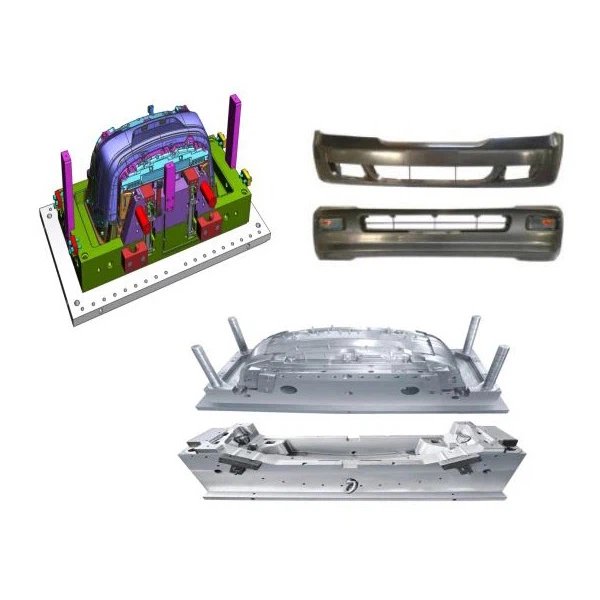

On the other hand, we had another customer who wanted a grille mould for a high - end luxury sports car. The design was extremely complex, with lots of curves, patterns, and fine details. We had to use a special type of high - strength steel and employ multiple advanced manufacturing processes. The production process took about 10 weeks, but the final mould was of the highest quality and met all the customer's requirements.
Links to Our Grille Mould Products
If you're interested in learning more about our grille mould products, check out these links:
Conclusion
So, as you can see, the time it takes to make a grille mould can vary widely depending on a number of factors. From design complexity and material selection to manufacturing processes and quality control, each aspect plays a crucial role in determining the overall production time. If you're in the market for a grille mould, it's important to have a clear understanding of your requirements and work with a reliable supplier who can manage the production process effectively.
If you have any questions or would like to discuss your grille mould needs, don't hesitate to reach out. We're here to help you get the best grille mould for your project.
References
- Industry reports on automotive mould manufacturing
- Internal records of grille mould production projects at our company