

As a seasoned supplier of bumper moulds, I've witnessed firsthand how the size of a bumper mould can significantly impact the production process. In this blog, I'll delve into the various aspects of how bumper mould size plays a crucial role in manufacturing, from design and material selection to production efficiency and cost.
Design Considerations
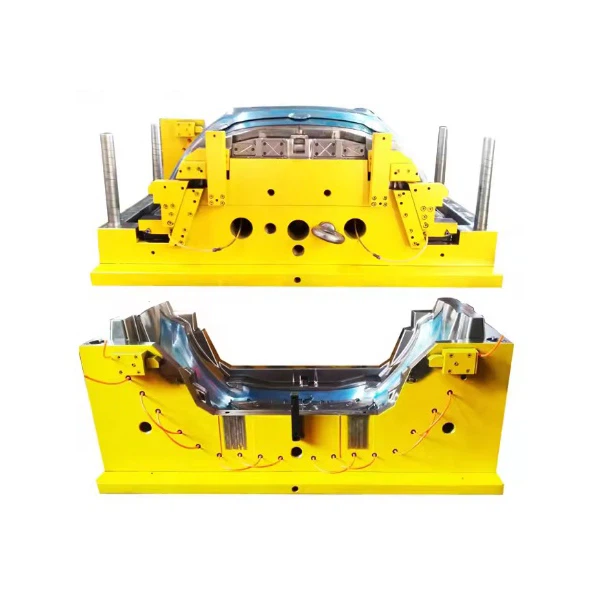
The size of a bumper mould is closely tied to the design requirements of the final bumper product. Larger bumper moulds are typically used for full - sized vehicles, such as SUVs and trucks, while smaller moulds are for compact cars. When designing a large bumper mould, engineers need to account for the increased complexity of the shape. A larger bumper often has more curves, contours, and mounting points, which means the mould design must be more precise.
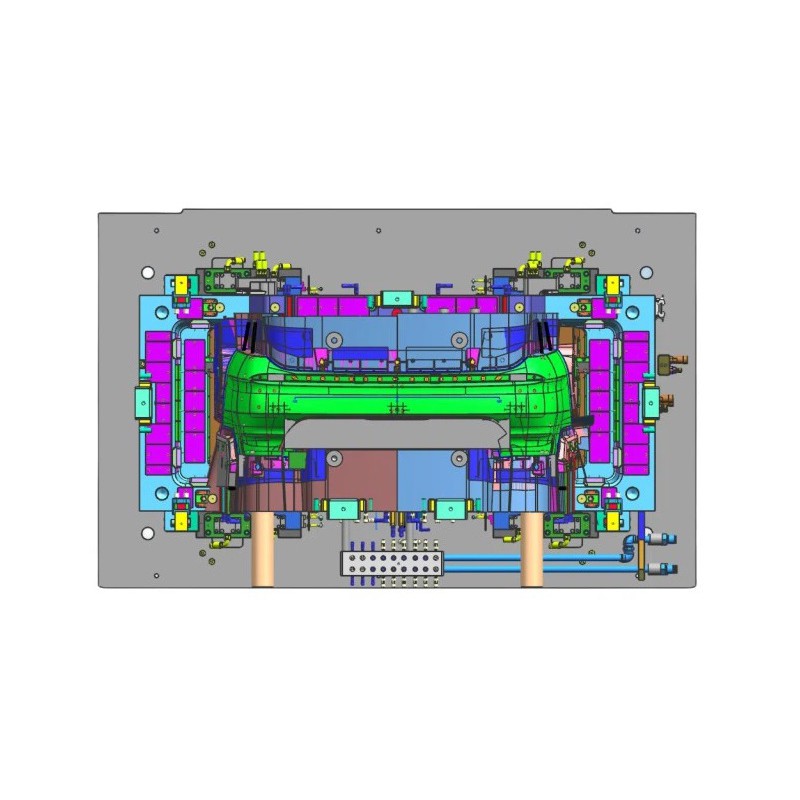
For instance, in a large Rear Bumper Mould, the design must ensure uniform wall thickness throughout the bumper. Any deviation in wall thickness can lead to problems during the injection moulding process, such as warping or sink marks. Moreover, the design of large bumper moulds needs to incorporate proper cooling channels. Since a larger mould has a greater volume of material to cool, efficient cooling is essential to prevent long cycle times and ensure the quality of the final product.
On the other hand, smaller bumper moulds have their own design challenges. While they may have fewer complex features, the tolerance requirements are often very tight. For example, in a small car's front bumper, the fitment around the headlights and grille must be perfect. This requires highly accurate mould design to ensure that the bumper can be assembled seamlessly with other vehicle components.
Material Selection
The size of the bumper mould also influences the choice of materials. For large bumper moulds, materials with high strength and good flow properties are preferred. Polypropylene (PP) is a commonly used material for large bumpers due to its excellent balance of strength, impact resistance, and cost - effectiveness. However, when dealing with large moulds, the flow of the molten plastic can be a challenge. The plastic needs to fill the entire cavity of the large mould evenly without any voids or air traps.
In addition, the thermal properties of the material are crucial. A large bumper mould generates more heat during the injection moulding process, and the material must be able to withstand high temperatures without deforming. Some advanced engineering plastics may be used in large bumper moulds to meet these requirements.
For smaller bumper moulds, materials with high precision and good surface finish are often selected. ABS (Acrylonitrile Butadiene Styrene) is a popular choice for small bumpers because it can provide a smooth and glossy surface, which is aesthetically pleasing. The lower volume of material in small moulds also allows for the use of more expensive, high - performance materials that may not be cost - effective for large - scale production.
Production Efficiency
The size of the bumper mould has a direct impact on production efficiency. Larger bumper moulds generally have longer cycle times. The injection process takes longer because more plastic needs to be injected into the mould cavity. Additionally, the cooling time is extended due to the larger volume of material. This means that the number of parts produced per hour is lower compared to smaller bumper moulds.
However, large bumper moulds can also offer economies of scale. Once the initial setup is complete, the cost per unit can be relatively low for high - volume production. For example, if a manufacturer is producing a large number of bumpers for a popular SUV model, using a large bumper mould can be more cost - effective in the long run, despite the longer cycle times.
Smaller bumper moulds, on the other hand, have shorter cycle times. The injection and cooling processes are faster, allowing for a higher production rate. This makes them ideal for low - volume production or for producing parts for niche vehicle models. For a custom - built sports car with a limited production run, using a small bumper mould can ensure quick turnaround times and reduce production costs.
Cost Factors
Cost is a significant consideration in the production process, and the size of the bumper mould has a major influence on it. The initial investment in a large bumper mould is substantial. The cost of designing, machining, and testing a large mould can be several times higher than that of a small mould. This is due to the increased complexity of the design, the larger amount of raw materials required, and the longer machining time.
However, as mentioned earlier, large bumper moulds can offer cost savings in high - volume production. The cost per unit decreases as the number of parts produced increases. This is because the fixed costs of the mould are spread over a larger number of products.
In contrast, small bumper moulds have a lower upfront cost. They are quicker and easier to manufacture, which reduces the overall cost of the mould. But for high - volume production, the cost per unit may be higher because the production efficiency is lower compared to large - scale production with large moulds.
Quality Control
Quality control is an essential part of the bumper production process, and the size of the bumper mould affects it in several ways. In large bumper moulds, it is more challenging to ensure consistent quality across the entire part. The large surface area means that there is a greater chance of defects such as scratches, dents, or uneven colour distribution. Special inspection techniques, such as 3D scanning and automated vision systems, may be required to detect and correct these defects.
Moreover, the uniformity of the material properties is crucial in large bumpers. Since a large bumper is subject to various stresses during use, any variation in material strength or impact resistance can lead to premature failure. Therefore, strict quality control measures need to be in place during the production of large bumpers.
For small bumper moulds, the focus of quality control is often on dimensional accuracy. The small size of the parts means that even a minor deviation in dimensions can cause fitment problems. Quality control checks need to be more frequent and precise to ensure that each small bumper meets the required specifications.
Impact on Assembly
The size of the bumper mould also has implications for the assembly process. Large bumpers are heavier and more cumbersome to handle during assembly. Special lifting and positioning equipment may be required to ensure that the bumper is correctly installed on the vehicle. In addition, the alignment of large bumpers with other vehicle components can be more challenging due to their size and weight.
Small bumpers, on the other hand, are easier to handle and assemble. They can be more easily integrated into the vehicle assembly line, reducing the overall assembly time and labour costs. However, the small size also means that the assembly process may require more delicate handling to avoid damage to the bumper.
Conclusion
In conclusion, the size of a bumper mould has far - reaching effects on the production process. From design and material selection to production efficiency, cost, quality control, and assembly, every aspect is influenced by the size of the mould. As a bumper mould supplier, we understand the importance of carefully considering these factors when working with our clients.
Whether you are in need of a Rear Bumper Mould, a Bumper Injection Mould, or a Car Lamp Injection Mold, we are here to provide you with the best solutions tailored to your specific needs. We can help you optimize the design, select the right materials, and ensure efficient production to meet your quality and cost requirements. If you are interested in our bumper mould products or have any questions, please feel free to contact us to start a fruitful procurement negotiation.
References
- "Injection Moulding Handbook" by O. Olanipekun and R. A. Adeyemi
- "Automotive Plastics and Composites: Technology, Applications, and Markets" by John Murphy
- Research papers on automotive bumper manufacturing processes from academic journals such as the Journal of Manufacturing Science and Engineering.