

As a supplier of Rear Bumper Moulds, I've witnessed firsthand how crucial every aspect of the mould design and manufacturing process is to the final product quality. One often overlooked yet extremely significant factor is the mold surface roughness. In this blog, I'll delve into how the mold surface roughness affects the product quality in a rear bumper mould.
Understanding Mold Surface Roughness
Mold surface roughness refers to the microscopic irregularities on the surface of the mold cavity. These irregularities can vary in size, shape, and distribution, and are typically measured in micrometers (μm). The surface roughness of a mold is influenced by several factors, including the machining process, the material of the mold, and the post - machining treatments such as polishing.
In the context of rear bumper molds, different levels of surface roughness can be intentionally created or controlled depending on the desired properties of the final product. For instance, a smoother surface might be required for a high - gloss finish on the rear bumper, while a slightly rougher surface could be used to achieve a matte or textured appearance.
Impact on Aesthetic Quality
One of the most obvious ways that mold surface roughness affects the rear bumper is in terms of its aesthetic quality.
Gloss and Reflectivity
A smooth mold surface generally results in a high - gloss finish on the rear bumper. When light hits a bumper produced from a smooth - surfaced mold, it reflects uniformly, giving the bumper a shiny and premium look. On the other hand, a rough mold surface can scatter light, leading to a dull or uneven appearance. For automotive manufacturers who aim to provide a high - end look for their vehicles, a smooth mold surface is essential.
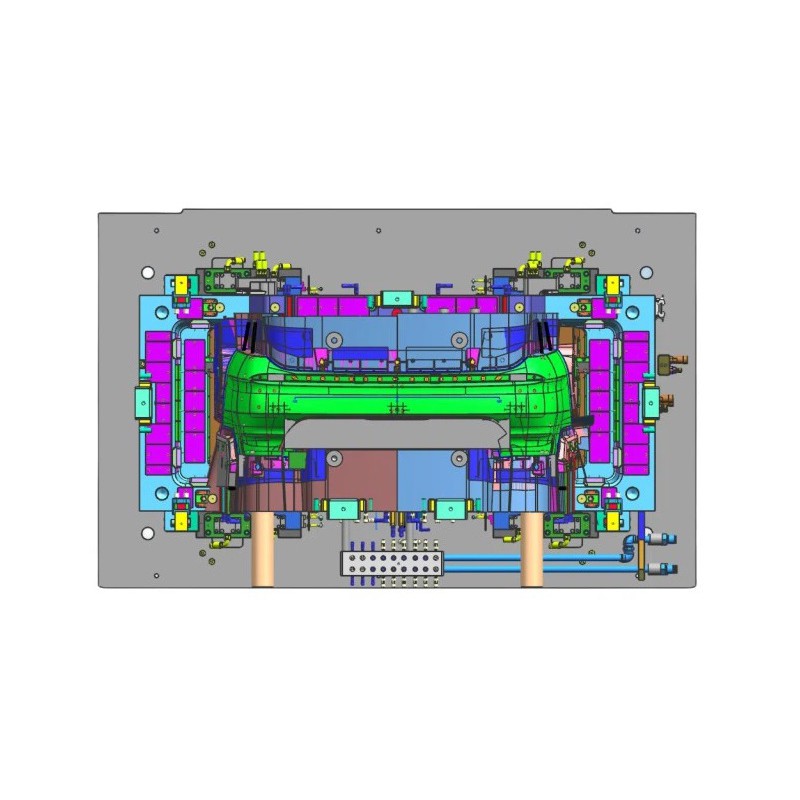
Our Rear Bumper Mould can be precisely machined and polished to achieve the desired level of smoothness, ensuring that the rear bumpers produced have a consistent and attractive gloss finish.
Surface Defects
Rough mold surfaces can also cause surface defects on the rear bumper. Micro - scratches, pits, or bumps on the mold can be transferred to the bumper during the molding process. These defects are not only visually unappealing but can also reduce the perceived quality of the vehicle. For example, if a rear bumper has visible surface irregularities, it may give the impression that the vehicle is of lower quality or poorly manufactured.
By carefully controlling the mold surface roughness, we can minimize the occurrence of these surface defects. Our advanced manufacturing techniques and quality control processes ensure that the mold surface is free from any significant irregularities, resulting in rear bumpers with a flawless surface finish.
Influence on Mechanical Properties
The mold surface roughness can also have an impact on the mechanical properties of the rear bumper.
Adhesion and Bonding
In some cases, rear bumpers may require additional coatings or attachments, such as paint or decorative trims. A rough mold surface can affect the adhesion of these coatings and attachments. A rougher surface may provide more surface area for the coating or attachment to bond to, but if the roughness is too high, it can also create air pockets or uneven stress distribution, leading to poor adhesion.
Conversely, a very smooth surface may not provide enough mechanical interlocking for the coating or attachment to adhere properly. Therefore, finding the right balance of mold surface roughness is crucial to ensure good adhesion and bonding of these additional components. Our Compression Molds For Automotive are designed to achieve an optimal surface roughness that promotes strong adhesion while maintaining a high - quality finish.
Stress Concentration
Rough mold surfaces can cause stress concentration in the rear bumper. When the plastic material is injected into the mold, it fills the cavities and takes on the shape of the mold surface. If the mold surface has sharp edges or uneven roughness, it can create areas of high stress in the bumper. These stress - concentrated areas are more likely to crack or break under impact or normal use.
A smoother mold surface helps to distribute the stress more evenly throughout the bumper, improving its overall strength and durability. Our expertise in mold manufacturing allows us to create molds with a smooth and uniform surface, reducing the risk of stress concentration and enhancing the mechanical performance of the rear bumpers.
Effects on Molding Process
The mold surface roughness also plays a role in the molding process itself.
Flow of Plastic Material
During the injection molding process, the plastic material needs to flow smoothly into the mold cavity to form the rear bumper. A rough mold surface can impede the flow of the plastic, causing issues such as uneven filling, weld lines, or short shots. These problems can result in defective rear bumpers that do not meet the required specifications.
A smooth mold surface reduces the friction between the plastic material and the mold, allowing the material to flow more easily and uniformly. Our Bumper Injection Mould is engineered with a smooth surface finish to ensure efficient and reliable plastic flow, minimizing the occurrence of molding defects.
Ejection of the Product
After the molding process is complete, the rear bumper needs to be ejected from the mold. A rough mold surface can increase the friction between the bumper and the mold, making it more difficult to eject the product. This can lead to damage to the bumper or the mold itself.
A smoother mold surface reduces the ejection force required, making the ejection process easier and more reliable. This not only improves the production efficiency but also reduces the risk of damage to the rear bumpers during the ejection process.
Conclusion
In conclusion, the mold surface roughness has a profound impact on the product quality of rear bumpers. It affects the aesthetic quality, mechanical properties, and the molding process itself. As a Rear Bumper Mould supplier, we understand the importance of controlling the mold surface roughness to ensure that the rear bumpers we produce meet the highest standards of quality.
If you are in the automotive industry and are looking for high - quality Rear Bumper Moulds, we would be more than happy to discuss your specific requirements. Our team of experts can provide you with customized solutions that take into account the desired surface finish, mechanical properties, and production efficiency of your rear bumpers. Contact us today to start a fruitful procurement negotiation.

References
- Campbell, F. C. (2012). Manufacturing Processes for Advanced Composites. Elsevier.
- Throne, J. L. (2012). Polymer Rheology and Extrusion. CRC Press.
- Osswald, T. A., & Turng, L. - S. (2007). Injection Molding Handbook. Hanser Publishers.