

Hey there! I'm a supplier of Airship Product, and today I wanna chat about how the ground effect can impact an airship product's takeoff and landing.
First off, let's get into what the ground effect actually is. The ground effect occurs when an aircraft, in our case, an airship, gets close to the ground. When an airship is flying near the surface, the air between the airship and the ground gets compressed. This compression changes the airflow around the airship, creating some interesting effects.
During takeoff, the ground effect can be a real game - changer. You see, as the airship starts to lift off and gets within about one wingspan (or in the case of an airship, one body - width) of the ground, the compressed air beneath it provides extra lift. It's like having an invisible cushion that helps the airship get off the ground more easily. This means that less power is required to achieve lift - off. For us as suppliers, this is a huge selling point. It means that our airship products can use less fuel or energy during takeoff, which is not only cost - effective for the users but also more environmentally friendly.
Imagine a kid playing with our Rocking Car - inspired airship product. If it can take off with less effort, it's more likely to work well even with a small battery or limited power source. This makes our products more accessible and user - friendly.
But it's not all sunshine and rainbows. The ground effect also has some challenges during takeoff. The airflow changes caused by the ground can make the airship a bit more unstable. The extra lift is not evenly distributed, and this can cause the airship to pitch or roll unexpectedly. As a supplier, we've had to invest a lot of time in research and development to make sure our airship products can handle these instabilities. We use advanced materials and design features to ensure that the airship remains balanced and controllable during takeoff, even in the presence of the ground effect.
Now, let's talk about landing. The ground effect plays a crucial role here too. As the airship approaches the ground for landing, the compressed air beneath it again comes into play. It acts as a sort of shock absorber, reducing the impact when the airship touches down. This is great for the durability of our airship products. It means that the landing gear and the overall structure of the airship are less likely to be damaged during landing.
For example, our Galaxy Fighter - themed airship has been designed to take full advantage of the ground effect during landing. The shape of the airship's hull is optimized to create a smooth flow of compressed air, which helps in a gentle touchdown. This not only protects the product but also gives the user a more enjoyable experience.
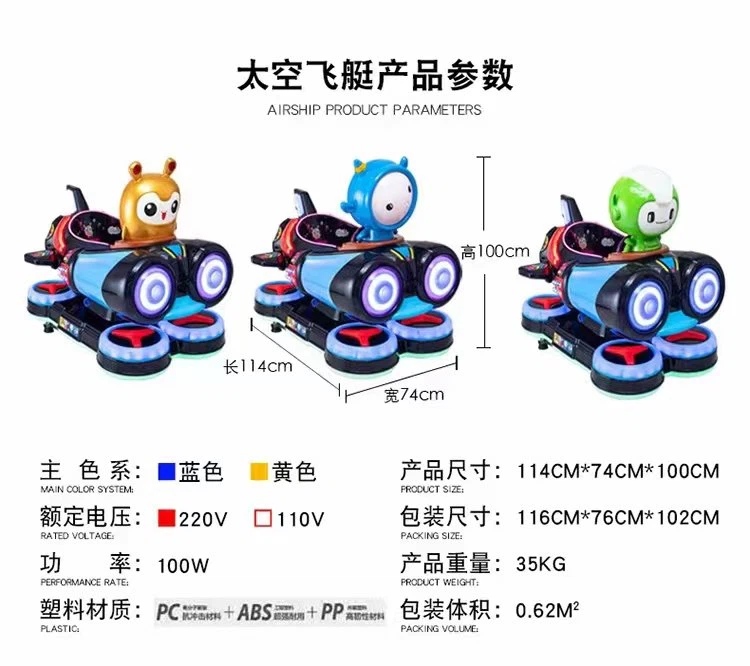

However, just like during takeoff, there are some issues. The ground effect can sometimes cause the airship to float longer than expected. This is because the extra lift from the compressed air keeps the airship airborne. If the pilot (or in the case of a toy airship, the user) isn't aware of this, they might misjudge the landing and end up with a less - than - perfect touchdown. To address this, we provide detailed instructions with our airship products, explaining how to handle the ground effect during landing.
Another aspect to consider is the wind. Wind can significantly affect the ground effect. A strong cross - wind can disrupt the airflow beneath the airship, reducing the effectiveness of the ground effect. This can make takeoff and landing even more challenging. As suppliers, we test our airship products in various wind conditions to make sure they can perform well regardless of the wind. We also recommend that users check the weather conditions before operating our airship products to avoid any potential problems.
In addition to the physical aspects, the ground effect also has implications for the design of our airship products. We have to take into account the height at which the ground effect is most pronounced. This influences the shape and size of the airship's hull, as well as the placement of its control surfaces. For instance, we might adjust the position of the fins or rudders to better control the airship's stability during takeoff and landing in the presence of the ground effect.
We're constantly looking for ways to improve our airship products in relation to the ground effect. We collaborate with experts in aerodynamics and conduct extensive testing in wind tunnels. This allows us to fine - tune the design and performance of our products, ensuring that they offer the best possible experience for our customers.
So, if you're in the market for an airship product, whether it's for a child's toy or a more serious application, you can trust that our products are designed with the ground effect in mind. We've put in the hard work to make sure that our airships take off and land smoothly, efficiently, and safely.
If you're interested in our airship products and want to discuss a purchase or have any questions, feel free to reach out. We're always happy to have a chat and help you find the perfect airship product for your needs.
References
- Anderson, J. D. (2001). Fundamentals of Aerodynamics. McGraw - Hill.
- Kuethe, A. M., & Chow, C - Y. (1998). Foundations of Aerodynamics: Bases of Aerodynamic Design. Wiley.