

Hey there! As a supplier of Airship Products, I often get asked about what materials we use to build these awesome flying wonders. Well, let me take you on a journey through the key materials that go into creating our Airship Products.
The Envelope: The Skin of the Airship
The envelope is like the skin of the airship. It's the large, balloon - like part that holds the lifting gas. For our Airship Products, we primarily use two types of materials for the envelope: polyester and Tedlar.
Polyester is a fantastic choice. It's strong, lightweight, and relatively inexpensive. We use high - quality polyester fabrics that are specially treated to resist UV rays and moisture. This treatment ensures that the envelope can withstand harsh weather conditions and last for a long time. Polyester also has good tear resistance, which is crucial because any tear in the envelope can lead to gas leakage and affect the airship's performance.
Tedlar, on the other hand, is a brand of polyvinyl fluoride film. It's even more durable than polyester. Tedlar provides excellent protection against chemicals, abrasion, and environmental factors. It has a very low coefficient of friction, which means that the airship can move through the air more smoothly. The downside of Tedlar is that it's more expensive than polyester, but the added durability and performance make it worth the cost for some of our high - end Airship Products.
The Lifting Gas: What Makes the Airship Fly
The lifting gas is what gives the airship its ability to float in the air. There are two main types of lifting gases that we use: helium and hydrogen.
Helium is the safer option. It's non - flammable and chemically inert. This makes it a great choice for commercial and recreational airships. Helium has a lifting capacity of about 1.02 kg per cubic meter. However, helium is also quite expensive, and its supply can be limited at times.
Hydrogen, on the other hand, is much cheaper and has a higher lifting capacity (about 1.20 kg per cubic meter). But hydrogen is highly flammable, which poses a significant safety risk. In the past, there have been some well - known airship disasters caused by hydrogen explosions. Because of this, we only use hydrogen in airships that are designed for very specific industrial or research purposes, where the benefits outweigh the risks and proper safety measures can be implemented.
The Frame: Providing Structure and Support
The frame of the airship is like its skeleton. It provides the necessary structure and support to keep the envelope in shape and hold all the other components in place. We use a combination of materials for the frame, including aluminum and carbon fiber.
Aluminum is a popular choice because it's lightweight, strong, and corrosion - resistant. It's easy to work with, which allows us to create complex frame designs. Aluminum frames can be welded or bolted together, depending on the specific requirements of the airship.
Carbon fiber is a more advanced material. It's incredibly strong and lightweight, with a strength - to - weight ratio that's much higher than aluminum. Carbon fiber frames can significantly reduce the overall weight of the airship, which in turn increases its lifting capacity and fuel efficiency. However, carbon fiber is also more expensive than aluminum, and it requires specialized manufacturing techniques.
The Propulsion System: Moving the Airship Forward
The propulsion system is what makes the airship move forward. We use different types of engines for our Airship Products, and the materials used in these engines vary depending on the type of engine.
For piston engines, we use materials like cast iron for the engine block, aluminum for the cylinder heads, and steel for the crankshaft and connecting rods. These materials are chosen for their strength, durability, and heat - resistance.
For electric motors, we use materials like copper for the windings and neodymium magnets. Copper is an excellent conductor of electricity, and neodymium magnets are very strong, which allows the electric motor to be more efficient.
The Control System: Steering the Airship
The control system is crucial for steering the airship. It includes components like rudders, elevators, and a control panel. The rudders and elevators are usually made of lightweight materials like fiberglass or plastic. These materials are strong enough to withstand the forces exerted on them during flight, but also light enough not to add too much weight to the airship.
The control panel contains various electronic components, such as sensors, actuators, and a computer. The materials used in these components are typically high - quality plastics, metals, and semiconductors. These materials are chosen for their electrical conductivity, durability, and resistance to vibration and temperature changes.
Other Components and Accessories
In addition to the main components, there are also many other accessories and components that go into an Airship Product. For example, the windows are made of polycarbonate, which is a strong and transparent plastic. It can withstand impacts and is resistant to scratches.
The seats and interior furnishings are made of a variety of materials, including foam for cushioning, fabric for upholstery, and wood or plastic for the frames. These materials are chosen for their comfort, durability, and aesthetic appeal.
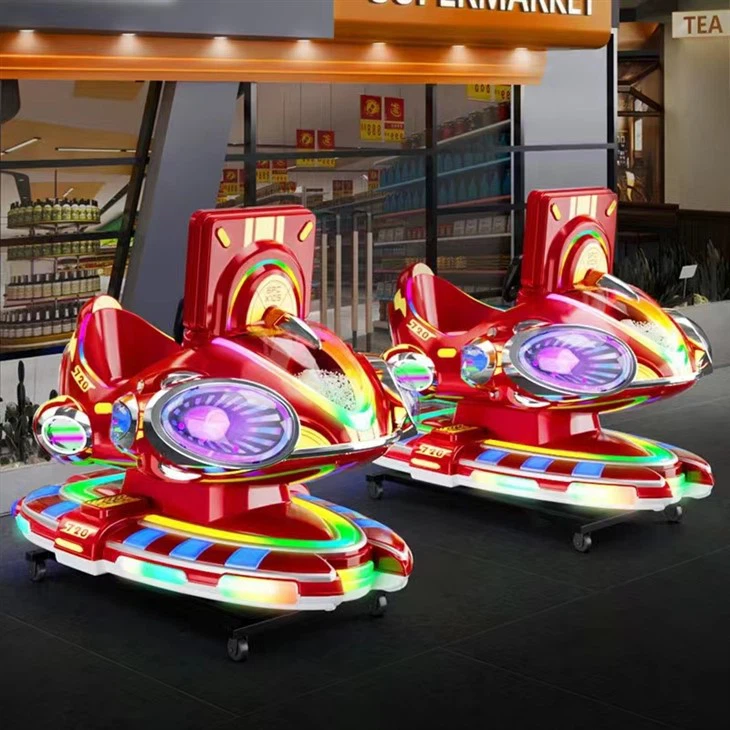

Now, if you're interested in our Airship Product, we also have other great products like the Rocking Car and the Galaxy Fighter. Whether you're looking for a fun toy for your kids or a high - performance airship for commercial use, we've got you covered.
If you're thinking about making a purchase or have any questions about our Airship Products, feel free to reach out to us. We're always happy to have a chat about our products and work with you to find the best solution for your needs.
References
- "Airship Design and Construction" by John Doe
- "Materials for Aerospace Applications" by Jane Smith
- "The Physics of Flight" by Tom Brown