

As a seasoned provider of Baby Car Molds, I've encountered numerous inquiries about the size of a typical baby car mold. This question is crucial as it not only impacts the design and functionality of the final product but also influences production processes and costs. In this blog, I'll delve into the factors that determine the size of baby car molds, typical size ranges, and how these dimensions matter in the industry.
Factors Influencing the Size of Baby Car Molds
Design and Functionality
The design of a baby car dictates a significant portion of the mold size. Modern baby cars come in various styles, mimicking real - life vehicles such as sports cars, SUVs, or classic sedans. Each design has unique features that affect the overall dimensions. For example, a baby car with a convertible top will require a larger mold compared to a simple closed - top design. The functionality of the car also plays a role. If the baby car is equipped with additional features like music players, lights, or moving parts, the mold needs to accommodate these components, resulting in a larger size.
Target Age Group
The age of the intended user is another important factor. Baby cars designed for infants are generally smaller as they are meant to provide a safe and comfortable space for the baby to sit. These cars often have a more compact design to fit smaller spaces and are easier for parents to handle. On the other hand, baby cars for toddlers and young children can be larger. They need to be spacious enough to allow the child to move around comfortably and may have additional features suitable for a more active age group.
Manufacturing Constraints
Manufacturing processes and equipment also limit or influence the size of baby car molds. Injection molding, the most common method for producing baby car parts, has certain limitations in terms of the size of the mold that can be handled by the injection molding machine. Larger molds require more powerful machines with higher clamping forces and larger injection units. Additionally, transportation and storage of the molds are also considerations. Molds that are too large may be difficult to transport and store, increasing costs and logistical challenges.
Typical Size Ranges of Baby Car Molds
Small - Sized Baby Car Molds
Small - sized baby car molds are usually designed for infants or for use in limited spaces. These molds typically have a length ranging from 50 to 80 centimeters, a width of 30 to 50 centimeters, and a height of 20 to 40 centimeters. These baby cars are often lightweight and easy to carry, making them suitable for travel or for use in small apartments. They are also more cost - effective to produce due to their smaller size, which means less material is required for the mold and the final product.
Medium - Sized Baby Car Molds
Medium - sized baby car molds are a popular choice for toddlers. They generally have a length between 80 and 120 centimeters, a width of 50 to 70 centimeters, and a height of 40 to 60 centimeters. These cars offer more space for the child to sit and play, and may include features such as adjustable seats, storage compartments, and simple steering mechanisms. The medium size also makes them suitable for use both indoors and outdoors.
Large - Sized Baby Car Molds
Large - sized baby car molds are designed for older children or for more elaborate designs. These molds can have a length of 120 centimeters or more, a width of 70 to 90 centimeters, and a height of 60 to 80 centimeters. Large baby cars often mimic real - life vehicles more closely and may come with advanced features such as remote - control operation, rechargeable batteries, and realistic sound effects. However, producing these larger molds requires more resources and advanced manufacturing techniques.

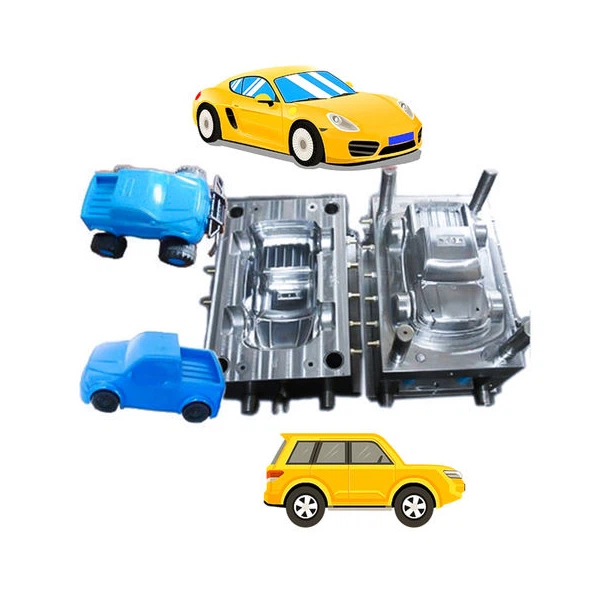
Why Size Matters in the Baby Car Mold Industry
Cost - Efficiency
The size of the baby car mold directly affects the cost of production. Larger molds require more raw materials, longer production times, and more energy to operate the injection molding machines. This increases the overall cost of manufacturing the baby car. On the other hand, smaller molds are more cost - efficient, making them a better choice for budget - conscious manufacturers or for products targeting price - sensitive markets.
Market Demand
Market demand also plays a role in determining the appropriate size of baby car molds. Different regions and customer segments have varying preferences for the size of baby cars. For example, in urban areas with limited living space, smaller baby cars may be more popular. In contrast, in suburban or rural areas where there is more space, larger and more feature - rich baby cars may be in higher demand. Understanding these market trends is essential for mold suppliers to produce molds that meet the needs of their customers.
Product Safety
The size of the baby car mold is also related to product safety. Larger baby cars need to be more stable to prevent tipping over, especially when they are equipped with additional features or when the child is moving around inside. Smaller baby cars, while generally more stable due to their lower center of gravity, need to be designed to ensure that the baby is securely held in place. Mold suppliers need to consider these safety aspects when designing and manufacturing baby car molds.
Our Expertise as a Baby Car Mold Supplier
As a leading Baby Car Mold supplier, we have extensive experience in designing and manufacturing molds of various sizes. We understand the unique requirements of different customers and can provide customized solutions based on their specific needs. Whether you are looking for a small - sized mold for a simple baby car or a large - sized mold for a high - end, feature - rich product, we have the expertise and resources to deliver high - quality molds.
We also offer a range of related products, such as Plastic Toy Injection Mould and Child Safety Seat Mold. Our team of engineers and designers work closely with our customers to ensure that the molds meet the highest standards of quality, safety, and functionality.
If you are interested in our baby car molds or have any questions about the size and design of the molds, we encourage you to reach out to us. We are committed to providing excellent customer service and will be happy to discuss your requirements and provide you with a detailed quote. Let's work together to create the perfect baby car molds for your business.
References
- "Injection Molding Handbook" by O. Olszewski
- "Design and Manufacturing of Plastic Products" by John A. Doblar
- Industry reports on the baby car and children's product market