

Hey there! As a supplier of bumper moulds, I've been in the game for quite a while, and I often get asked about the role of the parting line in a bumper mould. So, I thought I'd share some insights on this topic.
First off, let's talk about what a parting line is. In simple terms, the parting line is the boundary where the two halves of the mould meet. When we're making a bumper using an injection - moulding process, we have an upper and a lower part of the mould. The plastic material is injected into the cavity formed by these two mould halves, and the parting line is where they separate.
One of the most crucial roles of the parting line is in the demoulding process. After the plastic has been injected and cooled to form the bumper, the two mould halves need to be separated so that the finished bumper can be removed. The parting line is the key here. If it's not designed properly, it can be really tough to get the bumper out of the mould. For example, if the parting line is too complex or has sharp angles, the bumper might get stuck in the mould, leading to damage or even a failed production run.
Another important aspect is the appearance of the final product. The parting line leaves a visible mark on the bumper. In the automotive industry, aesthetics matter a great deal. A well - designed parting line can minimize the visibility of this mark. We, as a bumper mould supplier, work hard to place the parting line in areas where it won't be easily noticed. For instance, on a Rear Bumper Mould, we might position the parting line along a natural contour or a less prominent area of the bumper. This way, when the bumper is installed on a car, the mark won't be a major eyesore.
The parting line also affects the structural integrity of the bumper. During the injection - moulding process, the flow of the plastic material is influenced by the parting line. If the parting line is not optimized, it can cause uneven filling of the mould cavity. This might result in areas of the bumper having different thicknesses or densities. A bumper with inconsistent structural properties is more likely to crack or break under stress, which is a big no - no in the automotive world. We need to ensure that the parting line allows for a smooth and even flow of the plastic, so that the bumper can withstand the rigors of everyday use.
Now, let's consider the manufacturing cost. A poorly designed parting line can increase the cost of production. If the demoulding process is difficult, it might require additional labor or special equipment to remove the bumper from the mould. Also, if the appearance of the bumper is affected due to a bad parting line, there could be additional finishing steps required to make it look presentable. These extra steps add to the overall cost. As a supplier, we aim to design the parting line in a way that keeps the production process efficient and cost - effective.
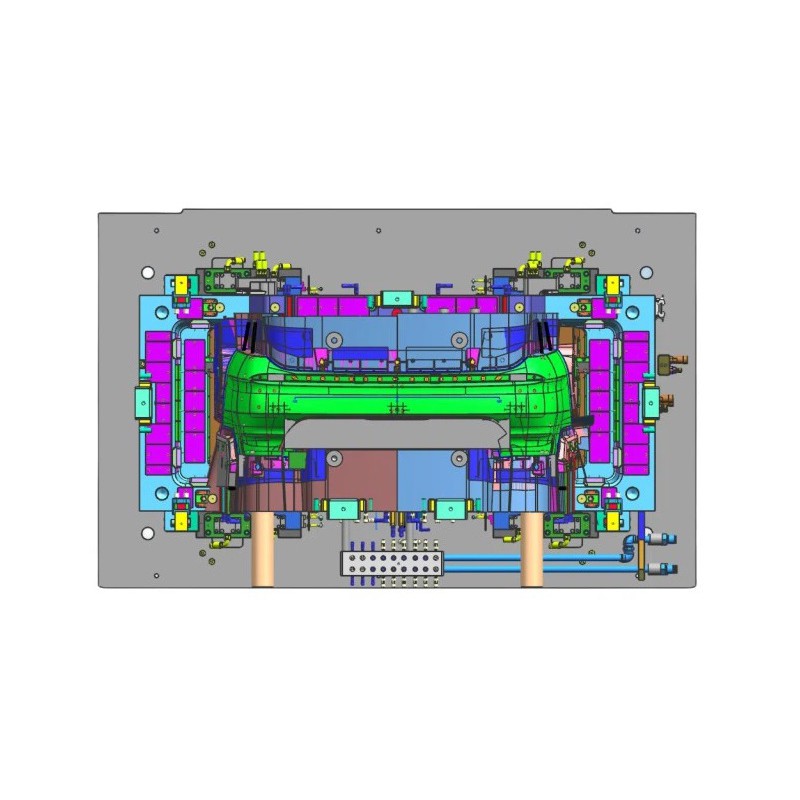
When it comes to different types of bumper moulds, like Front Bumper Mould and rear bumper moulds, the role of the parting line can vary slightly. Front bumpers often have more complex designs, with integrated features like air intakes and fog light housings. The parting line needs to be carefully planned to accommodate these features without sacrificing the demoulding process or the appearance of the bumper. Rear bumpers, on the other hand, might have different shape requirements and less complex features in some cases, but the principles of parting line design still apply.
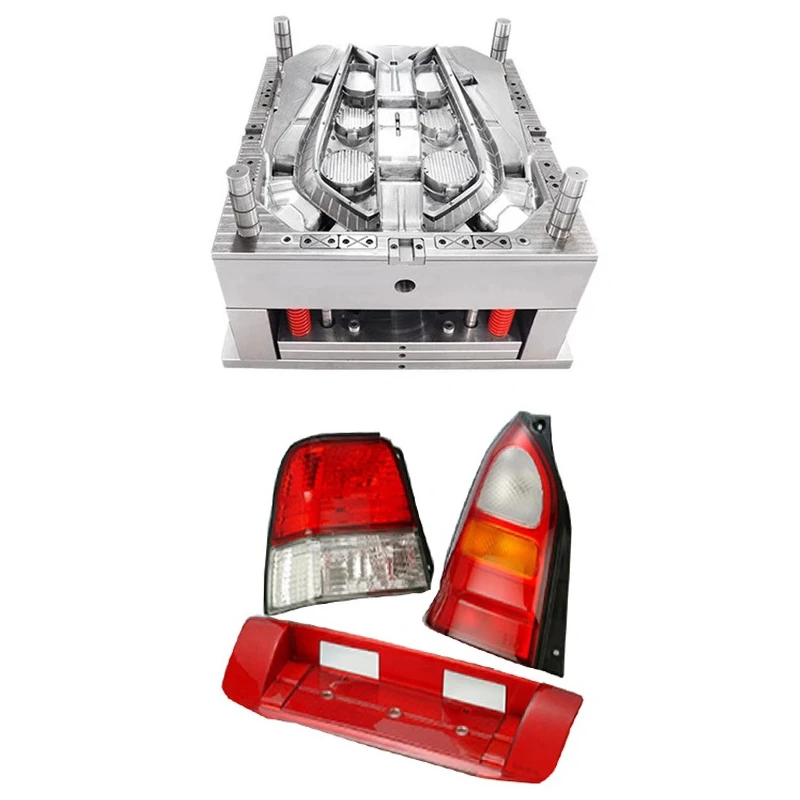
In addition to bumpers, we also deal with Car Lamp Injection Mold. The concept of the parting line is similar here. In car lamp injection moulds, the parting line needs to be designed to ensure proper sealing and a good - looking finish. Just like with bumpers, the appearance and functionality are crucial in car lamps, and the parting line plays a vital role in achieving both.
As a bumper mould supplier, we use advanced software and simulation tools to analyze and optimize the parting line. These tools allow us to predict how the plastic will flow in the mould, how easy it will be to demould the part, and what the final appearance of the bumper will be. We also take into account the specific requirements of our customers, such as the type of car the bumper is for, the desired finish, and any special features.
To sum it up, the parting line in a bumper mould is not just a simple boundary. It has a profound impact on the demoulding process, the appearance, the structural integrity, and the cost of manufacturing the bumper. Whether it's a front bumper, rear bumper, or a car lamp, getting the parting line right is essential for a successful product.
If you're in the market for high - quality bumper moulds or car lamp injection molds, we'd love to have a chat. We've got the experience and expertise to design and manufacture moulds with well - optimized parting lines. Contact us to start a discussion about your specific needs, and let's work together to create the perfect mould for your automotive parts.
References
- Injection Molding Handbook, Second Edition by O. Osswald, T. Turng, and P. Gramann
- Automotive Plastics and Composites: Design and Manufacturing by R. K. Gupta