

Hey there! As a supplier of helmet moulds, I've seen firsthand how crucial these tools are in the mass production of helmets. In this blog, I'll break down the role of a helmet mould in churning out helmets on a large scale.
Let's start with the basics. A helmet mould is essentially a custom - made tool that's used to shape molten materials into the specific form of a helmet. It's like a master key that unlocks the ability to create identical helmets over and over again.
Precision and Consistency
One of the most important roles of a helmet mould is to ensure precision and consistency in the production process. When you're mass - producing helmets, every single unit needs to meet strict safety and quality standards. A well - designed helmet mould guarantees that each helmet has the same shape, size, and thickness.

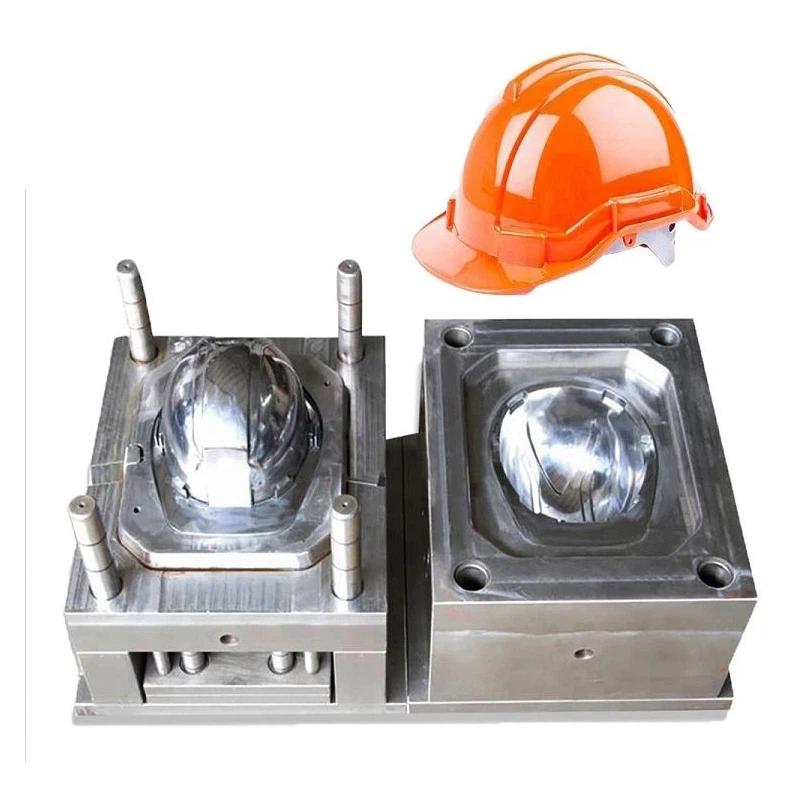
Think about it. If you're making safety helmets for construction workers, a slight variation in the thickness of the shell could mean the difference between a helmet that can withstand an impact and one that fails. Our Safety Helmet Mould is engineered to create helmets with exact specifications every time. This precision is achieved through advanced machining techniques and high - quality materials. The mould is crafted to have smooth surfaces and sharp edges where needed, so the helmets come out looking and performing great.
Efficiency in Production
Time is money, especially in mass production. A good helmet mould can significantly boost the efficiency of the manufacturing process. It allows for rapid production cycles, which means more helmets can be made in less time.
With our Helmet Injection Mold, the injection molding process is optimized for speed. The mould is designed to quickly fill with molten plastic, and then cool down rapidly so that the helmet can be ejected. This fast turnaround time is essential for meeting large orders. Instead of spending hours or even days on a small batch of helmets, manufacturers can produce hundreds or thousands in a relatively short period.
Moreover, the mould's design also reduces the amount of waste. It's engineered to use just the right amount of material, so there's minimal excess plastic that needs to be trimmed off. This not only saves on material costs but also makes the production process more environmentally friendly.
Customization
Even in mass production, there's often a need for customization. Different industries may require helmets with unique features, such as ventilation holes, attachment points for visors, or specific branding. A helmet mould can be customized to meet these diverse needs.
We work closely with our clients to understand their requirements and design a mould that can create helmets with the exact features they want. For example, if a client needs a Plastic Safety Helmet Mould for a particular brand of helmets, we can incorporate the brand logo and other design elements into the mould. This way, the mass - produced helmets still have a personalized touch.
Quality Control
The helmet mould also plays a key role in quality control. Before the mass production starts, the mould is thoroughly tested. We check for any defects, such as uneven surfaces or misaligned parts. Once the mould passes the quality checks, it serves as a reliable tool for ensuring the quality of the helmets.
During the production process, the mould helps in identifying any potential issues early on. If a helmet comes out with a defect, it could be a sign that there's a problem with the mould itself. This allows manufacturers to take corrective action quickly, preventing a large number of defective helmets from being produced.
Cost - Effectiveness
In the long run, using a high - quality helmet mould is cost - effective. Although the initial investment in a mould can be significant, it pays off in terms of reduced production costs and higher - quality products.
Since the mould enables efficient production and reduces waste, the overall cost per helmet is lower. Additionally, the consistent quality of the helmets means fewer returns and replacements, which also saves money. Our moulds are built to last, so manufacturers don't have to worry about frequent replacements. This durability further contributes to the cost - effectiveness of using our helmet moulds.
Adaptability to Different Materials
Helmets can be made from a variety of materials, including plastics, fiberglass, and carbon fiber. A good helmet mould is adaptable to these different materials.
Our moulds are designed to handle the specific properties of each material. For example, when working with plastic, the mould needs to be able to withstand the high temperatures and pressures of the injection molding process. When using fiberglass or carbon fiber, the mould may need to have a different surface finish to ensure proper adhesion. This adaptability allows manufacturers to choose the most suitable material for their helmets without having to worry about finding a compatible mould.
Conclusion
In conclusion, the role of a helmet mould in mass - producing helmets is multi - faceted. It ensures precision, efficiency, customization, quality control, cost - effectiveness, and adaptability. As a helmet mould supplier, we're committed to providing our clients with the best - in - class moulds that can meet their production needs.
If you're in the business of helmet manufacturing and are looking for a reliable partner for your mould needs, we'd love to hear from you. Whether you're starting a new production line or looking to upgrade your existing moulds, we have the expertise and experience to help you out. Reach out to us to start a conversation about your helmet mould requirements.
References
- Industry reports on helmet manufacturing
- Technical specifications of helmet moulds