

What is the production capacity of a bumper mould?
As a dedicated supplier of bumper moulds, I am often asked about the production capacity of these essential tools in the automotive manufacturing industry. Understanding the production capacity of a bumper mould is crucial for automotive manufacturers, as it directly impacts production efficiency, cost - effectiveness, and overall business success. In this blog post, I will delve into the factors that determine the production capacity of a bumper mould and provide insights based on my experience in the field.
Factors Affecting the Production Capacity of a Bumper Mould
-
Mould Design and Complexity
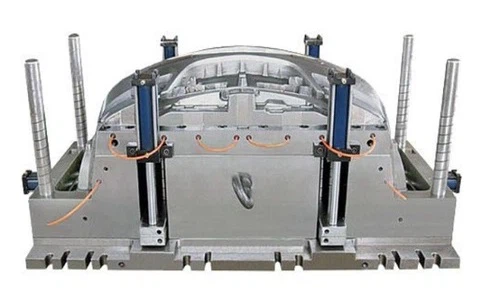
The design of a bumper mould plays a significant role in its production capacity. A simple, well - designed mould can operate at a higher cycle time compared to a complex one. Complex bumper designs with intricate shapes, undercuts, and multiple features require more time for the plastic to flow into the mould cavities, cool, and eject. For example, a bumper with a sleek, smooth surface and minimal details can be produced more quickly than one with elaborate grilles, aerodynamic fins, and integrated sensors. Additionally, multi - cavity moulds, which can produce multiple bumpers in a single cycle, can significantly increase the overall production capacity. However, the design and manufacturing of multi - cavity moulds are more challenging and costly. -
Material Selection
The choice of material for the bumper and the mould itself affects production capacity. For the bumper, different plastics have different flow characteristics and cooling times. Materials with good flowability, such as polypropylene (PP), can fill the mould cavities faster, reducing the injection time. On the other hand, the material of the mould, usually high - grade steel or alloy, impacts its durability and heat transfer properties. A mould made of a material with excellent heat transfer can cool the plastic bumper more quickly, allowing for shorter cycle times and higher production rates. -
Injection Moulding Machine Specifications
The injection moulding machine used in conjunction with the bumper mould is a key determinant of production capacity. The clamping force of the machine must be sufficient to hold the mould closed during the injection process. A machine with a higher clamping force can handle larger and more complex bumper moulds. The injection rate, which is the speed at which the plastic is injected into the mould, also affects cycle time. Faster injection rates can reduce the time required to fill the mould cavities. Moreover, the machine's cooling system efficiency can impact the cooling time of the bumper, which is a critical part of the overall cycle time. -
Maintenance and Upkeep
Regular maintenance of the bumper mould is essential for maintaining its production capacity. Over time, wear and tear can occur on the mould surfaces, leading to increased friction, uneven cooling, and potential defects in the produced bumpers. Proper cleaning, lubrication, and inspection of the mould can prevent these issues and ensure consistent production. Additionally, timely repairs and replacements of worn - out parts can keep the mould operating at its optimal capacity.
Measuring Production Capacity
The production capacity of a bumper mould is typically measured in terms of the number of bumpers produced per hour, day, or month. This is calculated based on the cycle time of the mould, which includes the injection time, cooling time, and ejection time. For example, if a bumper mould has a cycle time of 2 minutes, and the injection moulding machine operates for 24 hours a day, the theoretical production capacity would be 720 bumpers per day (60 minutes / 2 minutes per cycle * 24 hours). However, in real - world scenarios, factors such as machine downtime for maintenance, material changeovers, and quality control checks need to be considered, which can reduce the actual production capacity.
Real - World Examples and Case Studies
In my experience as a bumper mould supplier, I have worked with various automotive manufacturers to optimize their production capacity. For instance, one of our clients was struggling with low production rates due to a complex bumper design and an inefficient injection moulding machine. We redesigned the mould to simplify its structure and reduce the number of undercuts, which decreased the cycle time. Additionally, we recommended upgrading the injection moulding machine to one with a higher clamping force and faster injection rate. As a result, the client was able to increase their production capacity by 30%, significantly improving their profitability.
Industry Trends and Future Outlook
The automotive industry is constantly evolving, and so are the requirements for bumper moulds. With the increasing demand for lightweight and eco - friendly materials, new types of plastics and composite materials are being developed for bumpers. These materials may have different processing requirements, which could impact the production capacity of the moulds. Furthermore, the trend towards electric vehicles (EVs) and autonomous vehicles is leading to the design of bumpers with new features, such as integrated sensors and aerodynamic enhancements. These changes will require more advanced and precise bumper moulds, which may present challenges in terms of production capacity.
However, advancements in mould manufacturing technology, such as 3D printing and computer - aided design (CAD), are enabling the production of more complex and efficient bumper moulds. These technologies can reduce the manufacturing time and cost of the moulds, and potentially increase their production capacity.
Related Products and Services
In addition to bumper moulds, we also offer a range of related products and services. Our Car Lamp Injection Mold is designed to meet the high - precision requirements of automotive lighting components. We also provide Compression Molds For Automotive, which are suitable for producing various automotive parts with specific shapes and properties. And if you are looking for a Car Front Bumper Mold, we have the expertise and experience to deliver a high - quality solution tailored to your needs.
Conclusion and Call to Action
In conclusion, the production capacity of a bumper mould is influenced by multiple factors, including mould design, material selection, injection moulding machine specifications, and maintenance. By understanding these factors and working with an experienced bumper mould supplier, automotive manufacturers can optimize their production processes and increase their production capacity.
If you are in the automotive industry and are looking to improve your bumper production capacity, I encourage you to reach out to us. Our team of experts can provide you with customized solutions and professional advice based on your specific requirements. We are committed to helping you achieve your production goals and stay competitive in the market.

References
- "Injection Moulding Handbook" by Osswald, T. A., & Turng, L. - S.
- "Automotive Plastics and Composites" by Karger - Kocsis, J.
- Industry reports from automotive manufacturing associations and research institutions.