

Precision is the cornerstone of manufacturing high - quality grille cover moulds. As a grille cover mould supplier, I've witnessed firsthand how precision requirements can make or break a project. In this blog, I'll delve into what the precision requirements for a grille cover mould are and why they matter so much in the automotive industry.
Understanding the Basics of Grille Cover Moulds
Before we discuss precision, let's briefly understand what grille cover moulds are. Grille covers are an essential part of a vehicle's front - end design. They not only enhance the aesthetic appeal of the car but also play a crucial role in protecting the radiator and other components from debris. Grille cover moulds are used to manufacture these covers through processes like injection molding.
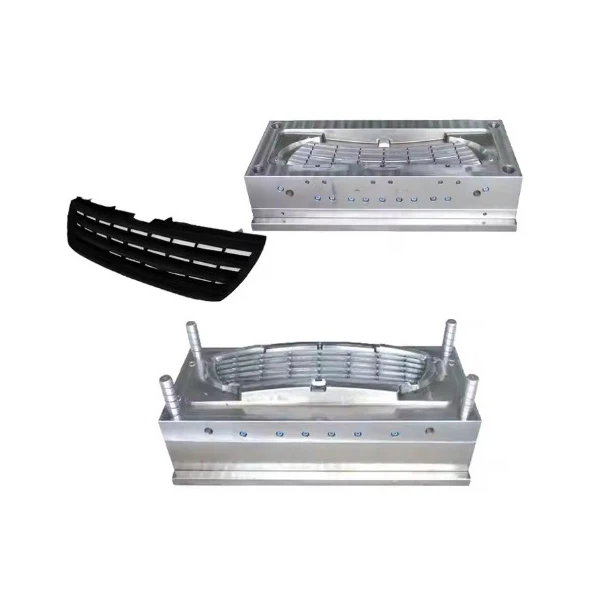
The grille cover moulds we supply, such as Automotive Radiator Grille Tooling Mold, Radiator Grille Mould, and Automotive Grille Injection Mould, are designed to create parts with specific shapes, sizes, and surface finishes.
Dimensional Precision
One of the most critical precision requirements for a grille cover mould is dimensional accuracy. The grille cover must fit perfectly into the designated space on the vehicle. Any deviation in dimensions can lead to poor fitment, which may cause gaps, misalignments, or even prevent the cover from being installed at all.
The tolerance levels for grille cover moulds are typically very tight. For example, in linear dimensions, the tolerance might be within ±0.05mm to ±0.1mm. This level of precision ensures that the grille covers produced are consistent in size, whether they are mass - produced or custom - made.
When it comes to complex shapes, such as those with curves and contours, the precision requirements become even more challenging. Advanced machining techniques, like five - axis CNC machining, are often employed to achieve the required accuracy. These machines can precisely cut and shape the mould to match the exact design specifications, ensuring that the grille cover has the right curvature and profile.
Surface Finish Precision
The surface finish of a grille cover is another aspect where precision is of utmost importance. A smooth and uniform surface finish not only gives the grille cover an attractive appearance but also affects its functionality. For instance, a rough surface can collect dirt and debris more easily, which may obstruct the airflow through the radiator.
The precision requirement for surface finish is often specified in terms of roughness average (Ra). For a high - quality grille cover, the Ra value might be in the range of 0.2μm to 0.8μm. To achieve this level of smoothness, various finishing processes are used, such as polishing, grinding, and electro - chemical machining.
In addition to smoothness, the surface finish must also be free from defects like scratches, pits, and blemishes. These defects can not only mar the appearance of the grille cover but also weaken the material, reducing its durability. During the mould - making process, strict quality control measures are implemented to ensure that the surface finish meets the required standards.
Geometric Precision
Geometric precision refers to the accuracy of the shape and form of the grille cover. This includes features like holes, slots, and ribs. These elements must be precisely located and sized to ensure proper functionality.
For example, the holes in the grille cover are designed to allow air to flow through to the radiator. If these holes are not of the correct size or are misaligned, it can significantly reduce the airflow, leading to overheating of the engine. The precision requirements for hole diameters might be within ±0.02mm to ±0.05mm, and the positional tolerance for holes could be within ±0.1mm.
Ribs and slots are also critical for the structural integrity of the grille cover. They must be formed with the right thickness, height, and spacing. Any deviation in these parameters can compromise the strength of the cover, making it more prone to damage.

Material and Heat - Treatment Precision
The choice of material for the grille cover mould and the precision of the heat - treatment process are also vital. High - quality tool steels are commonly used for grille cover moulds due to their excellent wear resistance, hardness, and toughness.
The material must be selected based on the specific requirements of the mould, such as the expected production volume, the type of plastic used for the grille cover, and the complexity of the design. For example, if the mould is expected to produce a large number of parts, a more wear - resistant steel might be chosen.
Heat - treatment is a process that further enhances the properties of the mould material. The precision of heat - treatment is crucial as it determines the hardness, strength, and dimensional stability of the mould. Incorrect heat - treatment can lead to problems like warping, cracking, or uneven hardness, which can affect the quality of the grille covers produced.
Assembly and Alignment Precision
Once the individual components of the grille cover mould are manufactured, they need to be assembled with high precision. The alignment of different parts of the mould, such as the core and cavity, is essential to ensure that the grille cover is formed correctly.
The alignment tolerance between the core and cavity might be within ±0.02mm to ±0.05mm. If the alignment is off, it can result in flash (excess plastic) on the grille cover, or the part may not have the correct shape.
Proper assembly also involves the use of precise fixtures and alignment tools. These tools help to ensure that all the components are in the correct position and orientation, allowing for the seamless production of high - quality grille covers.
Why Precision Matters in Grille Cover Moulds
The high precision requirements for grille cover moulds are not just for the sake of quality but also for the overall success of the automotive manufacturing process.
From a customer perspective, a high - precision grille cover provides a better driving experience. It looks good, fits well, and functions properly, which enhances the overall aesthetic and performance of the vehicle. This can lead to increased customer satisfaction and brand loyalty.
For automotive manufacturers, precision in grille cover moulds means reduced production costs. High - precision moulds produce fewer defective parts, which reduces waste and the need for rework. Additionally, they have a longer service life, which means less frequent replacement and lower maintenance costs.
Conclusion
In conclusion, the precision requirements for a grille cover mould are multi - faceted and demanding. From dimensional accuracy to surface finish, geometric precision, material selection, heat - treatment, and assembly, every aspect of the mould - making process requires a high level of precision.
As a grille cover mould supplier, we understand the importance of meeting these precision requirements. Our team of experts uses the latest technologies and manufacturing processes to ensure that each mould we produce meets the strictest quality standards.
If you're in the market for high - precision grille cover moulds, we'd love to discuss your specific requirements. Whether you need a standard mould or a custom - designed one, our team has the expertise and experience to deliver a solution that meets your needs. Contact us today to start the procurement discussion and take your automotive grille cover production to the next level.
References
- Automotive Tooling and Manufacturing Handbook
- Precision Engineering and Manufacturing Journal
- Plastics Mould Design and Manufacturing Textbook