

The lifespan of a grille mould is a crucial aspect for both manufacturers and suppliers in the automotive and other industries. As a grille mould supplier, understanding this factor is essential for providing high - quality products and ensuring customer satisfaction.
Factors Affecting the Lifespan of a Grille Mould
Material Quality
The material used to make the grille mould is the most fundamental factor influencing its lifespan. High - grade steel, such as P20, H13, or S7, is commonly used in grille mould manufacturing. P20 steel is known for its good machinability and polishability, which is suitable for general - purpose grille moulds. It can withstand a certain number of injection cycles, typically ranging from 100,000 to 300,000 cycles, depending on the specific application and operating conditions.
H13 steel, on the other hand, is a hot - work tool steel with excellent heat resistance and toughness. It is often used for grille moulds that are subjected to high - temperature and high - pressure injection processes. Grille moulds made of H13 steel can endure 300,000 to 500,000 injection cycles or even more under proper maintenance. S7 steel is another option, which offers high impact resistance, making it suitable for grille moulds that need to withstand sudden shocks during the manufacturing process.
Design Complexity
The design complexity of a grille mould also plays a significant role in determining its lifespan. Grille moulds with simple designs, such as those with fewer undercuts, ribs, and intricate details, generally have a longer lifespan. This is because simple designs are easier to manufacture accurately, and there is less stress concentration during the injection process.
In contrast, complex grille mould designs, like those with multiple moving parts, thin walls, or complex geometries, are more prone to wear and tear. The moving parts in a complex mould are subject to friction and mechanical stress, which can lead to premature failure. For example, a grille mould for a high - end luxury car with a very intricate front grille design may have a shorter lifespan compared to a basic grille mould for a standard vehicle due to the higher level of complexity involved.
Manufacturing Process
The manufacturing process of the grille mould can significantly affect its lifespan. Precision machining techniques, such as CNC (Computer Numerical Control) machining, ensure that the mould is manufactured with high accuracy. A well - machined grille mould has a better surface finish, which reduces friction during the injection process and minimizes wear on the mould cavity.
Heat treatment is another critical step in the manufacturing process. Proper heat treatment can improve the hardness, toughness, and wear resistance of the mould material. For instance, quenching and tempering processes can enhance the mechanical properties of the steel used in the grille mould, increasing its ability to withstand the high - pressure and high - temperature conditions during injection molding.
Operating Conditions
The operating conditions under which the grille mould is used have a direct impact on its lifespan. Temperature, pressure, and the type of plastic material used in the injection process are important factors. High - temperature injection processes can cause thermal expansion and contraction of the mould material, which may lead to cracking and deformation over time.
Similarly, high - pressure injection can put excessive stress on the mould, especially in areas with sharp corners or thin walls. The type of plastic material also matters. Some plastics, such as ABS (Acrylonitrile Butadiene Styrene) and polycarbonate, are relatively easy on the mould, while others, like glass - filled plastics, are more abrasive and can cause faster wear on the mould surface.
Maintenance and Care
Proper maintenance and care are essential for extending the lifespan of a grille mould. Regular cleaning of the mould after each injection cycle can prevent the build - up of plastic residues, which can cause corrosion and damage to the mould surface. Lubrication of the moving parts in the mould, such as slides and ejector pins, is also crucial to reduce friction and prevent premature wear.
Inspection of the mould for signs of wear, cracks, or other damage should be carried out regularly. Minor damages can be repaired promptly to prevent them from worsening. For example, if a small crack is detected in the mould cavity, it can be repaired using welding or other repair techniques before it grows and causes the mould to fail completely.
Lifespan Estimates for Different Types of Grille Moulds
Grille Cover Mould
Grille cover moulds are commonly used in the automotive industry to produce the outer covers of grilles. These moulds usually have a relatively long lifespan if they are made of high - quality materials and properly maintained.
For a grille cover mould made of P20 steel with a simple design and used under normal operating conditions, the lifespan can be around 100,000 to 200,000 injection cycles. If the mould is made of H13 steel and is well - maintained, it can last for 200,000 to 300,000 cycles. However, if the grille cover has a complex design or is used with abrasive plastic materials, the lifespan may be reduced.
Automotive Radiator Grille Tooling Mold
Automotive radiator grille tooling molds are designed to produce the radiator grilles of vehicles. These moulds are often subject to high - temperature and high - pressure injection processes, as the radiator grilles need to have good heat dissipation properties.

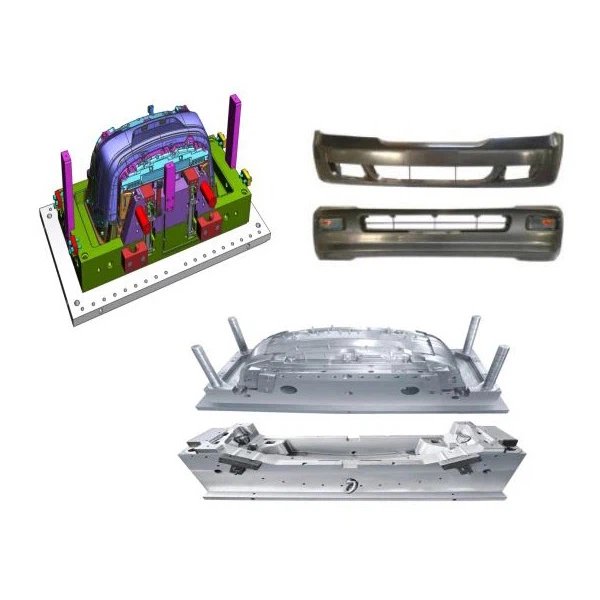
Grille moulds for automotive radiators made of H13 steel can typically endure 300,000 to 400,000 injection cycles. The complex designs of some radiator grilles, which may include cooling fins and air channels, can increase the stress on the mould, but with proper design and maintenance, the lifespan can still be relatively long.
Air Conditioner Grille Mold
Air conditioner grille molds are used to manufacture grilles for air conditioning units. These moulds usually operate under relatively milder conditions compared to automotive grille moulds.
A grille mould for an air conditioner made of P20 steel with a simple design can last for 150,000 to 250,000 injection cycles. If the mould is made of H13 steel, it can potentially reach 250,000 to 350,000 cycles. The lifespan can be affected by factors such as the type of plastic used for the air conditioner grille and the frequency of use.
Extending the Lifespan of Grille Moulds
To extend the lifespan of grille moulds, several measures can be taken. Firstly, choosing the right material based on the specific requirements of the grille mould is crucial. This involves considering factors such as the expected number of injection cycles, the operating conditions, and the design complexity.
Secondly, proper maintenance is essential. Regular cleaning, lubrication, and inspection of the mould can prevent minor issues from developing into major problems. It is also important to follow the recommended operating parameters during the injection process, such as temperature and pressure settings, to minimize stress on the mould.
Finally, continuous improvement in the design and manufacturing process can help to increase the lifespan of grille moulds. Using advanced design software to optimize the mould design and implementing the latest manufacturing techniques can enhance the quality and durability of the grille moulds.
Conclusion
The lifespan of a grille mould is influenced by multiple factors, including material quality, design complexity, manufacturing process, operating conditions, and maintenance. As a grille mould supplier, we understand the importance of these factors and strive to provide high - quality grille moulds with a long lifespan.
If you are in the market for Grille Cover Mould, Automotive Radiator Grille Tooling Mold, or Air Conditioner Grille Mold, we can offer you professional advice and high - quality products. Contact us to discuss your specific requirements and start a procurement negotiation today.
References
- "Injection Molding Handbook" by O. Olszewski
- "Tool and Die Making Technology" by R. A. Higgins
- Industry reports on grille mould manufacturing and usage