

Material selection plays a pivotal role in determining the quality of grille cover moulds. As a grille cover mould supplier, I have witnessed firsthand how the choice of materials can significantly impact the performance, durability, and overall quality of these essential components. In this blog post, I will delve into the various aspects of material selection and its far - reaching implications for grille cover moulds.
Mechanical Properties and Performance
One of the primary considerations when selecting materials for grille cover moulds is their mechanical properties. The mould must be able to withstand the high pressures and temperatures associated with the injection - moulding process. For instance, materials with high strength and hardness are crucial to resist wear and deformation during repeated use.
Steel is a commonly used material for grille cover moulds due to its excellent mechanical properties. High - grade tool steels, such as P20 and H13, offer superior hardness, toughness, and wear resistance. P20 steel is often used for pre - hardened moulds, which can be machined directly after delivery. It provides good dimensional stability and is suitable for producing medium - sized grille cover moulds. On the other hand, H13 steel is known for its high thermal fatigue resistance, making it ideal for applications where the mould is subjected to rapid heating and cooling cycles, such as in the production of Automotive Grille Injection Mould.
Aluminum is another material option for grille cover moulds. It has a lower density compared to steel, which results in lighter moulds. This can reduce the overall weight of the moulding equipment and potentially lower energy consumption. Aluminum also has good thermal conductivity, allowing for faster cooling of the plastic during the injection - moulding process. However, aluminum is generally less hard and wear - resistant than steel, so it may not be suitable for high - volume production or applications where the mould is exposed to abrasive plastics.
Surface Finish and Aesthetics
The surface finish of a grille cover mould directly affects the appearance of the final grille cover product. A smooth and defect - free surface finish is essential for achieving a high - quality, visually appealing grille cover. The material selected for the mould can have a significant impact on the surface finish.
Materials that are easy to polish, such as certain grades of stainless steel, can produce moulds with a mirror - like surface finish. This is particularly important for grille covers that require a high - gloss or reflective appearance, such as those used in luxury vehicles. In contrast, materials with a coarser grain structure may result in a rougher surface finish on the mould, which can be transferred to the grille cover during the moulding process.
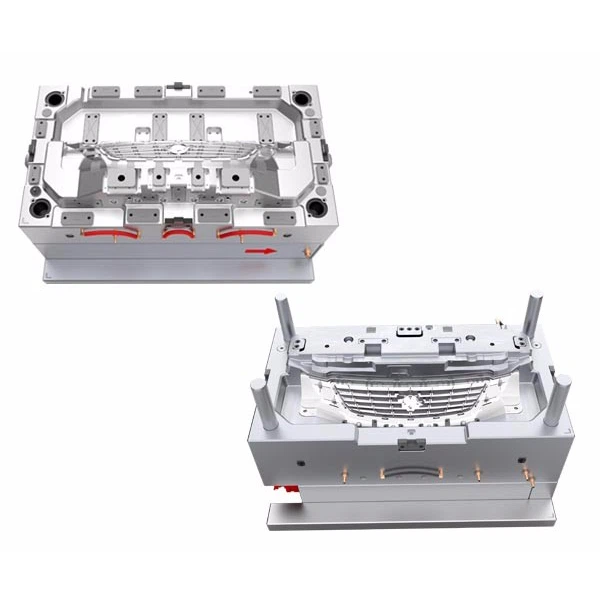

In addition to the initial surface finish, the material's resistance to corrosion and oxidation is also crucial. Corrosion can cause pitting and surface irregularities on the mould, which will negatively affect the appearance of the grille cover. Stainless steel is a popular choice in this regard, as it offers excellent corrosion resistance, ensuring that the mould's surface remains smooth and defect - free over time.
Dimensional Accuracy and Stability
Accurate dimensions are critical for grille cover moulds, as the final grille cover products must fit precisely into their designated spaces. The material's ability to maintain its dimensional accuracy during the manufacturing process and over time is of utmost importance.
Materials with low thermal expansion coefficients are preferred for grille cover moulds. When the mould is exposed to high temperatures during the injection - moulding process, a material with a high thermal expansion coefficient may expand significantly, leading to dimensional changes. This can result in grille covers that do not meet the required specifications. Steel and certain engineering plastics typically have relatively low thermal expansion coefficients, making them suitable for maintaining dimensional accuracy.
Moreover, the material's creep resistance is also a factor. Creep is the gradual deformation of a material under a constant load over time. A mould material with poor creep resistance may experience deformation during long - term use, which can affect the dimensional stability of the grille cover mould and ultimately the quality of the produced grille covers.
Cost - effectiveness
Cost is always an important consideration in the manufacturing industry. The choice of material for grille cover moulds can have a significant impact on the overall cost of production.
Steel, while offering excellent mechanical properties, can be relatively expensive, especially high - grade tool steels. The cost of steel includes not only the raw material cost but also the cost of machining and heat treatment. However, for high - volume production or applications where the mould needs to have a long service life, the initial investment in high - quality steel may be justified by the reduced need for frequent mould replacement.
Aluminum, on the other hand, is generally more cost - effective in terms of raw material cost. It is also easier to machine, which can reduce the manufacturing cost. However, as mentioned earlier, its lower hardness and wear resistance may require more frequent maintenance and replacement, offsetting some of the initial cost savings.
When considering cost - effectiveness, it is also important to take into account the cost of secondary operations. For example, if a material requires extensive surface treatment to achieve the desired surface finish, this will add to the overall cost.
Compatibility with Plastic Materials
Grille cover moulds are used to produce products from various plastic materials, such as polypropylene, ABS, and PC. The material of the mould must be compatible with these plastics to ensure a smooth moulding process and high - quality grille covers.
Some plastics may react chemically with certain mould materials, leading to adhesion issues or surface defects on the grille cover. For example, some plastics may stick to the mould surface during the demoulding process, causing damage to the grille cover or the mould itself. Therefore, the mould material should be selected based on its chemical compatibility with the specific plastic material used in the production.
In some cases, coatings can be applied to the mould surface to improve its compatibility with plastics. These coatings can reduce friction, prevent adhesion, and enhance the release properties of the mould.
Conclusion
As a grille cover mould supplier, I understand that material selection is a complex decision that requires careful consideration of multiple factors. The mechanical properties, surface finish, dimensional accuracy, cost - effectiveness, and compatibility with plastic materials all play crucial roles in determining the quality of grille cover moulds.
Whether you are in need of a Front Grille Mould for an automotive application or an Air Conditioner Grille Mold, choosing the right material is essential for achieving high - quality, durable grille covers. If you are interested in discussing your specific grille cover mould requirements and the best material options for your project, I encourage you to reach out for a procurement negotiation. We are committed to providing you with the best solutions tailored to your needs.
References
- Boothroyd, G., Dewhurst, P., & Knight, W. (2011). Product Design for Manufacturing and Assembly. CRC Press.
- Campbell, J. D. (2012). Manufacturing Engineering & Technology. Pearson.
- Kalpakjian, S., & Schmid, S. R. (2009). Manufacturing Processes for Engineering Materials. Pearson.