

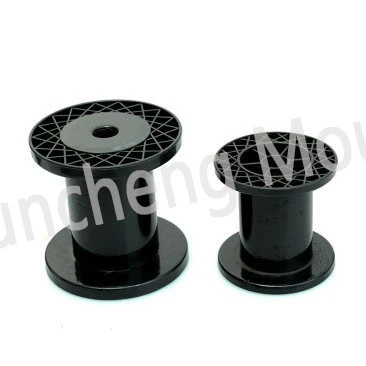
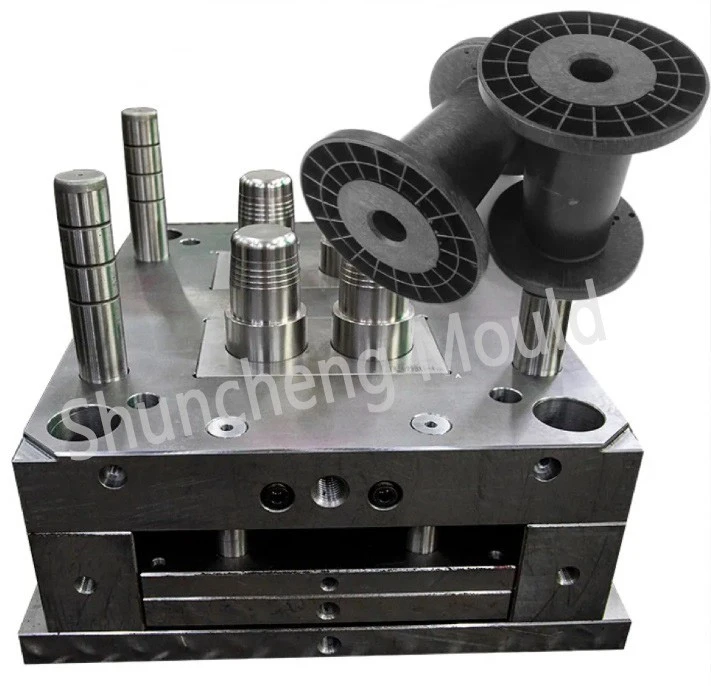
The ejection mechanism of a plastic spool mould is a critical component in the plastic injection molding process. As a professional Plastic Spool Mould supplier, I have witnessed firsthand the importance of a well - designed ejection mechanism. In this blog, I will delve into the details of what the ejection mechanism of a plastic spool mould is, its types, and why it is so crucial.
Understanding the Ejection Mechanism
In plastic injection molding, once the molten plastic is injected into the mould cavity and has cooled and solidified to form the plastic spool, it needs to be removed from the mould. This is where the ejection mechanism comes in. The ejection mechanism is a set of components within the mould that is responsible for pushing the finished plastic spool out of the mould cavity after the molding cycle is complete.
The main function of the ejection mechanism is to ensure that the plastic spool can be smoothly and safely removed from the mould without causing any damage to the spool or the mould itself. A poorly designed ejection mechanism can lead to issues such as spool deformation, surface defects, and even mould damage, which can increase production costs and reduce the quality of the final products.
Types of Ejection Mechanisms
1. Pin Ejection
Pin ejection is one of the most common types of ejection mechanisms used in plastic spool moulds. In this mechanism, ejector pins are placed strategically around the mould cavity. When the mould opens, a plate connected to the ejector pins moves forward, pushing the pins against the plastic spool. This action forces the spool out of the mould cavity.
The advantage of pin ejection is its simplicity and cost - effectiveness. It is relatively easy to design and manufacture, and it can be used for a wide range of plastic spool designs. However, one drawback is that the ejector pins can leave small marks on the surface of the spool. These marks may not be acceptable for products that require a high - quality finish. For more information on plastic spool moulds suitable for pin ejection, you can visit our Injection Plastic Spool Bobbin Mould page.
2. Sleeve Ejection
Sleeve ejection is another popular option. In this mechanism, a sleeve is used instead of ejector pins. The sleeve surrounds the core of the plastic spool and moves forward to push the spool out of the mould. Sleeve ejection is particularly useful for spools with a central hole or a complex internal shape.
The main advantage of sleeve ejection is that it provides a more uniform ejection force compared to pin ejection. This helps to prevent deformation of the spool, especially for thin - walled or delicate spool designs. However, sleeve ejection mechanisms are more complex and expensive to manufacture than pin ejection mechanisms. Our Cable Spool Plastic Injection Mold often utilizes sleeve ejection for better performance.
3. Stripper Plate Ejection
Stripper plate ejection is suitable for spools with a large surface area or those that have a tendency to stick to the mould. In this mechanism, a stripper plate moves parallel to the parting line of the mould. The plate contacts the entire surface of the spool and pushes it out of the mould.
Stripper plate ejection provides a very gentle and uniform ejection force, which is ideal for spools that require a high - quality surface finish. However, it requires a more complex mould design and is generally more expensive to manufacture. Our Plastic Cone Bobbin Mould may incorporate stripper plate ejection for specific customer requirements.
Factors Affecting the Design of the Ejection Mechanism
1. Spool Geometry
The shape and size of the plastic spool play a significant role in determining the type of ejection mechanism to be used. For example, spools with a simple cylindrical shape may be suitable for pin ejection, while those with complex internal features or large surface areas may require sleeve or stripper plate ejection.
2. Plastic Material
Different plastic materials have different shrinkage rates and adhesion properties. For materials that have a high shrinkage rate, a more robust ejection mechanism may be required to overcome the forces holding the spool in the mould. Similarly, materials that tend to stick to the mould surface may need a more gentle ejection mechanism to prevent damage to the spool.
3. Production Volume
The expected production volume also affects the design of the ejection mechanism. For high - volume production, a more reliable and durable ejection mechanism is preferred to minimize downtime and maintenance costs. On the other hand, for low - volume production, a simpler and more cost - effective ejection mechanism may be sufficient.
Importance of a Well - Designed Ejection Mechanism
1. Product Quality
A well - designed ejection mechanism ensures that the plastic spools are ejected from the mould without any damage or defects. This helps to maintain a high level of product quality, which is essential for customer satisfaction.
2. Production Efficiency
An efficient ejection mechanism reduces the cycle time of the injection molding process. Faster ejection means that more spools can be produced in a given time, increasing the overall production efficiency and reducing costs.
3. Mould Longevity
A properly designed ejection mechanism also helps to extend the life of the mould. By minimizing the stress on the mould during the ejection process, it reduces the risk of wear and tear, which can lead to premature mould failure.
Conclusion
In conclusion, the ejection mechanism of a plastic spool mould is a vital part of the plastic injection molding process. As a Plastic Spool Mould supplier, we understand the importance of designing and manufacturing ejection mechanisms that are tailored to the specific needs of our customers. Whether it is pin ejection, sleeve ejection, or stripper plate ejection, we have the expertise to provide the best solution for your plastic spool production.
If you are interested in our plastic spool moulds or have any questions about the ejection mechanisms, we encourage you to contact us for a detailed discussion. Our team of experts is ready to assist you in finding the most suitable mould and ejection mechanism for your production requirements.
References
- Throne, J. L. (1996). Plastics Process Engineering. Hanser Publishers.
- Rosato, D. V., & Rosato, D. V. (2000). Injection Molding Handbook. Kluwer Academic Publishers.