

In the dynamic world of plastic toy manufacturing, the efficiency and quality of production are paramount. As a dedicated Plastic Toy Mould supplier, I've witnessed firsthand the pivotal role that cooling systems play in the overall process. In this blog, I'll delve into what a cooling system in a plastic toy mould is and explore its crucial functions.
Understanding the Cooling System in a Plastic Toy Mould
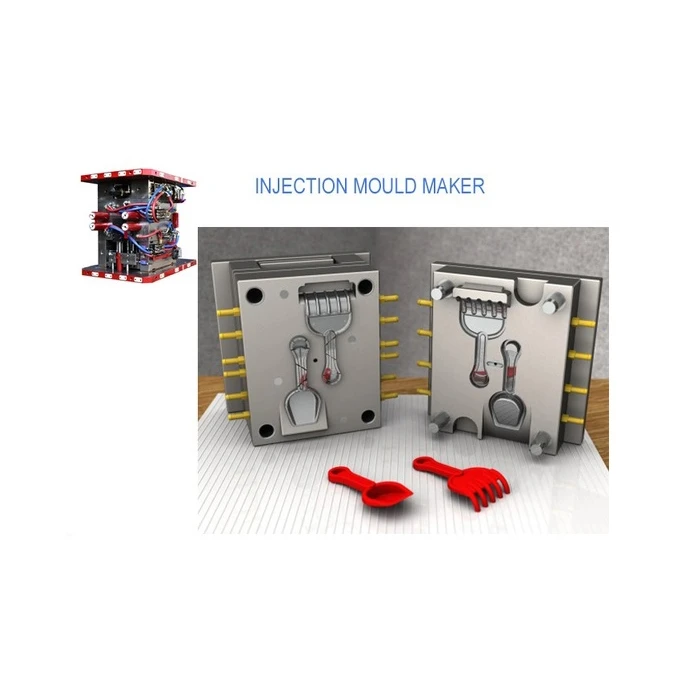
A cooling system in a plastic toy mould is a carefully engineered network of channels and passages designed to regulate the temperature of the mould during the injection - molding process. When molten plastic is injected into the mould cavity, it brings with it a significant amount of heat. If this heat is not removed efficiently, it can lead to a host of problems that affect the quality and production speed of the plastic toys.
The cooling system typically consists of cooling channels, which are drilled or machined into the mould plates. These channels are connected to an external cooling unit, such as a chiller, which circulates a coolant (usually water) through the channels. The coolant absorbs the heat from the mould and carries it away, maintaining the mould at an optimal temperature.
Functions of the Cooling System
1. Reducing Cycle Time
One of the primary functions of the cooling system is to reduce the cycle time of the injection - molding process. Cycle time refers to the time it takes to complete one full cycle of injection, cooling, and ejection of the plastic toy from the mould. The faster the plastic cools and solidifies, the quicker the toy can be ejected from the mould, and a new cycle can begin.
By efficiently removing heat from the mould, the cooling system accelerates the cooling rate of the molten plastic. This allows the plastic to reach its solidification temperature more rapidly, enabling shorter cycle times. As a Plastic Toy Mould supplier, we understand that reducing cycle time is crucial for our customers as it directly translates into higher production volumes and increased profitability. For example, in the production of Plastic Toy Injection Mould, a well - designed cooling system can cut down the cycle time by a significant margin, making the production process more efficient.
2. Improving Product Quality
The cooling system also plays a vital role in improving the quality of the plastic toys. Uneven cooling can lead to a variety of defects in the final product, such as warping, shrinkage, and sink marks. Warping occurs when different parts of the plastic toy cool at different rates, causing the toy to deform. Shrinkage happens as the plastic cools and contracts, and if the cooling is not uniform, it can result in dimensional inaccuracies. Sink marks are depressions on the surface of the toy, often caused by the uneven cooling of thick sections of the plastic.
A properly designed cooling system ensures that the plastic cools evenly throughout the mould cavity. This helps to minimize warping, shrinkage, and sink marks, resulting in plastic toys with better dimensional stability and a smoother surface finish. For instance, in the production of Plastic Toy Mould, a well - balanced cooling system can ensure that every part of the toy cools at the same rate, producing high - quality toys that meet the strictest industry standards.
3. Extending Mould Lifespan
Another important function of the cooling system is to extend the lifespan of the plastic toy mould. High temperatures can cause thermal stress on the mould, which can lead to premature wear and tear. Over time, this thermal stress can cause cracks, deformation, and other damage to the mould, reducing its effectiveness and increasing the need for costly repairs or replacements.
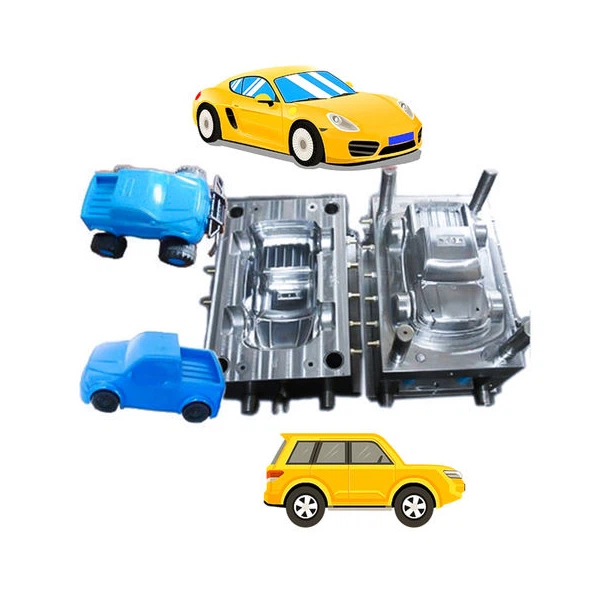
By maintaining the mould at a consistent and optimal temperature, the cooling system reduces the thermal stress on the mould. This helps to prevent damage and extends the lifespan of the mould, saving our customers money in the long run. For example, in the production of Children Electrical Car Mould, a reliable cooling system can ensure that the mould remains in good condition for a longer period, providing a better return on investment.
Design Considerations for Cooling Systems
Designing an effective cooling system for a plastic toy mould requires careful consideration of several factors.
1. Mould Geometry
The shape and size of the mould cavity have a significant impact on the design of the cooling system. Complex mould geometries may require more intricate cooling channel layouts to ensure uniform cooling. For example, if the toy has thick and thin sections, the cooling channels need to be designed in such a way that the thick sections cool at the same rate as the thin sections.
2. Plastic Material
Different plastic materials have different thermal properties, such as heat capacity and thermal conductivity. These properties affect the cooling rate of the plastic and, therefore, the design of the cooling system. For instance, plastics with high thermal conductivity will cool more quickly than those with low thermal conductivity, and the cooling system needs to be adjusted accordingly.
3. Production Volume
The expected production volume also influences the design of the cooling system. High - volume production requires a more efficient cooling system to ensure short cycle times and consistent quality. In contrast, low - volume production may allow for a simpler and less expensive cooling system.
Maintenance of Cooling Systems
Proper maintenance of the cooling system is essential to ensure its optimal performance. Regular cleaning of the cooling channels is necessary to prevent the buildup of debris, scale, and other contaminants, which can impede the flow of coolant and reduce the cooling efficiency.
The coolant should also be regularly monitored and replaced to ensure its proper chemical properties and prevent corrosion of the cooling channels. Additionally, the external cooling unit, such as the chiller, needs to be maintained according to the manufacturer's recommendations to ensure its reliable operation.
Conclusion
In conclusion, the cooling system in a plastic toy mould is a critical component of the injection - molding process. Its functions of reducing cycle time, improving product quality, and extending mould lifespan are essential for the success of plastic toy manufacturing. As a Plastic Toy Mould supplier, we are committed to providing our customers with high - quality moulds equipped with efficient cooling systems.
If you are in the market for Plastic Toy Mould, Plastic Toy Injection Mould, or Children Electrical Car Mould, we invite you to contact us for a detailed discussion. Our team of experts is ready to assist you in finding the best mould solutions tailored to your specific needs. Let's work together to enhance your plastic toy production and achieve greater success in the market.
References
- "Injection Molding Handbook" by O. J. Tobias and S. A. Todd
- "Plastics Processing: Modeling and Simulation" by R. B. Bird, R. C. Armstrong, and O. Hassager
- "Mold Design Handbook" by E. A. Avallone and T. Baumeister III