

When it comes to the manufacturing of helmets, the helmet mould plays a crucial role. As a professional helmet mould supplier, I understand the significance of pressure - resistance requirements for helmet moulds. In this blog, I will delve into the key aspects of these requirements, exploring why they are so important and how they impact the overall quality of helmet production.
The Importance of Pressure - Resistance in Helmet Moulds
Helmet moulds are used in a variety of manufacturing processes, such as injection molding. During these processes, the mould is subjected to high pressures. If the mould cannot withstand these pressures, it can lead to a series of problems. For example, the mould may deform, which will directly affect the shape and size of the helmets produced. Deformed helmets may not meet safety standards, putting the users at risk.
Moreover, pressure - resistant moulds ensure the consistency of the helmet production. A high - quality mould can maintain its shape and structure under repeated high - pressure operations, resulting in helmets with uniform quality. This is essential for meeting market demands and regulatory requirements.
Factors Affecting Pressure - Resistance Requirements
Material of the Mould
The choice of material for the helmet mould is a primary factor influencing its pressure - resistance. Commonly used materials include tool steels, such as P20 and H13. Tool steels are known for their high strength and good wear - resistance. P20 steel is often used for general - purpose helmet moulds. It has good machinability and can withstand moderate pressures during the injection molding process. On the other hand, H13 steel is more suitable for high - volume production and applications where higher pressures are involved. It has excellent thermal fatigue resistance and can maintain its mechanical properties at elevated temperatures, which is crucial when dealing with hot plastics in the moulding process.

Design of the Mould
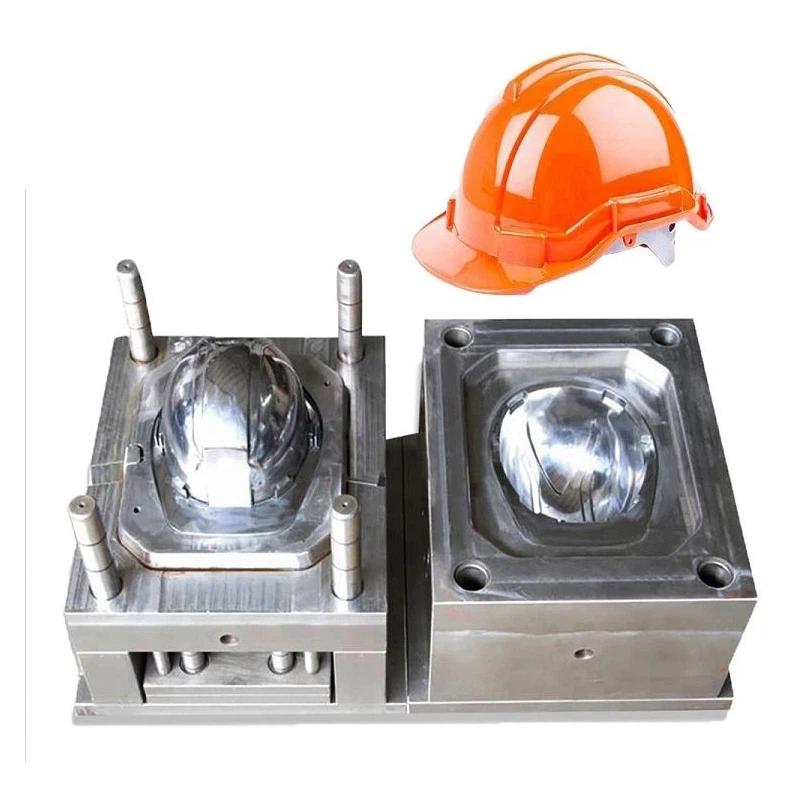
The design of the helmet mould also significantly affects its pressure - resistance. A well - designed mould should have a proper wall thickness. If the walls are too thin, the mould may not be able to withstand the pressure and will easily deform. Additionally, the shape of the mould cavity and the distribution of ribs and supports are important. Ribs can enhance the structural strength of the mould, while proper support distribution ensures that the pressure is evenly distributed across the mould. For example, in a Plastic Safety Helmet Mould, a well - designed rib structure can prevent the mould from collapsing under the high pressure of plastic injection.
Manufacturing Process
The manufacturing process of the helmet mould can impact its pressure - resistance. Precision machining is essential to ensure that the mould has accurate dimensions and a smooth surface finish. Any defects or irregularities in the machining process can create stress concentration points in the mould, reducing its ability to withstand pressure. Heat treatment is another important step. Proper heat treatment can improve the hardness and toughness of the mould material, enhancing its pressure - resistance. For instance, quenching and tempering of tool steels can optimize their mechanical properties, making the mould more durable under high - pressure conditions.
Pressure - Resistance Requirements for Different Types of Helmet Moulds
Motorcycle Helmet Mould
Motorcycle helmets need to provide high - level protection to riders. Therefore, the moulds used to produce them must have strict pressure - resistance requirements. Motorcycle helmet moulds often use high - strength tool steels like H13. The injection molding process for motorcycle helmets usually involves higher pressures compared to some other types of helmets. This is because motorcycle helmets are often made of high - performance plastics that require more force to fill the complex mould cavities accurately. The pressure - resistance of the mould ensures that the helmets have a consistent thickness and density, which is crucial for their impact - absorbing performance.
Safety Helmet Mould
Safety helmets are widely used in industrial settings. The pressure - resistance requirements for safety helmet moulds are also significant. Safety helmets are typically made of plastics such as polycarbonate or ABS. The moulds for these helmets need to be able to withstand the pressure during the injection molding process to produce helmets with the right shape and strength. A well - designed and pressure - resistant Safety Helmet Mould can ensure that the safety helmets meet the relevant safety standards, such as impact resistance and penetration resistance.
Testing and Quality Control of Pressure - Resistance
To ensure that the helmet moulds meet the pressure - resistance requirements, rigorous testing and quality control measures are necessary. One common testing method is hydraulic pressure testing. In this test, the mould is filled with a fluid, and the pressure is gradually increased until it reaches the expected operating pressure. The mould is then inspected for any signs of deformation or leakage.
Non - destructive testing methods, such as ultrasonic testing and X - ray testing, can also be used to detect any internal defects in the mould that may affect its pressure - resistance. Quality control also involves checking the dimensions and surface finish of the mould to ensure that they meet the design specifications. Only after passing these tests can the helmet mould be considered suitable for production.
Meeting the Pressure - Resistance Requirements as a Helmet Mould Supplier
As a helmet mould supplier, we are committed to meeting the highest pressure - resistance requirements. We carefully select the materials for our moulds, using only high - quality tool steels from reliable suppliers. Our experienced design team uses advanced CAD/CAM software to design the moulds, ensuring optimal wall thickness, rib distribution, and overall structural strength.
In the manufacturing process, we employ precision machining techniques and strict quality control measures. Our moulds are heat - treated according to the best practices to enhance their mechanical properties. We also conduct comprehensive testing on each mould to ensure that it can withstand the expected pressures during the helmet production process.
Conclusion
The pressure - resistance requirements for helmet moulds are of utmost importance in ensuring the quality and safety of helmets. By understanding the factors affecting pressure - resistance, such as material, design, and manufacturing process, and implementing strict testing and quality control measures, we can produce high - quality helmet moulds that meet the diverse needs of the market.
If you are in the market for high - quality helmet moulds that meet strict pressure - resistance requirements, we would be more than happy to discuss your specific needs. Our team of experts can provide you with professional advice and customized solutions. Contact us today to start the procurement negotiation process and take your helmet production to the next level.
References
- ASM Handbook Committee. (2008). ASM Handbook Volume 15: Casting. ASM International.
- Campbell, J. (2003). Castings. Butterworth - Heinemann.
- Throne, J. L. (1996). Plastics Engineered Product Design. Marcel Dekker.