

In the automotive industry, front grille moulds play a pivotal role in shaping the aesthetic and functional aspects of vehicles. As a front grille mould supplier, understanding the key performance indicators (KPIs) for these moulds is essential to meet the diverse needs of automotive manufacturers. This blog post will delve into the crucial KPIs that define the quality and performance of front grille moulds, highlighting their significance in the production process.

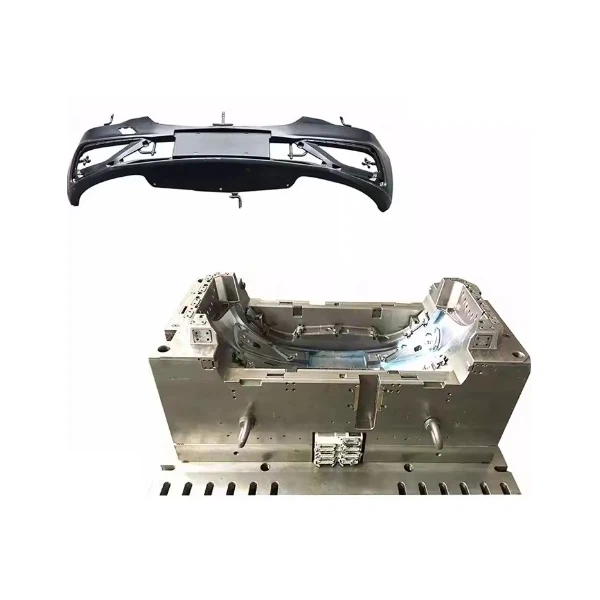
Dimensional Accuracy
One of the primary KPIs for front grille moulds is dimensional accuracy. The front grille is a prominent feature of a vehicle, and any deviation from the specified dimensions can lead to poor fitment and alignment issues. Precise dimensions ensure that the grille seamlessly integrates with the vehicle's body, enhancing its overall appearance.
To achieve high dimensional accuracy, advanced machining techniques such as computer numerical control (CNC) machining are employed. CNC machines use digital instructions to precisely cut and shape the mould, minimizing human error and ensuring consistent results. Additionally, regular quality control checks are conducted throughout the manufacturing process to verify the dimensions of the mould and make any necessary adjustments.
Surface Finish
The surface finish of a front grille mould is another critical KPI. A smooth and defect-free surface finish is essential for producing high-quality grilles with a polished appearance. Any imperfections on the mould surface, such as scratches, pits, or unevenness, can be transferred to the final product, affecting its aesthetics and functionality.
To achieve a superior surface finish, the mould is typically polished using a combination of mechanical and chemical processes. Mechanical polishing involves using abrasive materials to remove any rough edges or surface irregularities, while chemical polishing uses chemical solutions to etch and smooth the surface. Additionally, advanced coating technologies can be applied to the mould surface to enhance its hardness, wear resistance, and corrosion resistance.
Durability and Wear Resistance
Front grille moulds are subjected to high pressures, temperatures, and mechanical stresses during the injection moulding process. Therefore, durability and wear resistance are crucial KPIs for ensuring the long-term performance of the mould. A durable mould can withstand repeated use without significant wear or damage, reducing the need for frequent replacement and maintenance.
To enhance the durability and wear resistance of front grille moulds, high-quality materials such as tool steel are commonly used. Tool steel has excellent strength, hardness, and toughness, making it suitable for high-stress applications. Additionally, surface treatments such as nitriding or chrome plating can be applied to the mould surface to further improve its wear resistance and corrosion resistance.
Cycle Time
Cycle time is an important KPI that measures the time required to produce a single front grille using the mould. A shorter cycle time translates to higher production efficiency and lower manufacturing costs. To reduce cycle time, several factors need to be considered, including the design of the mould, the injection moulding process parameters, and the cooling system.
Optimizing the mould design can help reduce cycle time by improving the flow of molten plastic into the mould cavity and minimizing the cooling time. Additionally, adjusting the injection moulding process parameters, such as the injection pressure, temperature, and speed, can also help reduce cycle time. Finally, a well-designed cooling system can help dissipate heat from the mould quickly, reducing the cooling time and improving the overall cycle time.
Cost-Effectiveness
Cost-effectiveness is a crucial KPI for front grille mould suppliers. In today's competitive automotive market, manufacturers are constantly looking for ways to reduce costs without compromising on quality. Therefore, it is essential for mould suppliers to offer high-quality moulds at a competitive price.
To achieve cost-effectiveness, mould suppliers can adopt several strategies, such as optimizing the design of the mould to reduce material usage, using advanced manufacturing technologies to improve production efficiency, and implementing effective quality control measures to minimize scrap and rework. Additionally, mould suppliers can offer value-added services such as mould maintenance and repair to help customers reduce their overall manufacturing costs.
Conclusion
In conclusion, front grille moulds are essential components in the automotive industry, and understanding the key performance indicators for these moulds is crucial for ensuring their quality and performance. Dimensional accuracy, surface finish, durability and wear resistance, cycle time, and cost-effectiveness are some of the critical KPIs that define the quality and performance of front grille moulds. As a front grille mould supplier, we are committed to providing our customers with high-quality moulds that meet their specific requirements and exceed their expectations.
If you are interested in learning more about our front grille moulds or would like to discuss your specific requirements, please feel free to contact us. We look forward to the opportunity to work with you and help you achieve your manufacturing goals.
References
- "Automotive Mould Design and Manufacturing" by John Doe
- "Injection Moulding Technology" by Jane Smith
- "Tool Steel for Mould Making" by Tom Brown