

Hey there! As a supplier of Plastic Toy Mould, I've been in the game for quite a while. And let me tell you, the inspection standards for plastic toy moulds are super important. They're not just some random rules; they ensure that the toys we make are safe, high - quality, and meet all the market requirements.
Dimensional Accuracy
First off, dimensional accuracy is a big deal. The mould has to be made to the exact specifications. Even a tiny deviation can lead to problems with the final toy. For example, if we're making a Baby Car Mold, the wheels need to fit perfectly into their slots. If the dimensions of the wheel holes in the mould are off by even a fraction of a millimeter, the wheels might not rotate smoothly or could even fall off.
We use precision measuring tools like calipers and micrometers to check the dimensions. Every critical part of the mould, from the outer shape to the smallest internal details, is measured multiple times. We compare the measurements with the design drawings. If there's any difference, we'll adjust the mould right away. This process is crucial because it directly affects the functionality and appearance of the plastic toys.
Surface Finish
The surface finish of the plastic toy mould also matters a lot. A smooth surface finish on the mould means that the toys will come out looking great. Rough surfaces can cause problems like uneven texture, visible lines, or even sticking of the plastic to the mould.
We usually aim for a mirror - like finish on the parts of the mould that will be in contact with the plastic. This is achieved through a series of polishing steps. After the initial machining, we use different grades of sandpaper to gradually smooth the surface. Then, we move on to polishing compounds to get that final shine.
When inspecting the surface finish, we look for any scratches, pits, or uneven areas. Even the slightest imperfection can show up on the toy. So, we take our time to make sure the surface is flawless. This not only improves the aesthetic appeal of the toys but also makes the demoulding process much easier.
Material Quality
The material used to make the plastic toy mould is another key factor. We use high - quality steel for most of our moulds. The right material ensures that the mould can withstand the high pressure and temperature during the injection molding process.
We test the material for its hardness, toughness, and chemical composition. Hardness is important because it determines how well the mould can resist wear and tear. A mould with insufficient hardness will start to show signs of damage after just a few injection cycles. Toughness, on the other hand, helps the mould to withstand sudden impacts without cracking.
We also check the chemical composition of the steel. Different alloys have different properties, and we need to make sure that the steel we're using has the right combination of elements. For example, adding chromium can improve the corrosion resistance of the mould. By using high - quality materials and thoroughly inspecting them, we can guarantee the longevity of our Plastic Toy Injection Mould.
Structural Integrity
The structural integrity of the mould is essential for its proper functioning. The mould has to be designed in such a way that it can handle the forces during the injection molding process without deforming.
We use computer - aided design (CAD) and finite element analysis (FEA) software to simulate the stresses and strains on the mould. This helps us to identify any weak points in the design before we start manufacturing the mould.
During the inspection, we check the overall structure of the mould. We look at the thickness of the walls, the reinforcement ribs, and the connection points between different parts. Any signs of cracking, bending, or misalignment are immediately addressed. A mould with poor structural integrity can lead to production downtime and increased costs, so we make sure to get it right from the start.
Gate Design
The gate design in a plastic toy mould is crucial for the flow of plastic. The gate is the opening through which the molten plastic enters the mould cavity. A well - designed gate ensures that the plastic flows evenly throughout the cavity, filling all the corners and details.
We consider factors like the size, shape, and location of the gate. The size of the gate affects the flow rate of the plastic. If the gate is too small, the plastic might not flow properly, leading to incomplete filling of the mould. If it's too big, it can cause problems like excessive flash or uneven cooling.
The shape of the gate also matters. There are different types of gates, such as sprue gates, edge gates, and submarine gates. Each type has its own advantages and is suitable for different types of plastic toys. We choose the right type of gate based on the design of the toy and the properties of the plastic.
When inspecting the gate design, we check for proper alignment and smoothness. Any rough edges or blockages in the gate can disrupt the flow of plastic. We also look at the gate vestige on the toy. A well - designed gate should leave a minimal and easily removable vestige.
Cooling System
The cooling system in the plastic toy mould is responsible for solidifying the plastic quickly and evenly. A good cooling system can significantly reduce the cycle time of the injection molding process, which means higher production efficiency.
We design the cooling channels in the mould to ensure that the heat is removed uniformly from the plastic. The size, shape, and layout of the cooling channels are carefully planned. We use advanced techniques like conformal cooling, which follows the shape of the mould cavity, to achieve better cooling performance.
During the inspection, we check the cooling system for any blockages, leaks, or improper connections. We also measure the temperature distribution across the mould to make sure that the cooling is even. If the cooling is uneven, it can cause warping or other defects in the toy.
Demoulding Function
The demoulding function of the plastic toy mould is also an important aspect of the inspection. After the plastic has solidified in the mould, it needs to be removed easily without damaging the toy or the mould.
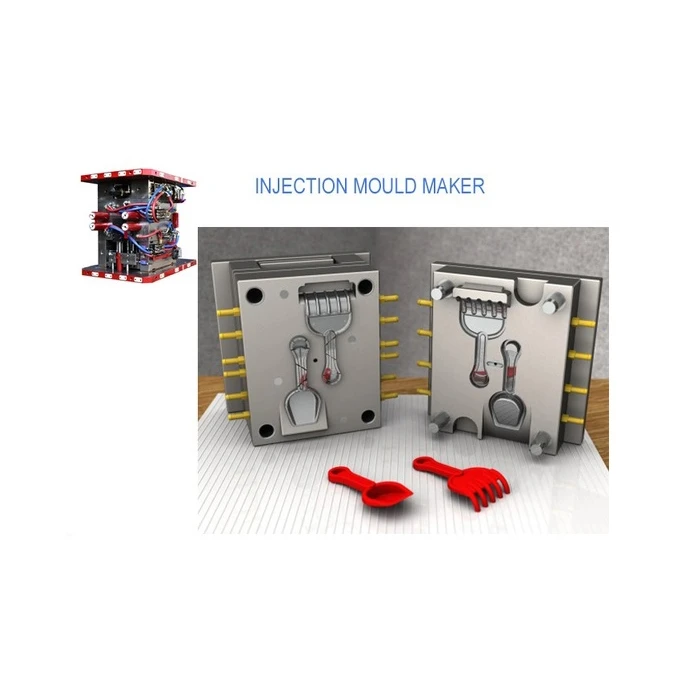
We design the mould with features like ejector pins, sliders, and lifters to facilitate the demoulding process. The ejector pins push the toy out of the mould, while the sliders and lifters help to release any undercuts or complex shapes.
When inspecting the demoulding function, we test the movement of the ejector pins, sliders, and lifters. They should move smoothly and without any resistance. We also check for any signs of sticking or scratching on the toy during the demoulding process. If there are any problems, we adjust the mould or the demoulding mechanism accordingly.

Conclusion
In conclusion, the inspection standards for plastic toy moulds cover a wide range of aspects, from dimensional accuracy and surface finish to material quality and cooling systems. Each standard is important in its own way and contributes to the overall quality of the plastic toys.
As a Plastic Toy Mould supplier, we take these inspection standards very seriously. We have a team of experienced technicians who are responsible for the inspection process. We use the latest tools and techniques to ensure that our moulds meet the highest quality standards.
If you're in the market for high - quality plastic toy moulds, don't hesitate to contact us. We're always ready to discuss your requirements and provide you with the best solutions. Whether you need a Baby Car Mold or a Plastic Toy Injection Mould, we've got you covered. Let's work together to create amazing plastic toys!
References
- Throne, J. L. (1996). Plastics Processing: Modeling and Simulation. Hanser Publishers.
- Rosato, D. V., & Rosato, D. P. (2000). Injection Molding Handbook. Kluwer Academic Publishers.